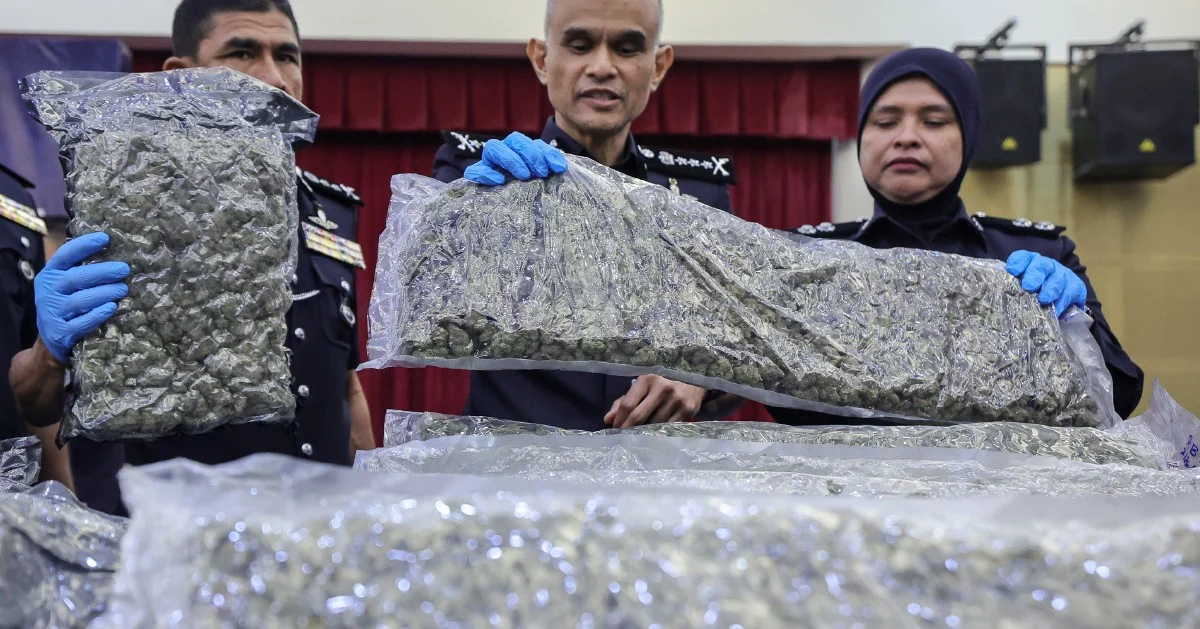
Malaysia's police force has uncovered a substantial drug trafficking network operating through Kuala Lumpur International Airport, with authorities confiscating more than 650 kilograms of cannabis buds and detaining 38 individuals since the start of the year. The operation, centred on the country's primary international aviation gateway, represents a significant dismantling of organised smuggling activities that threaten regional security and public health.
The seizures at KLIA underscore the airport's continued vulnerability to trafficking attempts despite enhanced security protocols. As one of Southeast Asia's busiest transport hubs, KLIA processes hundreds of thousands of passengers monthly, providing opportune cover for criminal syndicates seeking to move contraband across borders. The 650-kilogram haul recovered over recent months suggests a coordinated, sustained effort rather than isolated trafficking incidents, pointing to a network with established supply chains and distribution mechanisms.
Among those arrested are both Malaysian nationals and foreign individuals, indicating that the operation likely involves international cooperation and transcontinental smuggling routes. The presence of foreign suspects raises questions about the geographical origins of the cannabis and its intended destinations, potentially linking Malaysia to broader Southeast Asian drug networks. Such cross-border involvement complicates investigations and enforcement, requiring coordination between domestic authorities and international law enforcement partners.
Cannabis trafficking represents a growing challenge across Southeast Asia, where demand continues to rise despite strict regional prohibition regimes. Malaysia maintains some of the world's harshest drug penalties, yet the volume of seizures at major transport nodes like KLIA suggests that deterrent effects may be limited against well-organised criminal enterprises with significant financial incentives. The contraband's street value could reach millions of ringgit, justifying the resources criminals invest in smuggling attempts.
The timing and scale of these seizures also reflect the evolving tactics of drug syndicates adapting to enforcement strategies. Traffickers increasingly attempt to conceal cannabis within luggage, cargo shipments, and mail parcels passing through commercial channels, betting that airport screening cannot intercept every shipment. The fact that authorities managed to recover over half a tonne indicates both successful interdiction efforts and the troubling reality that more substantial quantities may slip through undetected.
Customs and immigration authorities at KLIA work in coordination with the police narcotics division to identify suspicious passengers and shipments, relying on intelligence, behavioural analysis, and technology-assisted screening. However, the resource-intensive nature of such operations limits comprehensive coverage, particularly as passenger volumes surge. Criminal networks capitalise on these operational constraints, deploying multiple couriers and decentralised methods to increase the probability that at least some shipments reach their destinations.
The arrest of 38 individuals provides investigators with interrogation leads that could illuminate the full extent of the smuggling enterprise. Police will likely map the network's hierarchy, identify financiers and organisers, and trace connections to related trafficking activities elsewhere in Malaysia and the region. Information extracted from detainees often proves invaluable in disrupting supply lines and preventing future shipments.
From a public health perspective, the seizure addresses a concerning trend in Malaysia where cannabis use, particularly among younger demographics, has increased in recent years. While cannabis remains classified as a dangerous drug under the Dangerous Drugs Act 1952, shifting global attitudes towards liberalisation in some countries have influenced perceptions domestically, potentially emboldening traffickers who sense reduced social stigma in certain communities. Interdicting large shipments like those at KLIA reduces the drug's street availability and maintains enforcement credibility.
The drug trafficking investigation demonstrates that despite Malaysia's stringent legal framework and penalties, including mandatory minimum sentences and capital punishment for trafficking beyond certain thresholds, criminal organisations continue operating with apparent operational freedom. This paradox suggests that while punishment severity may deter some individuals, systematic corruption, demand-side factors, and the profitability of the trade sustain criminal networks through revolving cycles of arrest and replacement.
Regional implications extend beyond Malaysia's borders, as KLIA serves as a transshipment point for drugs destined for other Southeast Asian countries and beyond. Disrupting trafficking networks at such hubs creates cascading effects across broader supply chains, potentially elevating street prices and constraining availability in downstream markets. Conversely, successful interdiction at one hub may redirect traffickers toward alternative routes through less-scrutinised channels.
The ongoing investigation signals authorities' commitment to drug enforcement, yet the persistence of large-scale seizures underscores the enormity of challenges facing law enforcement in an increasingly complex global narcotics landscape. Sustainable solutions will require not only operational excellence at airports but also demand reduction strategies, community engagement, and intelligence-led approaches that dismantle networks at source rather than merely intercepting products in transit.