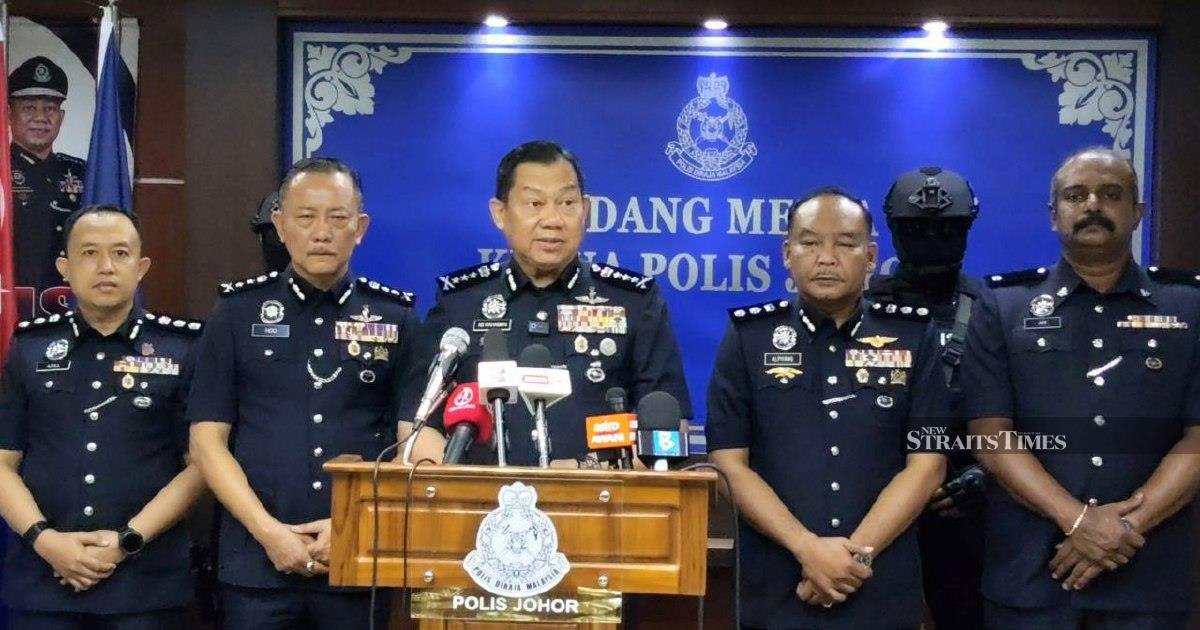
Authorities in Johor Baru dismantled what appears to be an organised drug distribution network on Saturday, resulting in one of the region's significant methamphetamine seizures in recent months. The operation yielded 60.78 kilogrammes of methamphetamine with an estimated street value of RM3.04 million, marking a substantial blow against drug trafficking operations in the southern state. Eight individuals were taken into custody during the coordinated raids, though details regarding their specific roles within the suspected syndicate remained under investigation as enforcement officers continued their preliminary inquiries.
The composition of the arrested group reveals the increasingly diverse recruitment strategies employed by drug trafficking networks. Among those detained was a teenage school dropout, identified as working in the capacity of a transporter or courier within the distribution chain. This pattern of enlisting young, out-of-school individuals reflects a growing concern among law enforcement agencies across Malaysia, as criminal syndicates systematically target economically vulnerable youth with limited educational prospects. Such recruitment methods exploit financial desperation and absence of alternative legitimate income opportunities, making these individuals particularly susceptible to coercion or inducement into roles within the illicit drug economy.
The seizure underscores the persistent challenge of methamphetamine trafficking within Malaysia's borders. Known locally under various street names and increasingly referred to as the crystalline stimulant drug of choice across Southeast Asia, methamphetamine represents the most commonly trafficked synthetic drug in the region. Production capacities in countries like Myanmar, where large-scale clandestine laboratories continue to operate relatively unchecked, maintain steady supply flows into neighbouring markets. Malaysia's geographic positioning along major trafficking routes, combined with its developed port and logistics infrastructure, renders it an attractive transit and distribution point for regional drug syndicates.
The monetary value attributed to the seizure, RM3.04 million, represents not only the street price but also illustrates the substantial profit margins driving this illicit commerce. Such financial incentives remain powerful motivators for criminal enterprises, particularly when the penalties, despite increasing severity, remain perceived as manageable business risks by organised networks. The conversion of 60.78 kilogrammes of methamphetamine into millions of ringgit demonstrates why drug trafficking continues to attract involvement from increasingly sophisticated criminal organisations capable of managing supply chains spanning multiple countries.
Johor Baru's position as a major urban centre near the Singapore border has historically positioned it as a critical nexus in regional drug trafficking networks. The proximity to Singapore, where demand for illicit stimulants remains substantial and prices substantially exceed those in Malaysia, creates incentive structures for traffickers to move products across the causeway. Simultaneously, the state's extensive road networks, port facilities, and position as a major commercial hub facilitate the movement of contraband through traditional and innovative smuggling routes. Law enforcement agencies have progressively enhanced surveillance and intelligence-gathering capabilities in response, though the cat-and-mouse dynamic between authorities and traffickers continues to evolve.
The arrest of eight individuals represents a significant operational success for local enforcement, yet it likely constitutes only a single layer of a deeper organisational structure. Drug trafficking networks typically employ compartmentalised systems designed to insulate higher-level operators from direct law enforcement contact. The courier, represented by the teenage suspect, occupies one of the most expendable positions within such hierarchies, deliberately isolated from knowledge of supply sources or ultimate distribution destinations. This structural arrangement ensures that even successful arrests of lower-level operatives frequently yield limited information regarding network leadership or broader trafficking patterns.
Investigators will likely focus considerable attention on establishing connections between the detained individuals and wider syndicate operations. Preliminary questioning may uncover information regarding source locations, distribution networks, and financial mechanisms used to launder proceeds from drug sales. The methods employed to transport 60.78 kilogrammes of methamphetamine—whether through parcel services, private vehicles, maritime routes, or other means—will provide investigators with insights into operational procedures. Such intelligence helps authorities refine interdiction strategies and identify potential weak points within trafficking networks.
The case illustrates broader challenges facing Malaysian law enforcement in combating synthetic drug production and trafficking. Unlike heroin, which requires cultivation of opium poppies and involves agricultural supply chains, methamphetamine production requires only chemical precursors and relatively portable laboratory equipment. This lower barrier to entry has enabled proliferation of production capabilities throughout the region, particularly in areas with weaker regulatory oversight. Addressing the problem requires coordinated action across multiple fronts: international cooperation on precursor chemical controls, intelligence sharing with neighbouring countries, community-based prevention initiatives, and rehabilitation services for users.
The involvement of a school dropout in the transportation role also signals concerning social trends. Youth unemployment, educational disengagement, and limited vocational opportunities in certain communities create vulnerability to recruitment by criminal elements. Prevention strategies must therefore extend beyond enforcement into addressing underlying socioeconomic conditions that predispose young people toward involvement in illegal activities. Educational programmes, vocational training initiatives, and youth employment schemes represent crucial complementary interventions alongside conventional law enforcement approaches.
Looking forward, this seizure exemplifies the ongoing commitment by Johor police to disrupt drug trafficking operations, yet the scale and persistence of methamphetamine flows suggest that single operations, however successful, address symptoms rather than root causes. Sustainable progress requires sustained resource allocation, technological advancement in detection capabilities, and cross-border cooperation frameworks that extend beyond Malaysia's immediate jurisdiction. The eight arrests and RM3.04 million seizure represent genuine tactical victories, but the broader challenge of containing stimulant drug proliferation throughout Southeast Asia demands systemic interventions spanning years rather than months.

