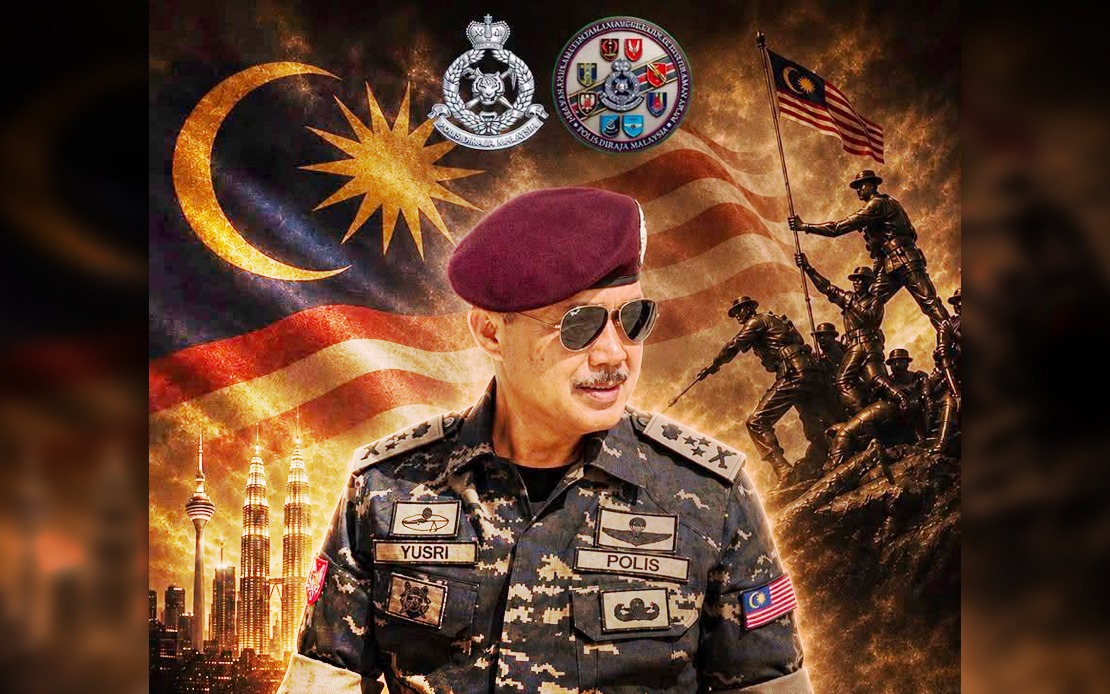
Datuk Seri Mohd Yusri Hassan Basri is swapping the engine roar of a high-powered motorcycle for the clip-clop of horse hooves this National Day. The director of the Department of Internal Security and Public Order (KDNKA) will ride a white horse named Al-Sakb to lead the 595-strong Royal Malaysia Police (PDRM) contingent at the 69th National Day Parade at Dataran Putrajaya on August 31. The change in transport represents a significant shift in how Malaysia's security apparatus displays itself during the nation's most important civilian celebration.
The transition reflects the deliberate evolution of how Malaysia's police force presents itself to the public. Last year, Mohd Yusri led the police detachment astride a BMW R 1250 RT motorcycle, symbolising motorised efficiency and modern policing. Now, leading from horseback introduces a classical, traditional element to the parade while maintaining the dignity and formality expected of senior police leadership. The Federal Reserve Unit's Mounted Unit, comprising 20 officers and personnel alongside 20 horses, will form the vanguard of the PDRM's appearance, setting the tone for the broader security contingent that follows.
Mohd Yusri acknowledged that this shift presents both a departure from his previous role and a personal challenge. When he served as director of the Traffic Investigation and Enforcement Department (JSPT), motorcycle leadership was a natural fit for an agency focused on road safety and enforcement. His rise to KDNKA, a broader internal security portfolio, called for a different public-facing approach. The move to horsemanship demonstrates the flexibility demanded of Malaysia's senior security officials, who must adapt their public personas while maintaining operational credibility and institutional gravitas.
Preparing for this parade role has demanded more than a month of intensive training for Mohd Yusri. The preparation goes beyond simple horsemanship; it requires synchronising the movements of twenty horse-mounted officers with the broader contingent of police personnel marching and moving in formation. Such coordination is essential for projecting an image of discipline and cohesion that reflects positively on both KDNKA and the wider PDRM. This investment of time underscores how seriously Malaysia's security establishment takes these national ceremonial moments, viewing them as opportunities to reinforce public confidence in police capabilities and professionalism.
Beyond the symbolic leadership of the mounted unit, the PDRM's National Day presentation will showcase the full spectrum of the force's operational diversity. The General Operations Force (GOF) and the Air Operations Force will feature prominently, demonstrating that Malaysian policing extends far beyond traditional beat patrols. This multi-dimensional display serves to educate the public about the complexity of contemporary security challenges and the sophisticated tools deployed to meet them. For Malaysian audiences, particularly younger citizens, the parade offers a rare window into the sophisticated operations that protect national security in an increasingly complex threat environment.
Among the assets expected to capture public attention are the ten newly acquired All Terrain Tactical Assault E-Bikes (ATEB). These high-performance electric motorcycles represent the GOF's technological modernisation for security and border patrol duties, alongside their deployment in high-risk special operations and conflict management scenarios. The inclusion of these vehicles in the parade sends a clear message about Malaysia's commitment to equipping its security forces with cutting-edge technology. For a nation increasingly concerned about transnational security challenges, from drug trafficking to border incursions, the public demonstration of such capabilities reinforces confidence in official preparedness.
Airpower will feature prominently in the PDRM's contingent presentation. An AW139 helicopter operated by the force is scheduled to execute a flypast, a dramatic gesture that typically draws crowds and emphasises the verticality of modern policing operations. In Southeast Asia, where maritime threats and aerial surveillance play critical roles in national security, the display of helicopter capability holds particular resonance. The flypast also serves as a reminder to Malaysian citizens of the technical sophistication available to law enforcement and the breadth of capabilities beyond street-level interactions.
The PDRM's contingent will also showcase the K9 Unit, with sixteen elite police dogs expected to participate. These canine officers represent a trained, specialized capability that spans drug detection, search and rescue, and crowd management. The inclusion of working dogs in the parade adds a human touch to the otherwise martial display of security forces. Dogs occupy a unique position in public perception—powerful enough to inspire respect for police capabilities, yet familiar enough to younger audience members to inspire positive associations with law enforcement.
Mohd Yusri's commitment to ensuring flawless execution reflects the high stakes attached to National Day performances in Malaysia. These parades serve not merely as entertainment or ceremonial duty; they function as powerful public diplomacy tools that shape citizen perception of state institutions. A well-executed contingent reinforces confidence in institutional competence, while any organisational mishap risks damaging public confidence. This pressure to perform perfectly explains the extensive training protocols and the careful coordination of disparate elements—from horseback riders to helicopter pilots to dog handlers.
The director explicitly invoked religious blessing when discussing parade preparations, reflecting the spiritual dimension often present in Malaysian state ceremonies. His reference to "Alhamdulillah" (praise be to God) and prayers for favourable weather illustrate how national celebrations in Malaysia often blend secular civic rituals with religious expression. This integration reflects Malaysia's constitutional framework and the role of Islam in national identity, even as the country maintains religious pluralism in public institutions.
Mohd Yusri's invitation for the public to attend with their families, bringing children to witness police capabilities and celebrate national independence, reflects a deliberate strategy of building police-community relations from an early age. When young Malaysians see horses, motorcycles, helicopters, and dogs operating in coordinated fashion under professional command, they develop formative impressions of state authority as organised, capable, and worthy of respect. This intergenerational engagement serves as soft power, subtly reinforcing social cohesion around respect for institutions.
The 69th National Day Parade represents more than ceremonial pageantry; it offers a snapshot of how Malaysia's security establishment wishes to present itself to citizens and the international observers who may watch footage of the event. The combination of traditional mounted units with cutting-edge electric motorcycles and helicopters emblematises the balance Malaysia seeks—honouring historical continuity and formal dignity while embracing technological modernity. Mohd Yusri's transition from motorcycle to horse exemplifies this same duality, maintaining traditional symbols of authority while overseeing the most contemporary security innovations.

