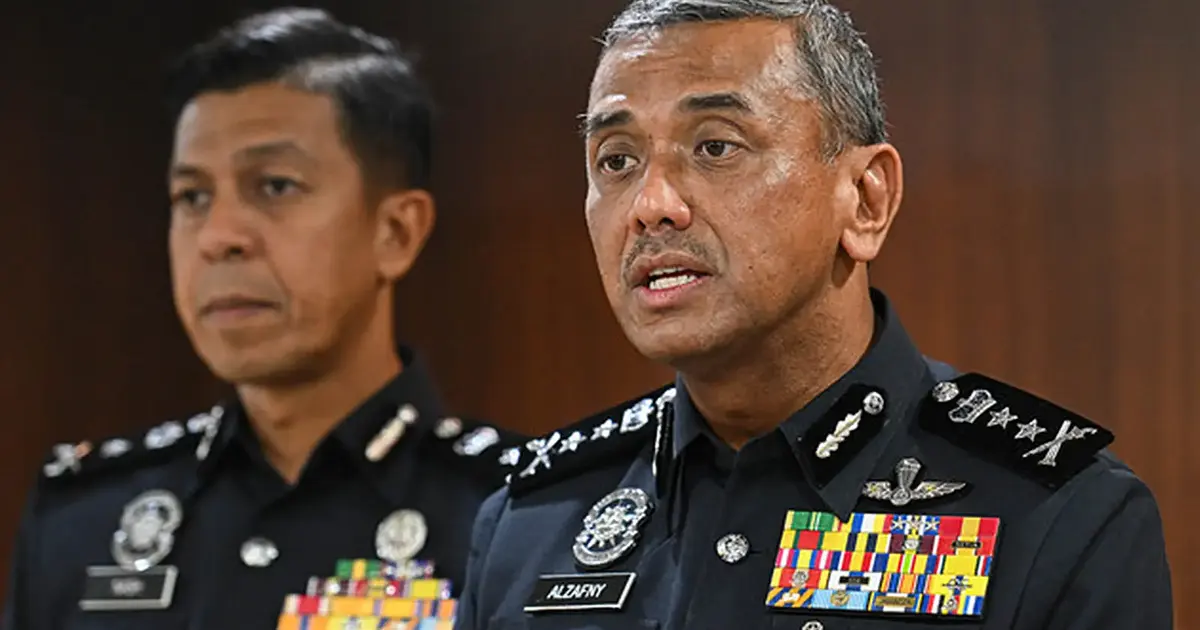
A resident of Negeri Sembilan faces police custody following allegations that he posted derogatory content directed at the state's royal family on social media platforms. According to Negeri Sembilan police chief Alzafny Ahmad, the arrest was made as authorities intensify their response to online remarks considered disrespectful to the institution of monarchy in the state.
The apprehension underscores the continuing tension between digital free expression and laws protecting the dignity of Malaysia's royal institutions. Under Malaysian law, insulting the monarchy carries serious legal consequences, and social media has increasingly become a focal point for enforcement actions across the country's 13 states and federal territories. Police chiefs nationwide have made clear their commitment to pursuing such cases, reflecting the government's zero-tolerance stance on any form of disrespect toward constitutional heads of state.
In this particular case, investigators confiscated the suspect's mobile device as a critical piece of evidence. The seizure of electronic devices in such inquiries has become standard practice, allowing forensic specialists to establish a complete digital trail, verify the source of the posts, and determine whether the accused acted alone or as part of a coordinated effort. The handset will be analysed to recover messaging history, social media accounts, timestamps, and any other data relevant to establishing guilt or innocence.
Negeri Sembilan, one of Malaysia's smaller states by population but significant as a historic Malay sultanate, has consistently upheld strict protocols regarding royal protocol and respect for its ruling family. The Duli Yang Maha Mulia Negeri Sembilan occupies a unique constitutional position as both a state monarch and, in certain electoral contexts, a participant in the selection of Malaysia's national Yang di-Pertuan Agong. Consequently, any perceived slight against the Negeri Sembilan throne reverberates not only at the state level but carries implications for federal governance structures as well.
The arrest reflects broader patterns seen across Malaysian police forces in recent years. Officers have become more proactive in monitoring online spaces, working with telecommunication providers and social media platforms to identify potentially offensive content quickly. This approach has led to numerous arrests and convictions, though civil liberties advocates have occasionally raised concerns about the breadth of interpretation when determining what constitutes an insult to royalty.
For Malaysian citizens navigating digital platforms, such cases serve as stark reminders of the legal boundaries that govern online expression within the country. What might be considered protected speech in other jurisdictions can trigger criminal investigation in Malaysia, where respect for the institution of monarchy is considered fundamental to the social contract and constitutional framework. Many Malaysians exercise considerable caution when discussing royal matters publicly, even in private messaging, given the potential legal ramifications.
The investigation into this particular case will likely proceed through established protocols. After the initial detention period, authorities will determine whether sufficient evidence exists to seek a remand order from the courts, allowing extended questioning. Depending on the evidence gathered from the seized device and other investigative avenues, the case may proceed toward formal charges, which could carry penalties including fines and imprisonment.
From a Southeast Asian perspective, Malaysia's approach to protecting royal dignity through social media surveillance represents one end of a spectrum. While countries like Thailand have similarly stringent laws protecting the monarchy, and Singapore maintains strict defamation standards, other regional nations maintain relatively looser regulatory frameworks. This variation reflects different constitutional traditions and political philosophies across the region regarding the appropriate balance between free expression and institutional protection.
For media organisations and content creators operating in Malaysia, cases like this underscore the importance of institutional knowledge regarding legally sensitive topics. News outlets maintain editorial guidelines specifically addressing coverage of royal matters, ensuring reporting remains factual and respectful while still fulfilling journalism's watchdog function. Digital natives and social media influencers, however, often operate with less institutional safeguards, making them more vulnerable to inadvertent violations.
The wider implications of this arrest extend to questions about digital governance in Malaysia as the country navigates rapid technological change. As more citizens conduct their lives online, from entertainment to commerce to political discourse, the intersection between traditional laws designed for physical speech and modern digital communication becomes increasingly complex. Policymakers face ongoing pressure to clarify the boundaries of permissible expression while safeguarding institutions considered fundamental to Malaysia's constitutional identity.
Police chief Alzafny Ahmad's confirmation of the arrest and device seizure demonstrates the coordinated enforcement approach now standard across Malaysian law enforcement. Regular inter-agency communication and information-sharing allow police forces in different states to learn from each other's investigative techniques and legal interpretations, creating a largely consistent national framework despite Malaysia's federal structure.

