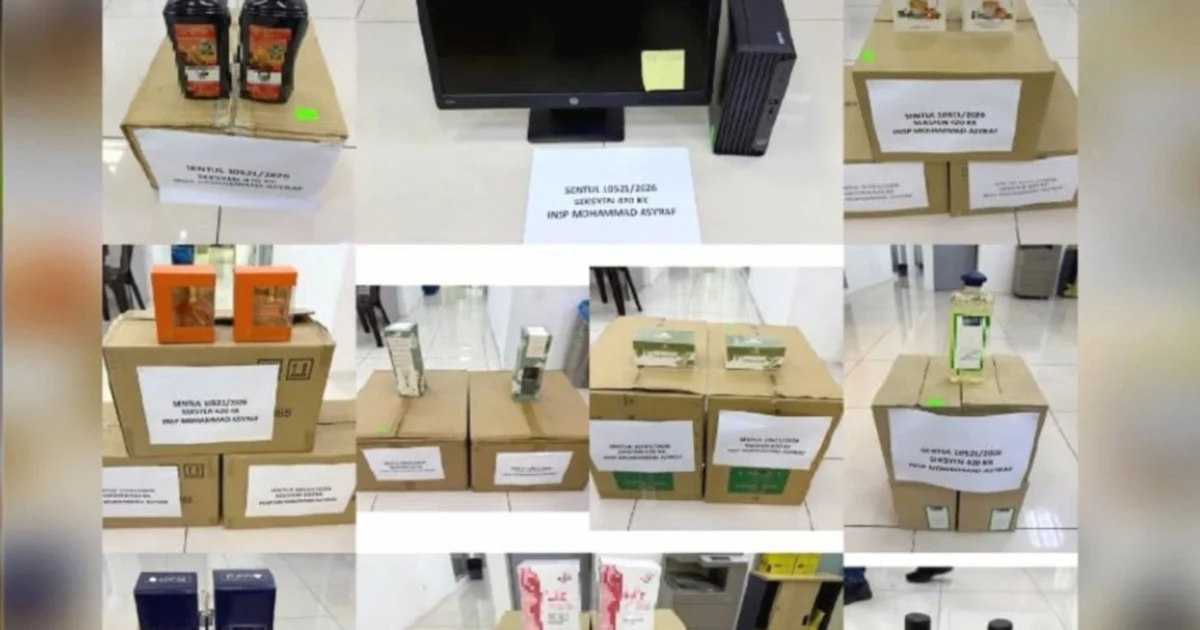
Law enforcement agencies have successfully broken up an investment fraud ring specialising in perfume schemes following a coordinated raid on a commercial location in KL Eco City on Wednesday. The operation resulted in the arrest of six individuals suspected of orchestrating and participating in the deceptive investment activity. The raid represents a significant victory in the ongoing battle against organised financial fraud, which has increasingly targeted Malaysian consumers seeking alternative investment opportunities outside conventional asset classes.
The dismantling of this particular syndicate highlights a troubling trend in Malaysia's fraud landscape, where scammers have turned to niche commodities—perfume being a particularly popular vehicle—to entrap unwary investors. By positioning perfume trading or retail networks as investment opportunities with guaranteed returns, criminal networks have been able to exploit the aspirations of everyday Malaysians hoping to grow their savings. The scheme's presence at KL Eco City, a prime business and residential district in Malaysia's capital, underscores how fraudsters operate from seemingly legitimate commercial addresses to lend credibility to their operations and evade immediate detection.
Investment scams centred on tangible goods like perfume typically operate through a layered recruitment system, where early participants are promised substantial profits in exchange for purchasing inventory or "investment packages" at inflated prices. These victims are then encouraged to recruit additional investors from their social circles, creating a pyramid-like structure that generates returns for organisers while accumulating losses for newer participants. The perfume sector has proven particularly vulnerable to such exploitation because the products can be authenticated in legitimate markets, making initial pitches appear credible to potential victims unfamiliar with the mechanics of pyramid schemes.
The investigation into this KL Eco City operation will likely reveal the extent of victimisation across multiple states, as syndicates typically operate virtual networks that span far beyond their physical headquarters. Authorities will be examining transaction records, communications between suspects and victims, and the movement of funds to reconstruct the full scope of the fraud. The number of individuals harmed by this particular scheme could number in the hundreds or even thousands, depending on how long the operation remained active before police intervention.
For Malaysian consumers, this case serves as a critical reminder of the common red flags associated with investment opportunities that promise unusually high returns with minimal risk. The use of physical premises and professional-looking marketing materials does not validate an investment scheme; legitimate financial instruments are regulated by entities like the Securities Commission Malaysia and Bank Negara Malaysia. Perfume, despite being a real commodity, cannot be issued as a regulated investment security, and any scheme treating it as such falls squarely into the category of fraudulent activity.
The arrest of the six suspects marks the beginning of the legal process, during which police will continue gathering evidence to support criminal charges. Malaysian law provides substantial penalties for investment fraud and related offences, particularly when organised crime elements are involved. The sentences faced by these individuals could extend to lengthy imprisonment and substantial fines, depending on the scale of financial losses and the number of victims defrauded through their coordinated activities.
Beyond the immediate criminal case, this raid will prompt regulatory bodies and law enforcement agencies to examine whether similar operations are functioning elsewhere in the Klang Valley and beyond. The targeting of a KL Eco City address suggests that these fraudsters were operating with enough apparent legitimacy to secure commercial space in a high-profile development, raising questions about due diligence procedures at business parks and commercial centres across the country. Moving forward, landlords and property management companies may face increased pressure to implement tighter vetting processes for tenants to prevent their premises from being exploited for illegal financial activities.
The case also underscores the importance of public education regarding fraud prevention. Many victims of investment scams—particularly those recruited through social media and personal networks—may not fully understand how to verify the legitimacy of investment opportunities before committing their money. The prevalence of such schemes across Malaysia suggests that awareness campaigns remain inadequate in reaching vulnerable demographic groups, including first-time investors, retirees seeking supplementary income, and individuals with limited formal financial literacy.
As the investigation progresses, law enforcement agencies will likely appeal to potential victims of this syndicate to come forward with information. Those who have invested money or recruited others through what they now suspect was fraudulent activity face the difficult decision of whether to report their involvement to authorities, particularly given the social stigma and personal financial losses involved. However, cooperation with police investigations is essential for establishing the full criminal liability of the suspects and for understanding the systemic vulnerabilities that made this fraud possible in the first place.
The dismantling of this perfume investment scam adds to an expanding portfolio of fraud cases that Malaysian police have successfully targeted in recent years. However, the persistence of such schemes—often with slight variations in product or marketing approach—indicates that enforcement action alone cannot solve the problem. A comprehensive response involving public education, regulatory oversight, and community vigilance remains essential to protecting Malaysian consumers from financial predators operating within the country's borders.

