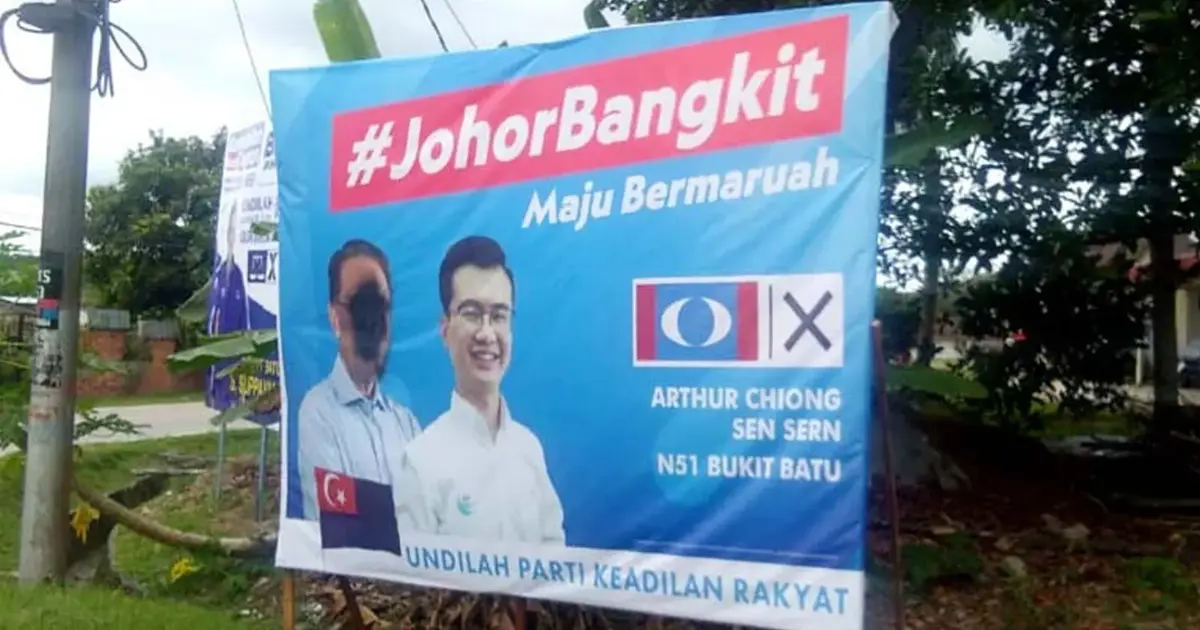
Inspector-General of Police Khalid Ismail has disclosed that authorities received 90 reports throughout the campaign period, of which 25 investigation papers have been formally opened. According to the IGP, the cases documented during this politically sensitive timeframe predominantly concern low-level offences rather than matters directly implicating political parties or their representatives.
The relatively modest number of investigations opened from the 90 initial reports suggests that many complaints did not meet the threshold for formal police action. This filtering process is typical in campaign periods, where heightened public awareness and civic engagement often result in increased community reporting of various incidents to law enforcement. The authorities' approach indicates a measured response to what appears to be routine public order concerns.
Among the documented offences, vandalism emerged as a primary category of concern. Such infractions—ranging from defaced campaign materials to property damage in public spaces—represent the type of street-level misconduct that emerges during heated electoral campaigns when tensions run high and activists become more visible in communities. The prevalence of vandalism-related cases reflects the physical nature of campaign activity, where posters, billboards, and promotional materials become focal points for rival supporters' actions.
The IGP's explicit statement that these cases do not involve the parties or candidates themselves carries significant weight in the Malaysian political context. This distinction is important for public confidence in the electoral process, as it demonstrates that authorities are treating infractions at the grassroots level separately from any potential institutional wrongdoing. By clarifying that political organisations themselves are not subjects of investigation, the IGP aims to reassure stakeholders that party leadership and official campaign machinery have operated within legal bounds.
For Malaysian voters and observers, this breakdown provides reassurance about the overall conduct of the campaign. The campaign period represents a critical juncture for democratic participation, and the volume and nature of police reports serve as one metric for assessing public behaviour during this timeframe. The relatively low proportion of reports that advanced to investigation status—roughly 28 percent—suggests that many initial complaints lacked sufficient grounds for formal police action or were resolved through other channels.
The context of campaign conduct in Malaysia reflects evolving expectations around electoral behaviour. Previous election cycles have witnessed varying degrees of public order challenges, and electoral commissions have worked progressively to establish clearer guidelines for permissible campaign activity. The current figures represent a snapshot of how these enforcement mechanisms functioned during the most recent campaign period and offer baseline data for comparing future election cycles.
From a Southeast Asian perspective, Malaysia's handling of campaign-period law enforcement demonstrates how democracies in the region manage the intersection of civil liberties and public order. The transparency shown by the IGP in disclosing these figures—breaking down the distinction between reports received and formal investigations opened—reflects professional standards in police communication and contributes to institutional accountability.
The vandalism-focused nature of the cases also highlights broader questions about campaign culture in Malaysia. As political engagement intensifies during election periods, the visibility of campaign materials and supporters in public spaces inevitably increases, sometimes resulting in disputes over public property and the right to advertise. Law enforcement's role in managing these conflicts without perceived partisan bias remains crucial to electoral legitimacy.
The 25 investigation papers opened represent cases considered serious enough or substantiated enough by police assessment to warrant formal inquiry procedures. These investigations require documentation, evidence gathering, and potential follow-up action, distinguishing them from the 65 reports that either lacked sufficient grounds or were resolved through informal means. This two-tier approach reflects standard policing practice in managing the volume of public complaints received during heightened civic activity periods.
Moving forward, the data from this campaign period will likely inform how electoral authorities and law enforcement agencies prepare for future cycles. The types of offences documented, their geographic distribution, and the effectiveness of responses all contribute to evolving best practices in managing campaign conduct. For political parties themselves, understanding the categories of infractions police identify during campaigns provides guidance for communicating expectations to supporters and campaign workers at the grassroots level.
The IGP's characterisation of the cases as minor matters and unrelated to party structures suggests that the 2024 campaign maintained broad compliance with electoral conduct standards, despite the inherent friction that accompanies competitive political mobilisation. This finding provides a baseline for assessing campaign quality and may influence how both law enforcement and electoral oversight bodies calibrate their approaches in subsequent election cycles across the region.

