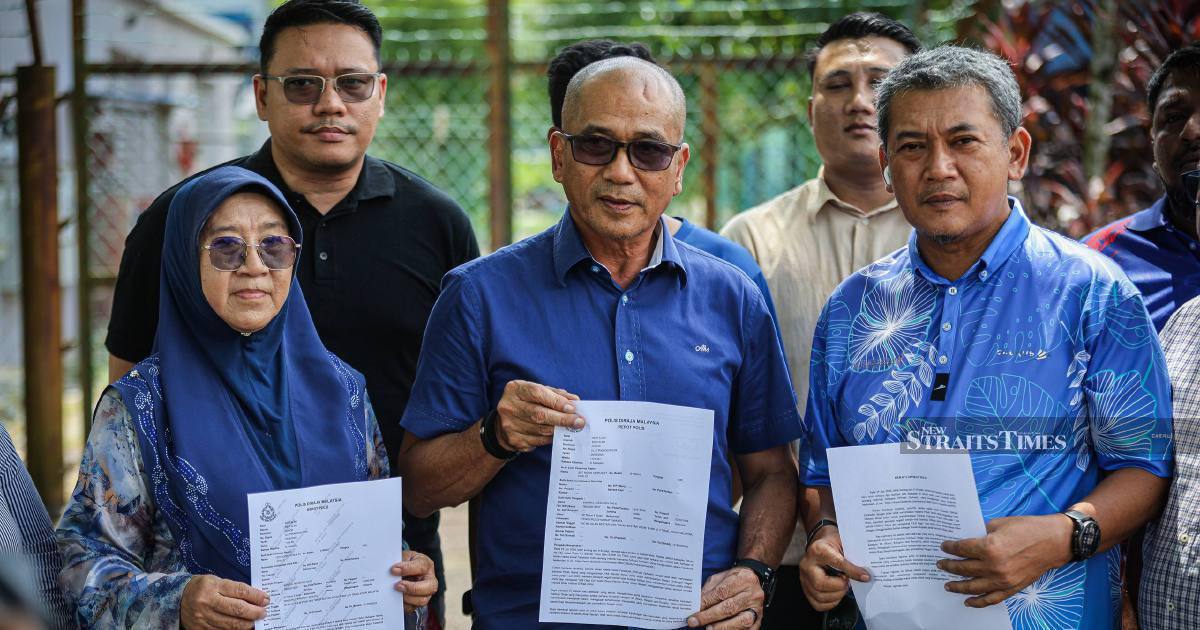
Tensions within Johor's political establishment have escalated following the lodging of police reports by several Barisan Nasional members against Datuk Dr Mohd Puad Zarkashi, a former senior figure in the United Malays National Organisation, over his public allegations linking the Johor palace to state political developments. The move underscores deepening rifts within the ruling coalition as questions persist about institutional influence on governance in one of Malaysia's most strategically important states.
The former Umno supreme council member had previously made contentious claims suggesting that the Johor palace wielded considerable sway over political decisions affecting the party and the state administration. These assertions, which touch on sensitive matters involving the institution of royalty, prompted swift action from within the Barisan Nasional ranks in Johor, with members moving to lodge formal complaints with law enforcement authorities. The decision to escalate the matter through police channels represents an unusual step within party politics, suggesting the gravity with which the allegations were viewed by the complainants.
For Malaysian observers, particularly those tracking Johor politics, the incident highlights persistent questions about the boundaries between the constitutional monarchy's ceremonial roles and its practical influence over state governance. Johor, governed by its own sultanate with considerable constitutional authority, has long occupied a unique position within Malaysia's federal system. The palace maintains historical and cultural prominence that extends beyond typical royal functions, making any allegations regarding its political involvement particularly sensitive and consequential.
Puad Zarkashi's background as a former member of Umno's supreme council lends his statements particular weight within party circles, as individuals at that level typically have direct exposure to high-level decision-making processes. His willingness to voice such claims publicly suggests either a significant rift with party leadership or conviction about matters he believes warrant public scrutiny. The timing and nature of these allegations also raise broader questions about governance accountability and the need for transparent institutional relationships.
The Barisan Nasional's response through police reports rather than internal party mechanisms reflects the escalated nature of political tensions in Johor. Rather than attempting to resolve disputes through party disciplinary processes or discussions, the move to involve law enforcement suggests that complainants view the allegations as crossing particular thresholds—potentially touching on defamation or public order concerns. This approach also signals confidence among the reporting members that police processes will validate their position.
Johor's political landscape has experienced considerable turbulence in recent years, with changes in state leadership, coalition adjustments, and internal party realignments creating an environment where institutional accountability questions resurface periodically. The state's economic importance and its position as a key federal territories buffer have made control of its political direction a priority for various national political actors. Against this backdrop, questions about who actually influences key decisions carry significance extending beyond routine partisan debate.
For Southeast Asian observers, the incident offers insights into how Malaysia's constitutional arrangements continue to generate friction points between different power centres. The Malaysian monarchy occupies a distinctive constitutional position compared to regional peers, with substantial residual powers particularly at the state level. When public figures challenge the boundaries of this influence, it inevitably triggers official responses designed to protect institutional prerogatives and maintain established hierarchies.
The allegations also occur against Malaysia's broader political volatility, which has seen shifting coalitions, realigned party loyalties, and recurring constitutional questions. In this context, any suggestion that formal state institutions operate according to influences outside official channels becomes politically potent, capable of destabilising carefully constructed political arrangements. The concerned Barisan Nasional members' decision to lodge reports can thus be understood partly as an effort to contain potential damage to institutional credibility and political stability within Johor's governing structures.
Puad Zarkashi's position as a former supreme council member creates complications for Umno's leadership response. Dismissing such allegations out of hand risks appearing defensive, yet engaging substantively with his claims potentially legitimises public discussion of sensitive institutional relationships. This dilemma has likely influenced the calculation by other party members to pursue police channels rather than engage in direct political debate, effectively depoliticising the matter by framing it as a law enforcement issue.
The incident also reflects changing norms around public discourse on traditionally protected subjects in Malaysian politics. Whereas institutional sensitivities once functioned to suppress such discussions, contemporary communication dynamics and political contestation have eroded some traditional restraints. Public figures now more readily voice institutional critiques that previous generations might have confined to private conversations, creating new challenges for authorities attempting to maintain established boundaries.
Looking forward, the outcome of any police investigation will likely carry implications beyond the immediate matter, potentially establishing precedents for how similar allegations are handled. The incident serves as a reminder that Malaysian politics continues navigating the complex intersection between constitutional monarchy, party politics, and democratic accountability—tensions that remain unresolved despite Malaysia's decades of political experience. For Malaysian readers, the Johor situation exemplifies broader questions about institutional transparency and the mechanisms through which power actually operates within state-level governance structures.

