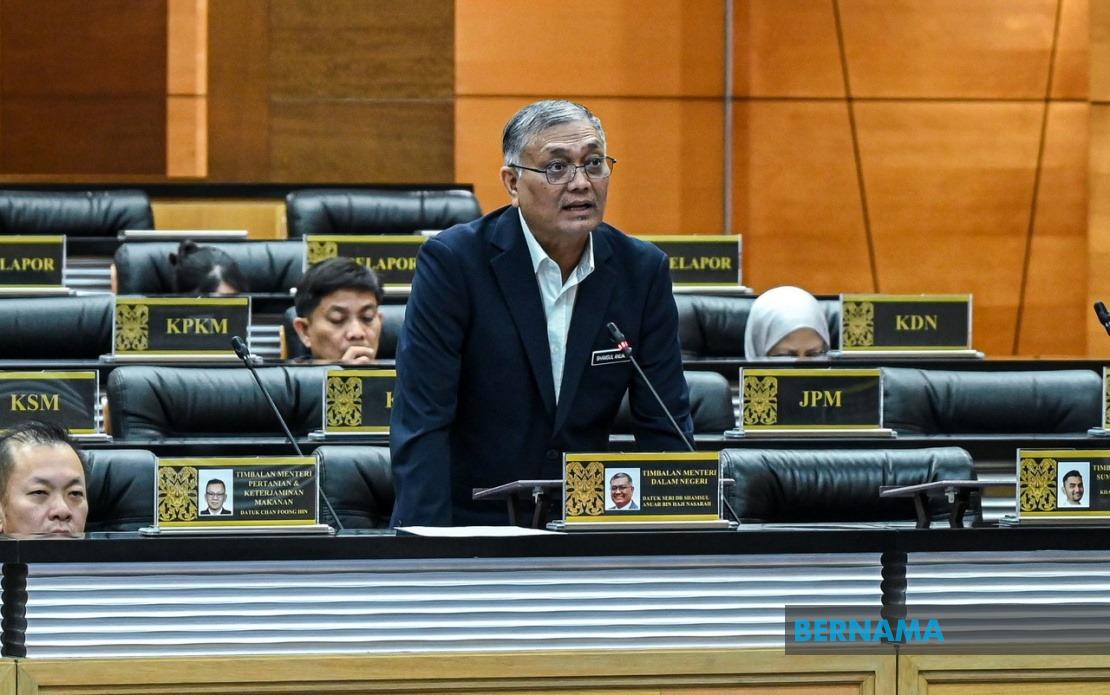
Malaysia's law enforcement approach to politically sensitive cases came under scrutiny on July 15 when Deputy Home Minister Datuk Seri Dr Shamsul Anuar Nasarah addressed concerns about the handling of several high-profile investigations. Speaking during a special Dewan Rakyat session, Shamsul Anuar sought to assure Parliament that the Royal Malaysian Police conducts its work with professionalism and transparency, treating all individuals equally irrespective of their political standing or previous government roles.
The focus of parliamentary questioning centred on the prolonged investigation into an intimate video recording that circulated widely on social media in 2019, which was linked to a former Cabinet member. Shamsul Anuar explained that investigators remain actively engaged in tracing the original recording alongside all devices and equipment connected to its creation and distribution. The case underscores the ongoing challenges law enforcement faces in handling digital evidence and cybercrime matters, particularly when high-ranking political figures are involved. Such cases test the institutional independence of Malaysian investigative bodies and public confidence in their impartiality.
The investigation operates under multiple legislative frameworks, reflecting the complexity of prosecuting modern digital offences in Malaysia. Authorities are working within Section 292, Section 377B and Section 504 of the Penal Code, supplemented by Section 233 of the Communications and Multimedia Act 1998. This multipronged legal approach demonstrates how Malaysian law addresses issues spanning obscenity, sexual conduct, and defamation through traditional criminal statutes combined with contemporary cyber regulations. The layered legislative framework offers prosecutors flexibility but also highlights potential gaps and overlaps in legislation governing digital media violations.
Parallel to the video investigation, the Deputy Home Minister addressed a separate case involving the son-in-law of former Prime Minister Tan Sri Muhyiddin Yassin. Rather than discuss details, Shamsul Anuar redirected responsibility to the Malaysian Anti-Corruption Commission, noting that the MACC had already issued an arrest warrant against the individual. This delineation of investigative authority reveals how Malaysia's enforcement architecture distributes responsibilities among specialized agencies. The MACC's independent status as an anti-corruption body means corruption-related matters fall outside PDRM's direct remit, though coordination between agencies remains essential for comprehensive investigations.
The Deputy Home Minister's measured statements reflect broader sensitivities surrounding investigations that touch figures associated with Malaysia's political leadership. The fact that such assurances required articulation in Parliament suggests public concern about potential inconsistency in law enforcement depending on an individual's political connections. This perception, whether grounded or not, can undermine public trust in institutions and suggests that Malaysian authorities face an ongoing need to demonstrate evenhandedness in high-stakes cases affecting prominent personalities.
Beyond domestic investigations, Shamsul Anuar addressed Malaysia's capacity to pursue suspects who have fled the country. Extradition procedures are governed by the Extradition Act 1992 and bilateral treaties between Malaysia and other nations. Currently, Malaysia maintains extradition arrangements with 11 countries and has also ratified the ASEAN Extradition Treaty, positioning the nation within a regional framework for managing cross-border criminal matters. These mechanisms are crucial for addressing transnational crime and ensuring that fugitives cannot indefinitely evade justice by seeking refuge abroad.
The government signalled its readiness to expand Malaysia's extradition reach by negotiating additional treaties with foreign jurisdictions. Such expansion would strengthen Malaysia's capacity to pursue economic crimes, corruption cases, and other serious offences with international dimensions. For Malaysia and Southeast Asia more broadly, enhanced extradition cooperation reflects recognition that modern criminal enterprises often transcend borders, requiring coordinated enforcement responses. Malaysian policymakers appear cognisant that regional stability and investor confidence hinge partly on demonstrable capacity to bring suspected wrongdoers to account regardless of geography.
The parliamentary exchange occurred against a backdrop of public concern about the politicization of law enforcement in Malaysia. The country's recent political history has witnessed multiple transitions of power and numerous high-profile investigations touching figures from competing coalitions. Citizens and observers have periodically questioned whether investigations progressed impartially or became instrumentalized for political advantage. Shamsul Anuar's repeated emphasis on professional, transparent, and fair conduct suggests the government recognizes the need to rebuild institutional credibility through consistent messaging about institutional independence.
For Malaysian citizens and businesses, these assurances carry practical implications. A police force perceived as beholden to political interests creates uncertainty for investors, complicates contract enforcement, and potentially discourages foreign companies from establishing operations in the country. Conversely, demonstrated commitment to impartial law enforcement strengthens the rule of law perception and can facilitate economic and governance improvements. The Deputy Home Minister's statements, whether fully resonant with public perception, represent an attempt to signal that Malaysia's law enforcement institutions operate according to professional standards rather than political calculation.
Looking forward, the trajectory of these investigations will offer evidence concerning the government's actual commitment to impartial enforcement. Media scrutiny and parliamentary oversight will continue monitoring whether investigations progress methodically or stall inexplicably. The 2019 intimate video case, in particular, remains emblematic of questions about whether powerful individuals or their associates receive differential treatment. As Malaysia navigates the complexities of investigating high-profile cases spanning cybercrime, corruption, and offences affecting former government figures, institutional performance will shape public confidence in democratic institutions and rule of law more broadly.

