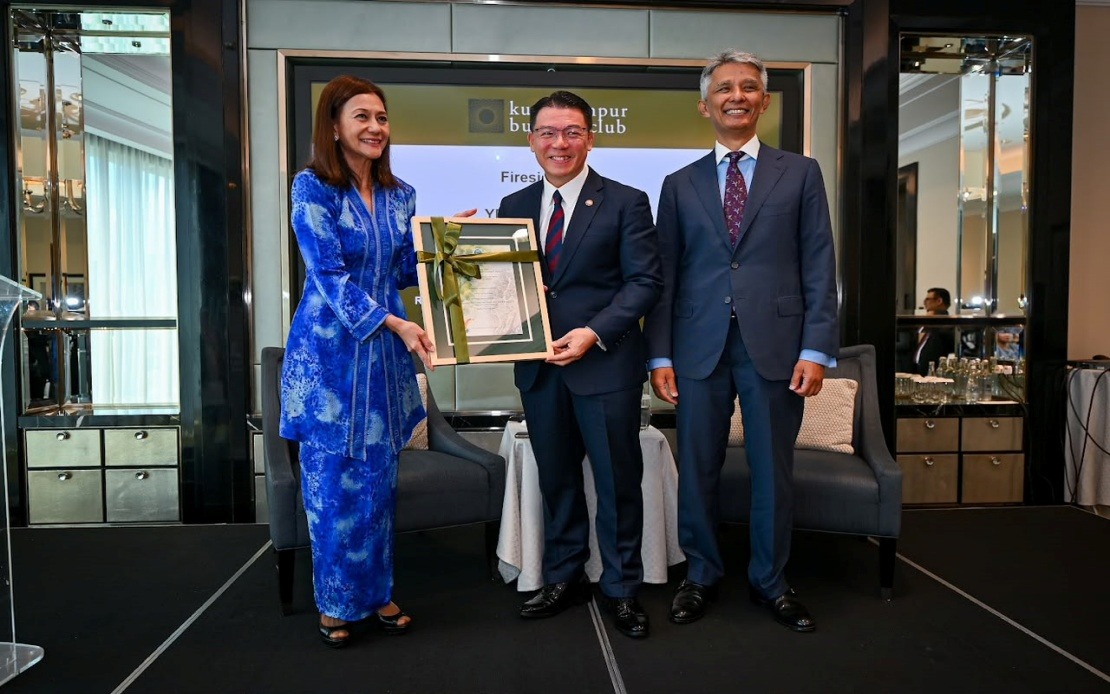
Maintaining unwavering commitment to the MADANI reform agenda is essential if Malaysia is to translate ongoing structural changes into concrete, enduring economic advantages, according to Housing and Local Government Minister Nga Kor Ming. Speaking at an event organised by the Kuala Lumpur Business Club, he argued that policy predictability underpins the government's capacity to retain foreign investor interest while strengthening the nation's competitive position in an increasingly volatile global marketplace. The continuity of governing principles, he suggested, acts as a stabilising force that enables Malaysia to weather external economic shocks and capitalise on emerging opportunities for expansion.
Nga contended that a sustained mandate would furnish the administration with sufficient breathing room to accelerate deeper institutional reforms, expand governmental capability, and bring to fruition ambitious long-term plans that remain at various stages of implementation. Without such constancy, he implied, many initiatives risk stalling or being abandoned midway, negating the progress already achieved. The minister framed this as a fundamental requirement for any government seeking to orchestrate genuine transformation rather than superficial change.
Under Prime Minister Datuk Seri Anwar Ibrahim's stewardship, the MADANI government has achieved measurable advances across multiple reform domains spanning fiscal governance, resource allocation, and international relations, Nga noted. These gains have culminated in renewed investor appetite for Malaysian assets, enhanced economic stability, and elevated standing among global peers. The evidence, he suggested, lay in concrete metrics and tangible policy outcomes rather than rhetorical commitments alone.
The minister pointed to Malaysia's rising appeal as an investment hub, underpinned by transparent regulatory frameworks, solid macroeconomic fundamentals, and a politically stable environment that reassures both domestic and foreign capital. In an era of geopolitical uncertainty and shifting supply chains, such predictability represents a scarce commodity that many nations struggle to provide. Malaysia's ability to offer this combination positions it favourably against regional and global competitors seeking to attract high-value investments.
Beyond direct investment metrics, Nga highlighted improvements in Malaysia's standing on the Corruption Perceptions Index, signalling that institutional integrity has strengthened measurably. International credit rating agencies have similarly taken note, upgrading assessments of Malaysia's fiscal credibility and debt sustainability. These improvements have cascading effects, reducing borrowing costs and expanding the government's fiscal manoeuvre space for strategic investments in infrastructure, human capital, and innovation.
Diplomatic initiatives have likewise yielded tangible partnerships that promise long-term economic dividends. Nga specifically referenced a RM52.73 billion strategic partnership with Turkmenistan alongside concurrent energy collaboration frameworks with Russia. Such arrangements, he argued, exemplify how strategic foreign policy positioning can unlock new revenue streams, diversify supply chains, and reduce Malaysia's dependence on traditional trading relationships. The energy collaboration ventures are particularly significant given Malaysia's long-term infrastructure and development ambitions.
The fireside chat, themed around future cities and urban economic reshaping under MADANI reforms, convened business leaders and policy stakeholders to examine how Malaysia's transformation agenda intersects with urbanisation trends. Cities represent engines of economic growth, employment generation, and innovation hubs, making their efficient development central to broader economic objectives. The MADANI framework's urban dimension therefore warrants scrutiny as a bellwether for the administration's broader capacity to deliver.
For Malaysian investors and businesses, Nga's emphasis on policy continuity carries immediate relevance. Companies planning multi-year capital commitments seek assurance that regulatory environments will remain stable and that long-term government priorities will not undergo radical swings. Pension funds, sovereign wealth managers, and institutional investors similarly value predictability when allocating capital across geographies. Malaysia's ability to signal sustained commitment to reform agendas thus translates directly into competitive advantage in attracting sophisticated capital.
Regionally, Malaysia's experience offers instructive lessons for neighbouring economies grappling with economic transformation pressures. Successful structural reform requires not merely the announcement of initiatives but their methodical implementation across administrations and electoral cycles. Vietnam, Indonesia, and Thailand face analogous challenges in deepening institutional capacity while maintaining investor confidence. Malaysia's demonstrated progress, if sustained, could position it as a regional exemplar of how political consistency enables economic modernisation.
The emphasis on policy consistency also acknowledges practical implementation realities. Government agencies, international partners, and private sector entities require time to align operations and strategies with new policy directions. Premature pivots or reversals disrupt planning horizons and waste resources already committed to reform initiatives. From this perspective, ministerial advocacy for continuity reflects hard-earned understanding of institutional dynamics rather than mere political rhetoric.
Looking forward, the test of Malaysia's transformation agenda will ultimately rest on whether proclaimed priorities translate into measurable improvements in citizen welfare, employment quality, and inclusive growth. Policy continuity is a necessary condition for such outcomes but remains insufficient without rigorous execution, adaptive learning, and genuine accountability. The coming period will reveal whether the administration can maintain both consistency in direction and flexibility in implementation methods as circumstances evolve.

