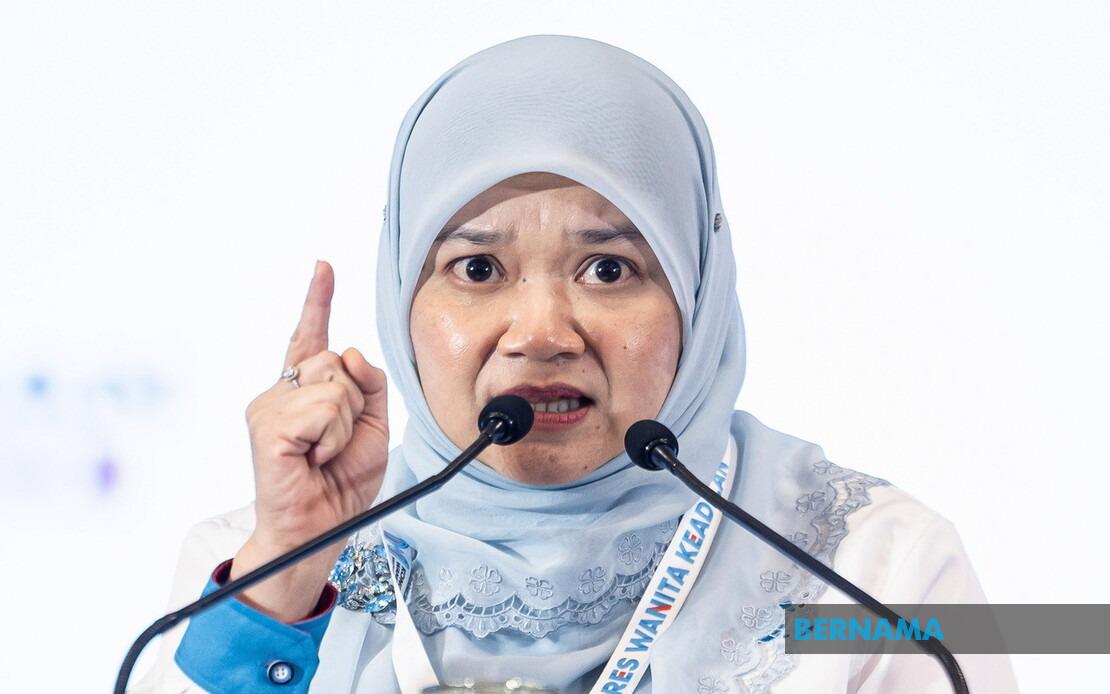
Wanita PKR chief Fadhlina Sidek has delivered a pointed message to Malaysian politicians: campaigns should be won through superior ideas and proven solutions, not through the weaponisation of religious sentiment. Speaking at the 2026 Wanita PKR National Congress in Melaka this week, Sidek articulated a vision of political competition that prioritises policy substance over divisive cultural appeals, a stance that reflects growing concern among moderate political voices about the trajectory of electoral discourse in the country.
The Wanita PKR leader's remarks cut to the heart of contemporary Malaysian politics, where religious issues have increasingly become flashpoints during election cycles. Sidek's intervention suggests that within PKR, at least among its women's wing leadership, there is recognition that relying on faith-based messaging or fear-mongering around religious matters ultimately weakens democratic institutions and polarises communities. Her call for restraint and good faith in these matters represents a counterweight to politicians across the spectrum who have found electoral dividends in stoking religious anxieties, a practice that has become more pronounced in recent years.
In her winding-up address at the congress held at the Melaka International Trade Centre in Ayer Keroh, Sidek articulated the argument that genuine political competition thrives when parties distinguish themselves through the calibre of their ideas and their demonstrated capacity to deliver tangible improvements to citizens' lives. This framing shifts the battleground from identity politics—where victory often depends on mobilising fear or resentment—to a terrain where governing competence and forward-thinking policy frameworks become the deciding factors. For a multiethnic, multireligious democracy like Malaysia, this represents a more constructive foundation for electoral engagement.
The Wanita PKR chief specifically warned against what she characterised as the arbitrary exploitation of religion for political purposes, particularly during election campaigns when such tactics are most potent. She cautioned politicians against inciting communities over matters of faith, implying that while religious identity remains important to Malaysians, it should not become a cudgel wielded by politicians seeking short-term electoral advantage at the cost of long-term social cohesion. This distinction—between respecting religious identity and exploiting it—is crucial for understanding her position.
Beyond her critique of political tactics, Sidek articulated a separate imperative for PKR and its grassroots structure: the urgent need to rebuild direct connections with communities at the neighbourhood level. She encouraged all party leaders and members to step beyond bureaucratic functions and engage substantively with the people they purport to represent. This call for reconnection with the grassroots carries particular weight given the erosion of traditional party machinery across much of Southeast Asia, where digital politics and top-down campaign structures have sometimes displaced personal interaction and community trust-building.
Sidek's emphasis on leaders understanding the immediate circumstances of the communities they serve reflects a practical concern about party relevance. She urged sensitivity to local conditions and a willingness to mobilise resources to address identified needs. This approach—grounded in direct observation of what people require, whether material assistance, infrastructure improvements, or services—represents a markedly different emphasis from campaigns centred on abstract ideological appeals or identity-based messaging. Her suggestion that party members should examine their neighbours' circumstances and offer help where possible advocates for a form of politics rooted in visible, tangible assistance.
The broader context for Sidek's address involves PKR's strategic position within Malaysian politics. As a component party of the Pakatan Harapan coalition that previously formed government, and which continues to hold significant parliamentary representation, the party faces pressure to demonstrate both ideological distinctiveness and competent governance. Sidek's framing of political competition around ideas and solutions, rather than religious appeals, implicitly positions PKR as a modernising force willing to compete on substantive grounds—a positioning that may resonate with urban, middle-class voters but requires sophisticated communication to avoid appearing dismissive of religious concerns that matter deeply to many Malaysians.
Sidek also addressed the internal cohesion of PKR, reminding members to maintain commitment to the party's political project despite challenges and setbacks. She emphasised that party strength emerges through consistent effort and a well-functioning organisational apparatus at all levels. Her call for loyalty and steadfastness, coupled with confidence in future electoral prospects, signals an attempt to maintain morale within the party structure during what appears to be a period of consolidation rather than organisational expansion.
The timing of these remarks, delivered at a women's wing congress, underscores that women within PKR are articulating these moderate, institution-strengthening positions. This is significant because women's wings across Malaysian parties, while sometimes marginalised in decision-making, often function as repositories of political moderation and community-focused activism. Sidek's elevation of ideas-based competition and grassroots engagement through a women's platform may indicate shifting dynamics within PKR's leadership regarding how the party should position itself in the broader political landscape.
For Malaysian politics more broadly, Sidek's intervention represents a voice—albeit one among many—arguing for electoral competition that builds rather than erodes social trust. Whether such appeals can ultimately gain traction in an environment where religious and ethnic polarisation has demonstrated electoral utility remains an open question. However, her emphasis on governance capacity and community engagement as the true markers of political fitness offers a template for competition that stronger democracies have historically relied upon, and that Malaysia's political system would benefit from cultivating more consistently.

