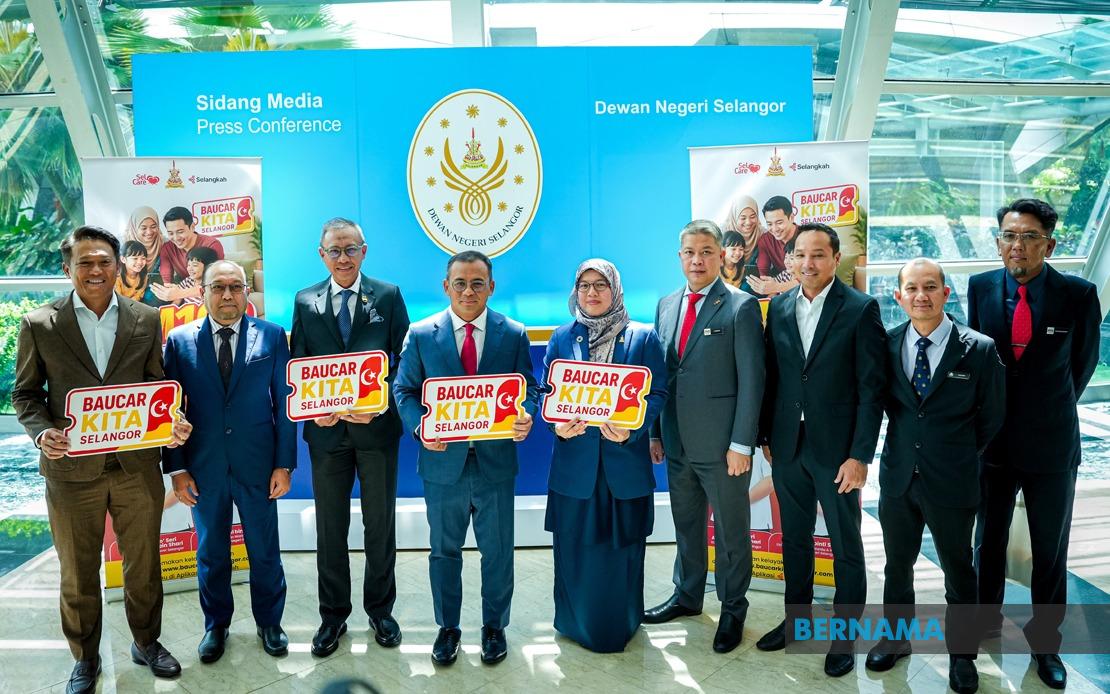
The Selangor state government has moved to clarify the status of land arrangements for the Port Klang Authority's third terminal project on Pulau Carey, confirming that property-related matters have been conclusively settled since December of the previous year. Menteri Besar Datuk Seri Amirudin Shari disclosed these details during a press conference at the Selangor State Legislative Assembly Building, emphasizing that the state administration has fulfilled its obligations regarding site acquisition and preparation.
The land portfolio assembled for this substantial maritime infrastructure initiative comprises multiple components spanning considerable territory. The development plan incorporates approximately 1,012 hectares of seabed area that will form the foundation of the expanded port facility. Contributing to the terrestrial requirements are 688 hectares held under the ownership of Yayasan Selangor, with an additional 86 hectares available for immediate development once other procedural requirements are satisfied. This aggregated landholding demonstrates the considerable scale of the undertaking and the complexity of coordinating multiple property interests across public and semi-public entities.
Despite the completion of these foundational arrangements, the initiative has encountered a significant bottleneck at the federal level that has effectively halted forward momentum. Amirudin explained that although the state government stands ready to proceed with active development work—having maintained this preparedness since the beginning of the calendar year—the project now awaits critical determinations from the national administration. The impediment centres on questions of governance structure and regulatory authority, particularly regarding which government tier will oversee the port operations and what approval mechanisms will govern the undertaking.
The complication arises from a legal assessment that has created ambiguity about the project's viability under current frameworks. According to a legal opinion obtained during the planning process, federal law stipulates that port facilities must remain under federal ownership and cannot be structured as privately controlled operations. This interpretation has introduced uncertainty about whether the originally envisioned arrangement can proceed, necessitating fundamental reconsideration of how the terminal development will be organized and executed.
Transport Minister Anthony Loke Siew Fook had previously indicated, in a statement made on June 18, that Selangor was actively engaged in refining approaches to address the land-related complications. The ministry confirmed that coordinated discussions were underway between his department, the state administration, and commercial partners to devise an appropriate concession framework that would satisfy legal requirements while enabling project advancement. These negotiations underscore the administrative intricacy of delivering major infrastructure initiatives that necessarily involve multiple jurisdictional layers and private-sector participation.
The Selangor State Development Corporation, the state's principal development agency, has initiated parallel discussions with the relevant commercial entity responsible for implementing the terminal expansion. These conversations aim to establish the operational and financial parameters that would govern site preparation and subsequent construction activities. The involvement of this development corporation reflects the state's strategic positioning of itself as facilitator and stakeholder in the initiative, rather than a passive provider of land resources.
Amirudin stressed that the fundamental challenge now requires federal-level decision-making about the project's future direction. The state government is specifically seeking clarity on whether the federal administration intends to assume direct control of the project through assumption of ownership, or alternatively whether it will grant targeted approvals that would permit the private sector to proceed with construction and operations under a defined concession arrangement. This binary choice will materially shape the timeline and structure of the entire endeavor.
The urgency of reaching such determinations is underscored by the distinctive technical characteristics of the development. Unlike conventional port expansions that can be undertaken on existing terrestrial properties, the Pulau Carey terminal will require extensive land reclamation activities to create the necessary foundation. This seabed conversion process demands significant capital investment and extended execution timeframes, making delays in approvals particularly consequential from both financial and scheduling perspectives. Every month of postponement translates into delayed commencement of the reclamation work that must precede structural development.
For Malaysian commerce and regional supply chains, the implications of this terminal project extend considerably beyond Selangor's borders. Port Klang currently ranks among Southeast Asia's busier container facilities, and the third terminal represents a critical capacity expansion that logistics operators and shipping lines have been anticipating. The delay in securing federal authorization has begun to create uncertainty about when enhanced capacity will become available, potentially affecting long-term planning by companies reliant on the port for export and import activities.
The project also carries strategic significance within Malaysia's broader infrastructure development agenda. As a major gateway for containerized trade and automotive shipments serving not only the peninsula but also connecting to wider regional commerce, port efficiency directly influences the country's competitiveness as a logistics hub. The protracted approval process, while reflecting appropriate caution regarding legal and jurisdictional matters, highlights the complex institutional coordination required to advance major infrastructure undertakings in the Malaysian federal system.
Stakeholders in the maritime and logistics sectors have been monitoring progress on the third terminal particularly closely given the capacity constraints that have occasionally affected port operations during peak shipping periods. Port Klang's role as a critical node in regional supply chains means that delays in expansion work have ripple effects across multiple industries. The clarification from the state government regarding completed land preparations may provide some reassurance to project proponents, but the absence of federal approval leaves fundamental questions about timelines and implementation structures unresolved.
The path forward appears to hinge on federal transport ministry deliberations about the optimal governance model for the facility. That determination will likely influence not only the pace of development but also the broader portfolio of port infrastructure initiatives across Malaysia. Should the federal government elect to assume ownership, the project's financing, operational philosophy, and commercial arrangements would all require restructuring. Conversely, granting specific approvals to enable private-sector-led development under a defined concession framework would preserve the business model currently envisioned while clarifying the regulatory environment within which operators must function.