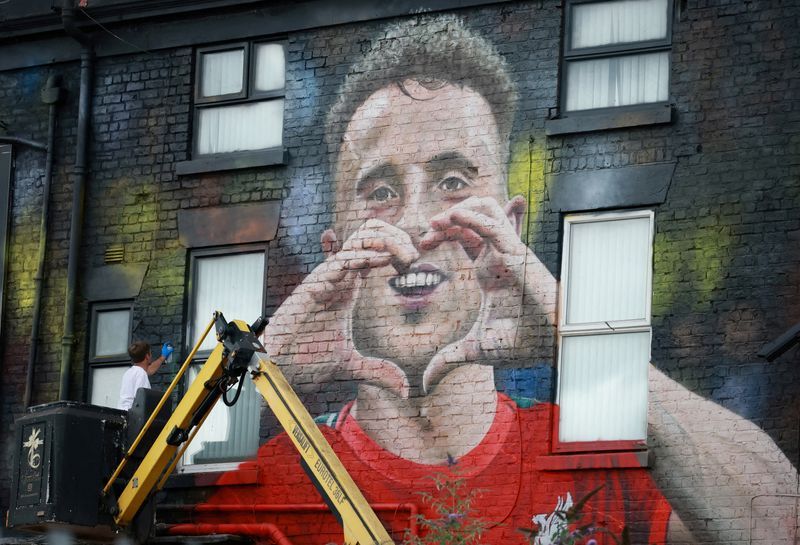
Portugal's journey through the World Cup in Canada has been inseparable from a profound sense of loss. On Thursday, when the team squares off against Croatia in the tournament's round-of-32 stage in Toronto, the moment will carry deep significance back home. While the match takes place on July 2 in the Canadian timezone, Portugal's clocks will have already crossed into July 3 — marking precisely twelve months since the tragic death of Diogo Jota, the Liverpool forward and one of the nation's most celebrated footballers.
Jota, aged 28, and his brother Andre Silva perished in a devastating car accident in northwestern Spain when their Lamborghini left the roadway and became engulfed in flames. The incident sent shockwaves through Portuguese football and the broader sports community, leaving teammates, fans, and officials grappling with the sudden loss of a player whose combination of technical ability, goal-scoring instinct, and unwavering commitment to his country had made him indispensable to the national squad.
The Portuguese Football Federation and the team's management have deliberately ensured that Jota's memory remains woven into the fabric of their World Cup campaign. Manager Roberto Martinez has spoken of Jota in reverent terms, describing him as "our light," and took the symbolic step of naming him as an honorary member of the squad competing in North America. This decision goes beyond mere gesture; it represents an acknowledgment that Jota remains part of the team's identity and purpose during the tournament.
The tributes extend across multiple dimensions of the squad's presence in Canada. Midfielder Ruben Neves, who shared a close personal bond with Jota, has assumed the number 21 shirt as a living memorial during matches. Beyond the pitch, Portugal's Prime Minister Luís Montenegro presented the players with wristbands bearing Jota's name, a tangible symbol of national unity and remembrance. During the opening World Cup fixture against DR Congo in Houston, an emotional ceremony honoured Jota's memory, and his parents Isabel and Joaquim Silva were visibly moved as they witnessed the tribute unfold in the stadium.
The emotional weight of approaching this anniversary has not escaped the players themselves. Defender Vitinha articulated the complex motivation driving the team heading into the Croatia fixture, acknowledging that beyond the standard competitive drive exists a deeper purpose. The match carries significance not merely for advancing through the tournament but for honouring a teammate whose absence is keenly felt. For Vitinha and his colleagues, the match becomes an opportunity to channel their grief and respect into performance, creating a narrative in which sporting achievement becomes intertwined with remembrance.
Jota's impact extended beyond Portuguese football circles. In Scotland's World Cup delegation, the loss resonated deeply with Andy Robertson, the Liverpool captain and close friend who had shared years of competition and camaraderie with Jota at club level. When Scotland secured their World Cup qualification spot in November, Robertson's thoughts immediately turned to his departed friend. Subsequently, Jota's widow, Rute Cardoso, reached out to Robertson with a poignant message that captured the complex emotions surrounding the tournament. Her words — acknowledging that Jota's presence would accompany the Scottish players through their thoughts, steps, and hearts — demonstrated how the tragedy transcended national boundaries and created bonds of shared remembrance across rival nations competing in the same tournament.
The timing of Thursday's match introduces another layer of emotional significance. As the opening whistle sounds in Toronto, midnight will pass in Portugal, marking the precise moment when the anniversary shifts from the previous day into July 3. This convergence of sporting action and commemorative time creates a poignant backdrop, with the match itself becoming a form of collective memorial observed across Portuguese communities globally.
For many of Portugal's current squad members, Jota represented more than simply a teammate or rival for playing time. He embodied a generation of Portuguese footballers who had sustained the nation's position among Europe's elite teams. His presence in the dressing room carried weight beyond his statistical output; he was a trusted figure whose composure under pressure and tactical intelligence made him invaluable to Roberto Martinez's planning. During his international career, Jota scored 14 goals across 49 appearances for Portugal, establishing himself as a reliable performer in crucial matches. Had circumstances been different, his experience and quality would almost certainly have secured him a place in this World Cup squad organically, making his absence feel particularly acute.
The psychological dimension of carrying Jota's memory through a major tournament cannot be underestimated. In the dressing room, on the training pitch, and certainly during matches, his absence serves as a constant reminder of football's capacity to connect people across time and circumstance, even as life's fragility intrudes upon the sport's structured predictability. While the passage of a year has not diminished the pain felt by those closest to him, the football world necessarily continues its relentless forward motion, finding ways to incorporate remembrance into ongoing competition.
Portuguese communities scattered across North America have likewise embraced the opportunity to honour Jota's legacy during the tournament. Miguel De Silva, a Portuguese-Canadian who operates a sports establishment in Toronto's Portuguese neighbourhood, articulated a perspective shared by many supporters. He suggested that the convergence of the anniversary with the team's crucial match would serve as additional motivation for Portugal's players, transforming grief into competitive energy. For De Silva and others like him, Jota's enduring popularity among Portuguese fans ensures that his memory transcends individual sadness to become a collective source of inspiration and determination as the team pursues tournament success.

