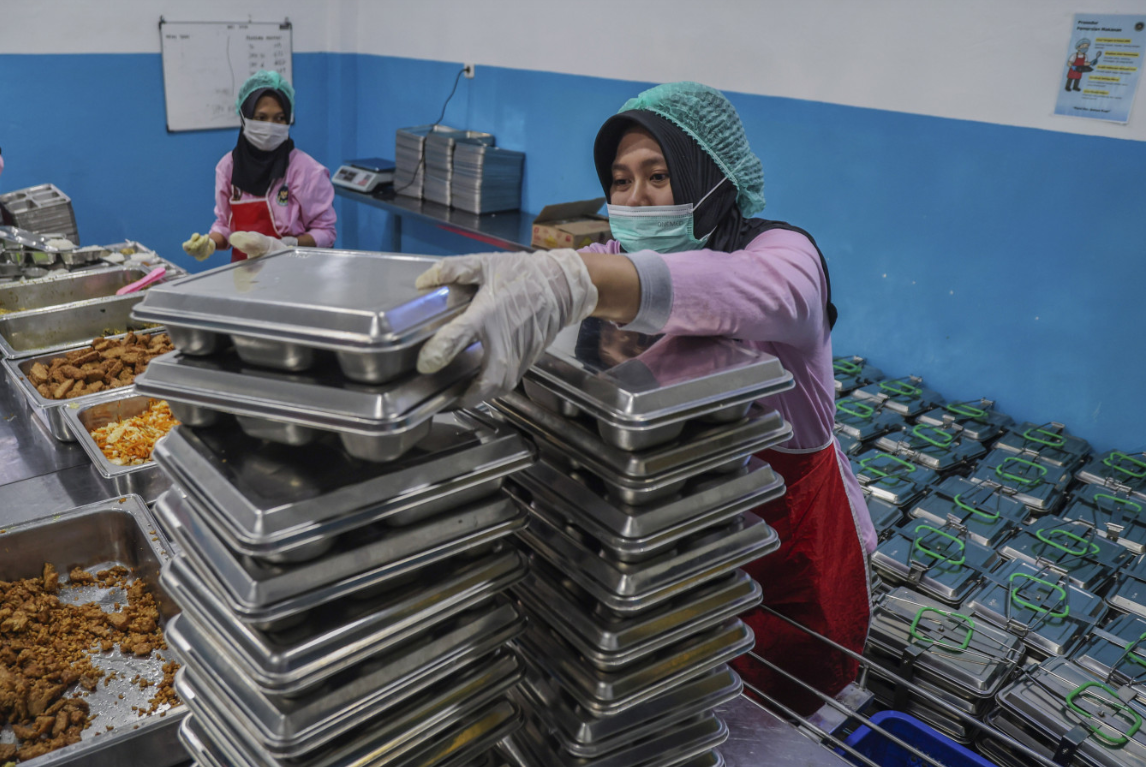
President Prabowo Subianto is undertaking a fundamental reassessment of two cornerstone initiatives that have become lightning rods for public controversy and escalating political pressure. The decision to review the free nutritious meal programme and the Red and White cooperative scheme reflects growing acknowledgment within his administration that flagship policies require recalibration in response to widespread concerns about implementation, cost, and unintended consequences.
The pivot emerged during a lengthy meeting at the Presidential Palace on Wednesday with senior cabinet officials responsible for executing these programmes. The National Nutrition Agency, tasked with managing the school meals initiative, received explicit presidential directives to conduct a methodical examination of current rollout methods within a compressed one-month timeframe. This timetable underscores the administration's recognition that delays could further erode public confidence in programmes already facing considerable scrutiny.
According to BGN deputy chief Agustina Arumsari, the President stressed the importance of thorough examination before implementing any modifications. Her remarks highlighted an important tension within the policy framework: the desire to target assistance more effectively while avoiding stigmatisation or division within school communities. The concern about students sitting alongside classmates receiving free meals while others do not reflects deeper anxieties about social cohesion and psychological welfare in educational settings—an area often overlooked in policy discussions dominated by fiscal considerations.
The eligibility criteria represent the most substantive element under review. Officials are seriously considering restricting benefits to lower-income households, effectively narrowing the current beneficiary pool from the intended 83 million recipients. This represents a fundamental departure from the initial universal approach, suggesting the government recognises that blanket provision across all income levels strains both budgets and logistical capacity. Implementation in economically mixed schools presents particular challenges that officials acknowledge require careful navigation.
Alternative delivery mechanisms are also on the table, with school canteens emerging as a potential replacement for dedicated free meal kitchens. This shift would decentralise operations and potentially improve sustainability by integrating subsidised provision into existing school infrastructure rather than maintaining parallel systems. Such an approach could reduce administrative overhead whilst maintaining nutritional objectives, though questions remain about whether canteen operators possess requisite expertise in large-scale meal provision for vulnerable populations.
The financial dimensions underscore why such comprehensive review became necessary. Budgeted at Rp 268 trillion rupiah—equivalent to approximately US$19.5 billion for 2026 alone—the free meals initiative represents an extraordinary expenditure that inevitably attracts intense scrutiny. For Malaysian policymakers contemplating similar universal welfare provisions, Indonesia's experience offers cautionary lessons about the fiscal sustainability and operational complexity of programmes serving such vast populations across archipelagic geography with widely varying infrastructure capabilities.
The original rationale remains valid: combating child malnutrition and stunting represents a legitimate public health imperative. Yet recent months have exposed serious complications that undermine political viability. Multiple food poisoning incidents generated alarming headlines, whilst a corruption investigation ensnaring senior National Police and Indonesian Military officials damaged institutional credibility. Concurrent street protests demanding programme suspension demonstrated that even ostensibly popular welfare initiatives can provoke public anger when implementation falters.
Parallel difficulties plague the Red and White cooperative scheme, particularly following deaths during mandatory military-style leadership training. These fatalities transformed a rural economic development initiative into a humanitarian controversy, forcing the administration onto the defensive precisely when maintaining momentum was essential. The expansion announced by Coordinating Food Minister Zulhas Hasan—positioning cooperatives as primary distribution channels for government assistance programmes—represents an attempt to preserve the concept whilst addressing implementation concerns.
The cooperative's expanded mandate includes agricultural support mechanisms whereby government purchasing guarantees protect farmers when market prices collapse. This intervention reflects legitimate agricultural policy concerns in a developing economy where commodity price volatility disrupts rural livelihoods. However, integrating multiple functions—welfare distribution, agricultural support, and military-supervised management training—creates operational complexity that may exceed institutional capacity, particularly given the recent training-related casualties that already damaged the programme's credibility.
For regional observers, Indonesia's struggles with flagship welfare programmes carry broader significance. Malaysia and other Southeast Asian nations pursuing ambitious poverty alleviation or nutritional improvement initiatives must recognise that scale creates distinct governance challenges. Moving from pilot programmes to serving tens of millions requires not merely budgetary commitment but fundamental institutional strengthening, transparent performance monitoring, and willingness to adjust implementation methods based on evidence rather than initial assumptions.
The presidential directive for careful, deliberate review rather than hasty modification suggests the administration understands that credibility depends on demonstrable competence. Whether the one-month deadline allows sufficient analysis to generate meaningful improvements remains uncertain. However, the very fact that Prabowo is ordering reassessment signals recognition that governing involves continuous course correction, particularly when popular mandates encounter operational realities that complicate implementation and generate public resistance.

