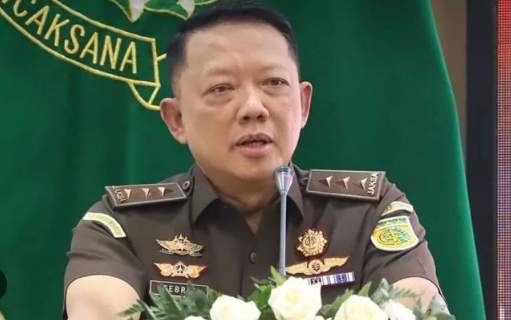
Indonesian President Prabowo Subianto arrived in office with a forceful anti-corruption agenda, explicitly demanding that government officials "clean themselves up" or face intervention from law-enforcement agencies. Less than two years into his presidency, that commitment is confronting perhaps its most delicate challenge yet: the corruption investigation into Febrie Adriansyah, who until recently served as the nation's deputy attorney general for special crimes and wielded extraordinary influence over Indonesia's most significant fraud prosecutions.
The case has thrust into the spotlight a fundamental governance challenge facing Indonesia's law-enforcement architecture—how to investigate senior officials embedded within the very institutions tasked with pursuing corruption cases. Police seized approximately US$26 million in cash and gold bars from a property owned by Febrie and formally named him a suspect in money-laundering investigations. Yet despite these serious allegations, the former prosecutor has remained at liberty, a decision that has sparked considerable legal and political controversy about the handling of the inquiry.
What has provoked the most intense scrutiny among legal professionals is not the allegations themselves or Febrie's continued freedom, but rather a procedural decision taken by the police to transfer the investigation to the Attorney General's Office—the very institution where Febrie spent much of his distinguished career. This move has raised fundamental questions about whether such a transfer has any constitutional foundation and whether it represents a pragmatic coordination between agencies or an institutional protectionism that could undermine the integrity of the investigation.
Mahfud MD, the former Constitutional Court Chief Justice, has directly challenged the legality of this transfer, asserting that Indonesia's criminal procedure code contains no provision permitting an active police investigation to be handed to prosecutors. He warned that such a procedural irregularity could provide grounds for a pretrial challenge that might jeopardise the entire case. The parliamentary response has been equally cautious, with lawmakers establishing a dedicated working group to monitor developments and some legislators urging the Attorney General's Office to establish an independent prosecutorial team insulated from potential conflicts of interest.
Academic observers have articulated the underlying institutional challenge with particular clarity. Zaenur Rohman, an anti-corruption scholar at Gadjah Mada University, characterised the case transfer as essentially a political settlement designed to ease tensions between competing law-enforcement agencies rather than a decision anchored in legal principle. The Corruption Eradication Commission, an independent state agency within the executive branch, would be the more appropriate body to handle such a sensitive investigation, Rohman suggested, given its structural independence from the institutional conflicts that plague the police and prosecutors.
The sensitivity of pursuing one of Indonesia's most influential prosecutors cannot be overstated. Throughout his tenure leading the Attorney General's Office's Special Crimes Division, Febrie oversaw investigations into some of the nation's largest corruption cases, including major inquiries involving the state-owned energy company Pertamina, the tin producer Timah, the national airline Garuda Indonesia, Prabowo's signature free-meals programme, and the former Education Minister Nadiem Makarim. Few prosecutors commanded greater authority over politically consequential investigations, making his investigation equally consequential for the administration's credibility.
Coordinating Minister Yusril Ihza Mahendra has defended the case transfer as a measure to enhance investigative efficiency, yet he candidly acknowledged the public concern that it could constitute what Indonesians call "oranges eating oranges"—an idiomatic expression suggesting that one institution protects its own. Yusril disclosed that Prabowo personally convened meetings with both the national police chief and the attorney general to provide direction on managing the transition, indicating that the highest level of government is intimately involved in resolving this institutional tension.
The underlying structural problem afflicting Indonesian law enforcement is the persistent overlap in jurisdiction between multiple agencies pursuing corruption cases. The police, the Attorney General's Office, and the Corruption Eradication Commission all maintain investigative powers in fraud matters, creating perpetual competition for influence, public visibility, and control over high-profile inquiries. This institutional fragmentation has been further complicated by recent legal amendments, including a 2025 revision to military law that permits active-duty military officers to serve in the Attorney General's Office without retiring from the armed forces—a change that has expanded the military's institutional presence within the prosecutor's apparatus.
The Prabowo administration's anti-corruption campaign has been marked by theatrical displays of seizures at televised press conferences, showcasing confiscated cash, precious metals, and luxury assets alongside investigations of state-owned enterprises, senior former ministers, and the free-meals programme. While such visibility may serve political purposes in demonstrating executive commitment to tackling graft, the handling of the Febrie investigation suggests that institutional power dynamics and interagency rivalries continue to constrain enforcement outcomes in ways that may not always align with transparency and legal integrity.
Aditya Perdana, a political analyst at the University of Indonesia, has observed that while the sequence of events does not explicitly demonstrate institutional conflict, the pattern itself communicates an underlying story about how competing agencies navigate sensitive cases. The Attorney General's Office's recent directive ordering regional prosecutors to cease collecting data on the free-meals programme—issued shortly after police named an active brigadier general as a suspect in related inquiries—reinforces perceptions of tactical manoeuvering between institutions.
Jacqui Baker, a specialist in Southeast Asian politics at Murdoch University, contextualises the case within a broader pattern of successive Indonesian presidents attempting to maintain equilibrium among police, prosecutors, and military institutions rather than permitting any single agency to consolidate dominance over criminal investigation. She emphasises that investigative authority over corruption cases represents a core source of institutional power, making such jurisdictional disputes inherently consequential for the balance of authority across the Indonesian state apparatus.
The investigation into Febrie Adriansyah will likely determine whether Prabowo's anti-corruption platform can withstand the institutional pressures that have historically compromised graft prosecutions in Indonesia. The case represents a critical test of whether procedural integrity and genuine accountability can overcome the tendency of institutions to protect prominent figures from their own ranks—a test that carries implications not only for Indonesia's anti-corruption credibility but also for the Southeast Asian region's broader governance trajectory.

