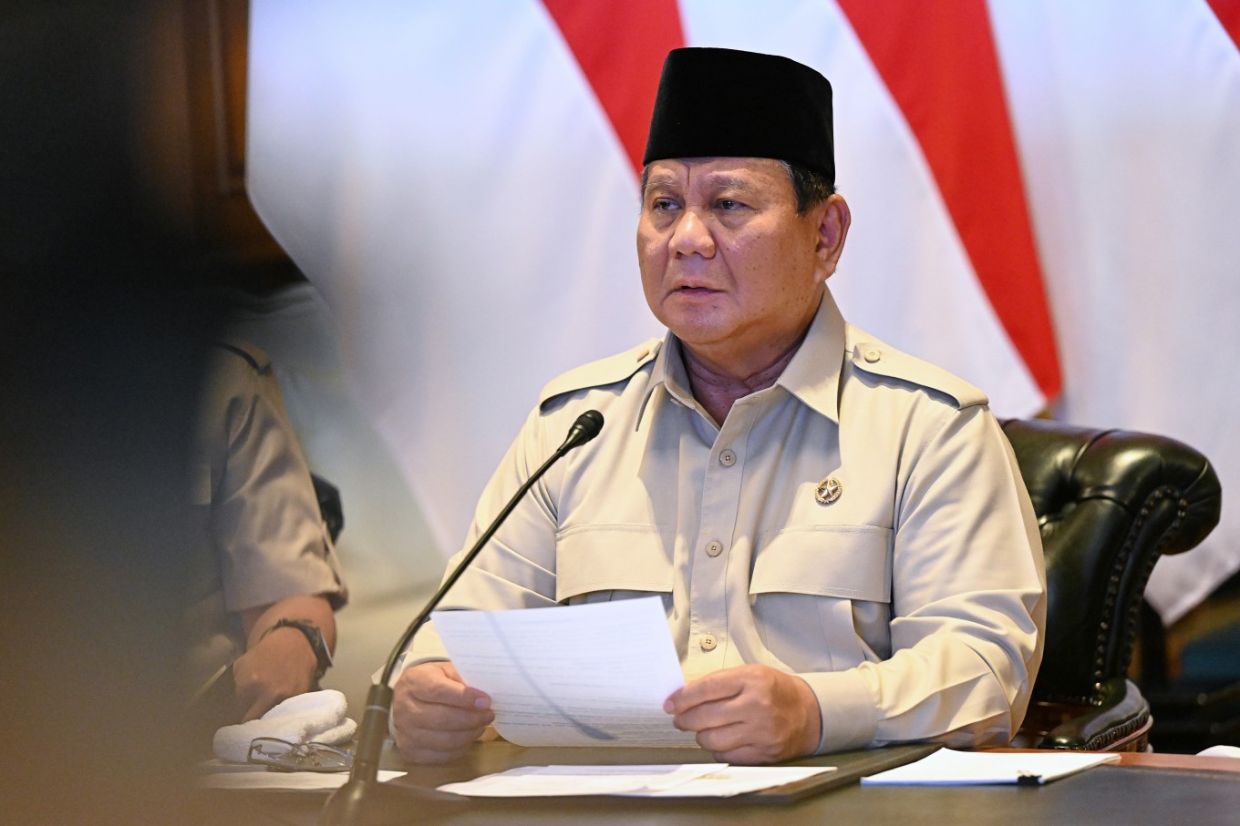
The unusually extended political honeymoon enjoyed by Indonesian President Prabowo Subianto has definitively ended, with his approval rating collapsing to 51.1 percent in July 2026, down from an exceptional 81.2 percent just eight months earlier. The steep decline, documented by multiple independent polling firms, marks the moment when democratic normalcy has reasserted itself after an extraordinarily long stretch of public goodwill that few world leaders have ever experienced.
What made Prabowo's initial popularity period remarkable was not merely that he won the 2024 presidential election, but that the approval boost extended far longer than historical precedent would suggest. His predecessor, Joko Widodo, achieved his personal approval high of 81.7 percent only deep into his second term in May 2023, years after taking office. Prabowo reached comparable heights within his first eighteen months, sustained by tangible social spending initiatives, particularly the free nutritious meal programme rolled out in January 2025. Through most of 2025, polling firms consistently recorded his support in the 70 to 80 percent range, a plateau that proved far more durable than the early trajectories typically observed in Indonesian presidential politics.
The trajectory stands in sharp contrast to Widodo's own opening chapter. When Widodo took office, his inauguration approval of 62 percent fell precipitously to just 41 percent shortly afterward, following a politically damaging decision to raise fuel prices. Prabowo avoided any such early shock. His administration managed the initial period with sufficient care to prevent the customary dramatic reversal that has claimed most recent Indonesian presidents and numerous international counterparts. Donald Trump's second term began in January 2025 with a historically anemic 47 percent approval, while both Barack Obama and Joe Biden experienced early, steep declines from their opening highs. Prabowo's extended plateau at 70-80 percent represented an anomaly in contemporary democratic politics.
Yet the laws of political gravity have finally caught up. The July 2026 survey from Saiful Mujani Research and Consulting, conducted between July 5 and 19 among 749 respondents, revealed the depth of the shift. Dissatisfaction surged to 46.9 percent from a mere 16 percent, a 30-point deterioration spanning nine months. SMRC executive director Deni Irvani attributed the collapse to worsening public perceptions across three critical areas: economic management, political governance, and law enforcement. Positive assessments of the economy dropped to just 15.7 percent, while political approval fell from 35.8 percent in November 2025 to 13.5 percent in July 2026. Only law enforcement perceptions remained relatively stable at 26.4 percent, suggesting a narrow foundation for residual support.
The decline appears genuine and not an artefact of methodological bias, despite Prabowo supporters pointing to SMRC founder Saiful Mujani's public criticism of the administration. While such concerns merit acknowledgment, they become less persuasive when cross-checked against other independent research. Indikator Politik Indonesia, operating independently, surveyed 4,250 respondents between July 14 and 24 and found satisfaction at 49.5 percent, down from 68 percent in April 2026 and 81 percent in December 2025. The convergence of two separate polling operations on nearly identical findings strengthens confidence that the underlying shift reflects genuine changes in public sentiment rather than institutional bias.
Underlying the approval collapse is a widening chasm between campaign rhetoric and governing reality. Prabowo promised to curtail corruption and accelerate GDP growth from its recent 5 percent to an ambitious 8 percent annually. These commitments are now colliding with observable economic headwinds: a weakening rupiah, a sluggish stock market, and growing public anxiety about government spending levels and the independence of the central bank. For Malaysian and broader Southeast Asian observers, the Indonesian situation mirrors challenges across the region, where post-election enthusiasm frequently encounters the difficult realities of economic management and implementation capacity.
Prabowo remains a highly visible president, deploying frequent televised speeches and a communications apparatus designed to maintain public prominence. His willingness to respond directly and forcefully to critics and journalists kept him in constant public view during the initial phase when the underlying economic narrative remained sufficiently favourable to allow rhetoric to compensate for implementation gaps. But last month's numbers suggest this rhetorical strategy has reached its ceiling. Public judgment ultimately derives not from presidential visibility on television but from daily lived experience: food prices, exchange rates, employment prospects, the reliability of promised free meal programmes, and whether public services actually improve.
A government official with access to Presidential Palace discussions confirmed that Prabowo has been actively engaged with economic policy responses. The administration convened the National Economic Council to explore improvements in economic policy, the domain where public satisfaction has deteriorated most sharply. Officials indicated that social assistance programmes face expansion, though specifics remain under discussion. Simultaneously, the government is bracing for potential climate disruption, with forecasts suggesting an El Niño event could trigger broader economic turbulence, necessitating precautionary measures such as holding fuel prices steady rather than increasing them.
Prabowo's inner circle has also begun consulting with the polling firms that guided his successful 2024 presidential campaign. These discussions have reportedly produced recommendations that the President strengthen his public communication strategy and conduct comprehensive programme reviews, particularly for the free nutritious meal programme and the Red and White Cooperatives initiative, both of which have encountered significant implementation difficulties. One pollster involved in these consultations suggested that recovery remains achievable if improvements occur within the President's immediate advisory group, implying that the challenge is primarily managerial and communicative rather than structural or irreversible.
Historically, the trajectory Prabowo is now experiencing represents the norm rather than a crisis. Presidential approval declines during the second year of a term are virtually universal in democratic systems, driven by the inevitable gap between campaign promises and governing constraints. What distinguishes Prabowo's case is the magnitude of the fall and its speed rather than its existence. Some recent Indonesian presidents have recovered from steeper drops, though the 30-point decline across nine months, corroborated by multiple pollsters, indicates that the goodwill generated by early social spending has definitively exhausted itself.
The critical variable going forward centres not on presidential communications or public visibility, but on tangible improvements in the economic, political, and law enforcement dimensions that surveys identified as the primary sources of dissatisfaction. For Malaysia and other regional economies watching Indonesia's trajectory, the case illustrates how social spending initiatives, while electorally valuable, prove insufficient as sustained foundations for approval if underlying macroeconomic conditions deteriorate. The pressure on Prabowo to deliver measurable improvements has intensified considerably, with the window for rhetorical compensation having firmly closed.

