President Prabowo Subianto's signature free nutritious meals initiative has been struck by fresh institutional instability after the head of the National Nutrition Agency (BGN), Nanik Sudaryati Deyang, stepped down citing serious health concerns. Her departure marks the third leadership change at the embattled agency in less than a year, compounding existing questions about the political flagship programme's management, governance framework and operational capacity.
Nanik disclosed her resignation through a Facebook statement on Wednesday, explaining to Prabowo that she required overseas medical treatment for a heart condition, with the President promptly accepting her departure. The circumstances surrounding her exit reveal deeper tensions within the administration. In a preceding post the evening before, Nanik described how physicians had identified arterial blockage and directly attributed her cardiac deterioration to overwhelming stress from managing the agency's gargantuan budget.
Her language exposed the psychological toll of the role, depicting the experience as causing "acute trauma" and comparing financial stewardship of public resources to "standing on the edge of a steep cliff" where minimal error becomes catastrophic. Nanik recounted implementing extreme caution in her duties, refusing to independently authorise transactions and subjecting every decision to repeated scrutiny. This defensive posture, while evidencing her concern for probity, simultaneously illustrates the operational paralysis that bureaucratic anxiety can produce within large government bodies tasked with delivering complex social programmes.
Nanik's abrupt exit follows an even more dramatic upheaval in June when her predecessor Dadan Hindayana was arrested alongside two subordinates on corruption allegations relating to procurement irregularities and financial mismanagement within the multitrillion-rupiah scheme. Prabowo had dismissed Dadan days prior, then promoted Nanik, who served as deputy, to restore institutional credibility following Attorney General investigations. That confidence-building exercise lasted fewer than eight weeks, a timeframe suggesting structural problems transcend individual leadership.
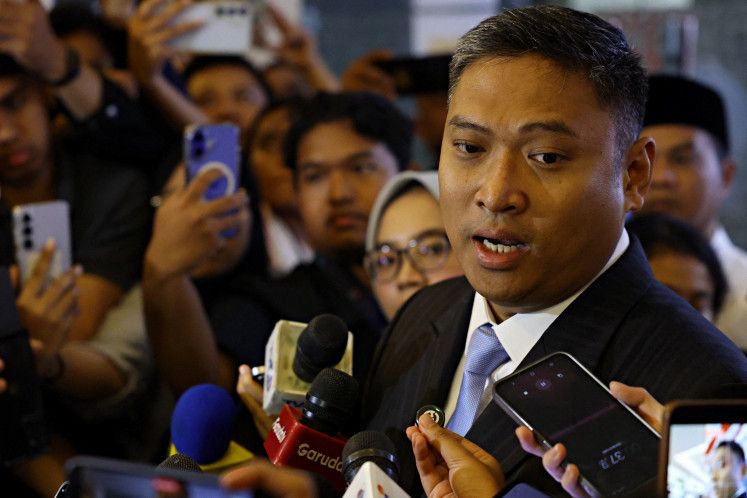
Within hours of accepting Nanik's resignation, Prabowo appointed Deputy Agriculture Minister Sudaryono as the replacement BGN chief during a State Palace ceremony Wednesday. Sudaryono represents a notably different leadership profile—a Gerindra Party politician who previously served as Prabowo's aide during the 2010s. His selection immediately raised questions about whether the administration was retreating from technocratic approaches toward political stewardship of the embattled agency. Sudaryono publicly pledged to enhance transparency and accountability, committing to digitising manual processes and eliminating operational opacity, declaring that "nothing should happen behind closed doors anymore." Yet his background as a partisan political ally, coupled with the speed of succession, suggested institutional priorities may favour political control over independent administration.
State Secretary Prasetyo Hadi acknowledged that these circumstances represented outcomes the administration "had not hoped for," noting that Prabowo had ordered comprehensive reforms following the corruption investigation. Prasetyo justified Sudaryono's appointment by emphasising his involvement in developing the free meals programme during its inception phase, positioning continuity of vision as his principal qualification rather than credentials in public health or nutrition.
The broader context reveals an initiative genuinely struggling with both conception and execution. Since launching in early 2025, the programme has confronted mounting operational crises including widespread food safety incidents with repeated mass poisoning episodes documented across Indonesia. Nanik attempted to impose corrective measures through a kitchen moratorium while reviewing approximately 28,000 existing facilities nationally. This intervention, though well-intentioned for quality assurance, triggered fierce protests from thousands of prospective kitchen operators who had invested substantial capital expecting to participate.
Budgetary retrenchment has accompanied operational reorientation. On Tuesday, BGN announced reducing the provisional 2026 budget to Rp229 trillion (US$12.8 billion), down from the originally allocated Rp268 trillion. The government simultaneously contracted beneficiary targets to 62.7 million people, substantially below the initial projection of 82.9 million encompassing schoolchildren, toddlers and pregnant women. This represented a fundamental recalibration of programme ambition—previously the administration had allocated Rp335 trillion for 2026 to serve that larger population.
BGN deputy chief Agustina Arumsari framed the contraction as strategic repositioning, stating that service quality improvement now supersedes numerical beneficiary expansion, effectively removing fixed targets pending stabilisation. This rhetorical shift masked substantive programme downsizing driven by accumulated implementation failures and resource constraints that had become politically untenable.
Political analyst Wasisto Raharjo Jati identified systemic planning deficiencies at the programme's foundation, arguing that despite elevated political prominence, the initiative reflected "shortcomings in its planning." Wasisto characterised the free meals scheme as fundamentally misaligned between political aspiration and technical preparation, noting that institutional development had been "driven more by political ambition than technocratic preparation." This assessment resonates across Southeast Asia, where similar flagship social programmes frequently struggle when political timeline pressures override methodical implementation sequencing.
For Malaysian observers, Indonesia's experience offers cautionary implications. Large-scale social provisioning programmes require robust administrative infrastructure, independent procurement oversight, and insulation from political patronage dynamics. The Indonesian episode demonstrates how rapid leadership turnover, particularly toward political appointees, can exacerbate rather than resolve governance crises. The successive arrests, resignations and health-related departures signal dysfunction rooted in institutional design rather than individual competence, a distinction crucial for assessing whether reforms will prove substantive or cosmetic. Sudaryono's appointment suggests Prabowo may be prioritising political control over the programme's future trajectory, a choice likely to persist underlying vulnerabilities regardless of transparency commitments.

