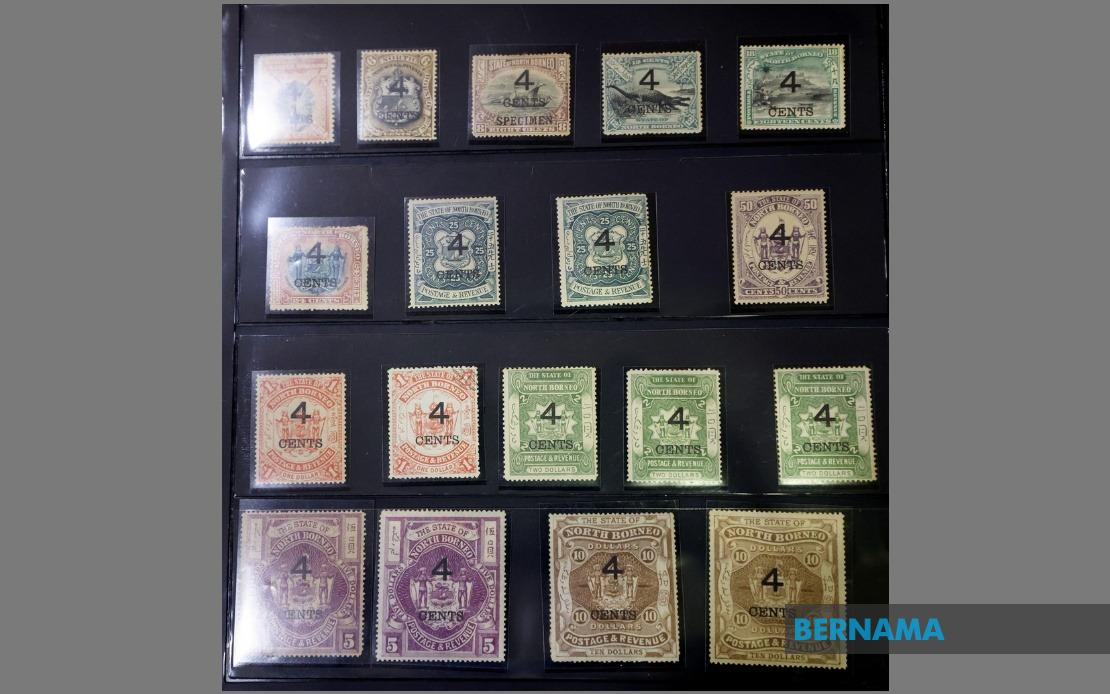
Kota Kinabalu faces a pressing cultural challenge: the preservation of North Borneo stamps issued over a century ago, at a time when fewer people collect them and fewer still understand their historical significance. These philatelic artefacts, which span from 1883 to 1963, represent more than postal documentation—they embody the development trajectory of Sabah during pivotal periods of British colonial rule and territorial transformation. With demand declining and prices rising sharply at antique dealers across the state capital, the window for safeguarding this heritage collection is narrowing considerably.
Dr Shari Jeffri, founder and president of the Borneo History Association, champions the preservation cause with particular urgency. At 56 years old, Jeffri characterises the dispersed philatelic collection across the region as a "living archive" essential for transmitting knowledge about Sabah's past to younger generations. His perspective underscores a fundamental tension facing heritage preservation in Malaysia: as traditional collecting practices fade, institutional and individual efforts must intensify to prevent irreplaceable records from vanishing. The stakes are high because each stamp, properly contextualised, illuminates specific moments in Sabah's colonial and post-colonial history that might otherwise remain undocumented.
Interest in stamp collecting has contracted significantly among contemporary audiences. Jeffri observes that the cohort actively pursuing philately continues shrinking, a pattern replicated across Southeast Asia where digital communication has displaced the correspondence that once drove stamp production and consumption. This generational shift creates cascading losses: not merely the loss of objects themselves, but the loss of expertise required to authenticate, value, and interpret them correctly. Fewer young people possess the foundational knowledge to distinguish genuine artefacts from reproductions, understand the technical details that determine rarity, or appreciate the narratives embedded within designs and postal markings.
A recent survey of antique retailers throughout Kota Kinabalu revealed that North Borneo stamps have become genuinely difficult to locate, with prices reflecting their scarcity and desirability among the remaining collector base. The investigation uncovered specimens including a six-cent denomination featuring Queen Elizabeth II alongside a Dusun woman, and a ten-cent issue documenting logging operations, both produced between 1954 and 1961. These particular examples illustrate how stamps functioned as visual records of colonial administration and economic activity, capturing moments that formal governmental archives might overlook. Their rarity amplifies their documentary value, making their preservation increasingly urgent.
Jeffri's personal journey illuminates how philatelic knowledge transmits across generations through family channels. His grandfather, employed at the Recreation Club Jesselton during the 1920s, initiated the family collection after observing British administrators who pursued stamp collecting as leisure activity. This accidental inheritance transformed into lifelong passion when Jeffri encountered stamps at age seven and formalised his collecting practice during secondary school years. His narrative exemplifies how cultural interests become embedded within family structures, and how disruptions to these transmission mechanisms—through migration, changing interests, or simple disengagement—threaten knowledge loss.
Among Jeffri's most prized possessions are two two-cent North Borneo stamps from the 1883 inaugural issue, featuring brown sailing boats and bearing original postal cancellations. For serious philatelists, the 1883 series represents a foundational collection element; these stamps command respect because they constitute the earliest North Borneo postal issue and survive in diminishing quantities. Jeffri emphasises that stamps function as historical documents rather than mere postage, with each denomination, design variant, and cancellation type narrating specific chapters of Sabah's development during defined historical periods.
The British North Borneo Chartered Company introduced these stamps in 1883, maintaining them through approximately 52 years of subsequent use and design evolution. Initially, the designs incorporated symbolic imagery—lions, boats, and tigers—until around 1892, establishing visual identity for the territory. Beginning in 1894, designers shifted toward depicting Borneo's distinctive natural environment, featuring indigenous flora, fauna, and wildlife that both distinguished the colony visually and communicated its ecological character to international postal systems. The 1935 redesign further crystallised Sabah's identity through enhanced imagery, while denominations eventually ranged from two sen to one dollar, accommodating various postal requirements across different correspondence types and distances.
The technical dimensions of stamp preservation present substantial challenges that most casual observers overlook. Jeffri stresses that maintaining collections in acid-free albums proves essential for preventing deterioration, fading, and chemical degradation that compromise both aesthetic and documentary value. Equally significant, stamps bearing complete postal cancellations—displaying mailing dates, post office names, times, and precise locations—occupy a rarefied category of rarity and value. These comprehensive cancellations provide concrete evidence of postal infrastructure, temporal movements of correspondence, and the geographic reach of communication networks, transforming individual stamps into fragments of administrative history. Additionally, the composition of stamp paper and adhesive layers determines authenticity; Jeffri notes that understanding these technical specifications requires specialised knowledge increasingly concentrated among aging experts.
To authenticate and assess his expanding collection, Jeffri consulted experts based in Singapore, including Voon Kyam Foh and Tan Chun Lim, while systematically studying specialised catalogues such as Commonwealth & British Empire Stamps. This transnational knowledge-seeking demonstrates how expertise networks extend across Southeast Asia, with Singapore functioning as a regional philatelic centre. Yet this dependence on external expertise also illustrates capacity gaps within Sabah itself: the region lacks sufficient local specialists capable of mentoring emerging collectors or conducting rigorous authentication and valuation work. Building such institutional capacity would strengthen preservation efforts while generating employment and intellectual infrastructure.
The broader context shapes this preservation imperative. Although postal correspondence has surrendered to digital communication in daily practice, North Borneo stamps remain invaluable witnesses to Sabah's transformation across eight decades of governance, economic development, and cultural change. These objects document the visual representation of colonial authority, the economic activities prioritised through iconography, the territorial boundaries and postal infrastructure of past eras, and the transition from colonial to post-colonial administration. Losing these artefacts would erase tangible connections to historical narratives that shape contemporary Sabah, fragmenting understanding of how the region evolved.
Efforts to establish institutional frameworks for preservation deserve increased attention and resources. Creating dedicated archival spaces with appropriate climate control, developing cataloguing systems accessible to researchers and collectors, and establishing mentor relationships between experienced philatelists and younger practitioners could collectively sustain this heritage. Collaboration between the Borneo History Association, Sabah government heritage agencies, and educational institutions might generate broader awareness of preservation imperatives while creating sustainable systems for knowledge transmission. Without deliberate intervention, the convergence of generational disengagement, technical expertise loss, and market pressures will continue fragmenting these collections across private holdings, reducing their research value and risking permanent loss of individual specimens to deterioration or overseas dispersal.
The preservation of North Borneo stamps extends beyond nostalgic attachment to historical objects. These philatelic materials constitute documentary evidence of Sabah's past, accessible to future historians, researchers, and citizens seeking to understand how their territory developed. The challenge remains fundamentally one of institutional capacity, intergenerational knowledge transmission, and cultural valuation—determining whether Malaysian society, and Sabah specifically, regards these artefacts as worthy of investment and protection, or permits their gradual dissolution into private collections and historical obscurity.

