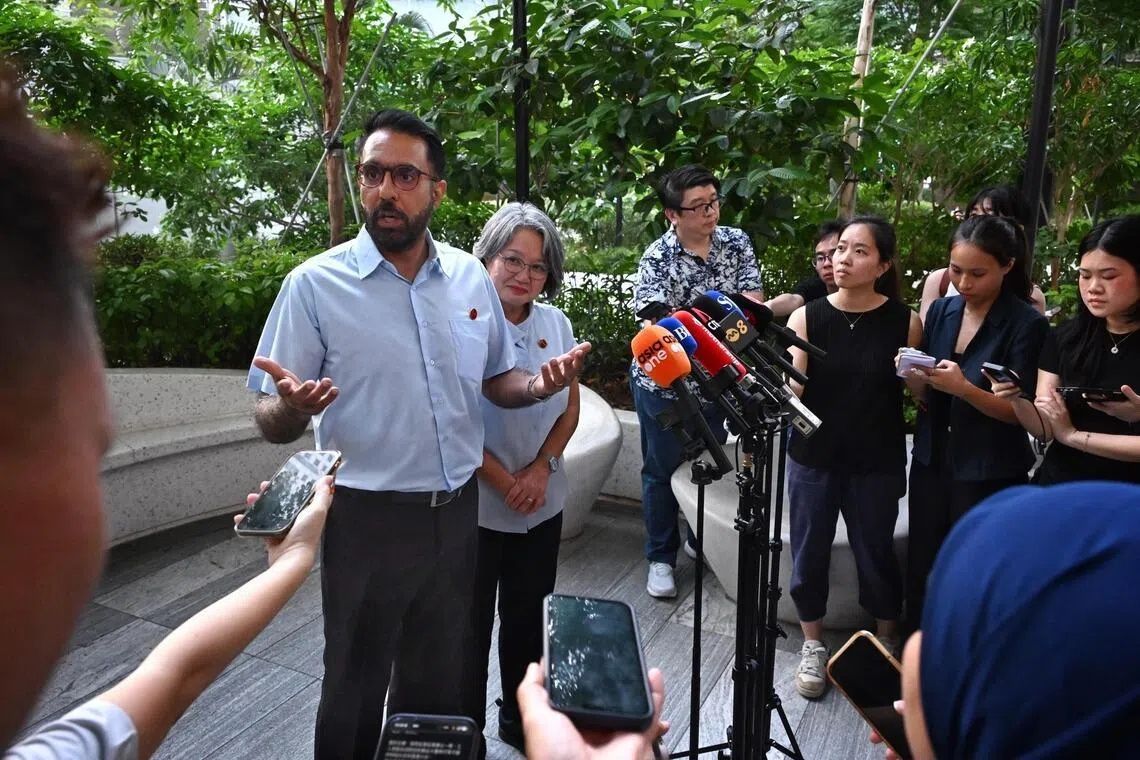
Pritam Singh has consolidated his position as leader of Singapore's Workers' Party after securing an overwhelming mandate in party elections held on June 28, comfortably seeing off a coordinated attempt by internal critics to force his departure. Running unopposed for the top role, Singh emerged victorious from a tense special cadre conference earlier that day where unhappy party members had sought to trigger his resignation through formal process, underscoring the resilience of his standing among party rank-and-file despite mounting legal and political headwinds.
The re-election marks a significant turning point for Singapore's largest opposition faction, which has navigated turbulent waters since 2021 when former Aljunied GRC MP Raeesah Khan admitted to fabricating parliamentary testimony. Singh's role in that episode—he was found to have guided Khan in maintaining the false narrative for several months—prompted criminal conviction and subsequent removal as Leader of the Opposition in early 2026. Yet the party machinery appears to have moved past that crisis, with analysts attributing Singh's strengthened position to demonstrated resilience and measured stewardship during sustained political pressure.
At the special cadre conference that preceded the formal elections, dissident members attempted to invoke party constitutional procedures requiring Singh to stand for a secret ballot on his continued leadership if he would not voluntarily resign. The mechanism ultimately proved ineffective, with party chair Gerald Giam, who chaired the proceedings, confirming that Singh secured "well in excess of a supermajority" among the party's inner circle of slightly more than 100 cadres. Party sources subsequently revealed Singh obtained approximately 80 per cent support, a result that Singh himself described as evidence of party unity following what he characterised as a robust and civil debate.
The challenge had emerged from a December 2025 petition signed by 25 party members troubled by Singh's legal entanglements and broader questions about his continued suitability for leadership. Singh's conviction for lying to Parliament—later upheld by the High Court following his appeal—formed the backdrop for internal dissatisfaction, with petitioners seeking accountability for his conduct during the Khan episode. A formal disciplinary process had already concluded months earlier, resulting in a letter of reprimand from the party's central executive committee after a panel comprising MPs Jamus Lim and He Ting Ru alongside former legislator Png Eng Huat found Singh had breached two constitutional articles.
Speaking immediately after his re-election, Singh struck a conciliatory tone, asserting that the Workers' Party exists to serve Singaporeans with rationality and responsibility. He framed the vote outcome as validation of the party's internal democratic culture, suggesting that cadres had aired their concerns in good faith and accepted the result with the same respect for democratic process they demanded throughout the challenge. His reluctance to disclose precise voting figures stood in mild tension with his claims of unity, yet the sheer scale of reported support—approaching four in five cadres—left little ambiguity about the verdict.
A crucial moment came early on election day when former party leader Low Thia Khiang publicly reaffirmed his backing for Singh, effectively snuffing out speculation that he might support a challenger. Rumours had circulated during the lead-up to voting that Low harboured reservations about Singh's stewardship and might quietly back a rival, potentially fragmenting the party's upper echelon. Low's public endorsement, delivered as he travelled to the conference venue, removed that uncertainty and likely influenced several wavering cadres, consolidating Singh's control just when it appeared most vulnerable.
The formal internal elections followed the cadre conference by several hours, completing the restructuring of the party's central executive committee. Chair Sylvia Lim, who has held her position since 2003, was returned unopposed, signalling continuity in the party's administrative leadership. The elections also determined twelve additional central executive committee members, with most incumbents successfully retaining their seats, demonstrating that discontent remained confined to a minority rather than representing broader dissatisfaction with the existing leadership cohort.
Notably, four of the twelve elected committee members hold no parliamentary seat, including Low, former Aljunied GRC MP Faisal Manap, longstanding member Tan Kong Soon, and newly elected senior counsel Harpreet Singh. Harpreet Singh's elevation represented the sole fresh addition to the elite body, marking the first entry of a non-incumbent following his unsuccessful candidacy in the Punggol GRC team during May 2025's general election. His inclusion signals the party's intention to broaden its leadership base beyond sitting legislators, potentially widening the pool of potential successors should circumstances require leadership transition in future.
Harpreet Singh subsequently used LinkedIn to frame the cadres' decision through the lens of discerning judgment rather than tribal loyalty, describing it as a careful assessment of Singh's track record and leadership quality under pressure. He acknowledged the significance of Singh's High Court conviction, emphasising that the judgment demanded respect, yet argued that evaluating an individual's fitness for leadership required examining full biographical context beyond any single legal verdict. This formulation appeared designed to provide intellectual scaffolding for cadres who wished to distinguish between legal accountability and political viability—a crucial distinction for a party seeking to recover credibility after years of reputational damage.
The Workers' Party's refusal to nominate an alternative Leader of the Opposition following Singh's removal from that post had proven strategically important, allowing the party to avoid legitimating what it characterised as a politically motivated decision by Prime Minister Lawrence Wong. The stance positioned Singh as a victim of executive overreach rather than as someone whose party had lost confidence, a narrative substantially reinforced by the electoral landslide. By maintaining that the opposition leader position should reside with the head of the largest opposition party, the Workers' Party kept the question alive as a potential future point of political contention.
The resolution of internal turmoil comes as the Workers' Party recalibrates after May 2025's disappointing general election performance, where the party made limited parliamentary gains despite hopes for significant breakthroughs. That electoral setback, combined with Khan's parliamentary lies and the fallout surrounding Singh's conviction, had created a perfect storm of challenges that many analysts believed might prove insurmountable. The decisive re-election suggests the party retains sufficient cohesion and member commitment to Singh's leadership to survive this period of profound difficulty, though questions remain about whether voters will reciprocate the cadres' confidence when the next general election arrives.
For Malaysia and Southeast Asia more broadly, Singapore's opposition dynamics warrant close attention as a regional barometer of democratic practice and institutional resilience. The Workers' Party's management of internal dissent through formal processes, combined with cadres' willingness to engage in tough questioning of their leader while ultimately supporting him, demonstrates functioning internal democracy in a context of external political constraint. Yet the party's circumstances also illustrate the precarious position of opposition movements in city-states with dominant ruling parties and incumbent advantages, a dynamic relevant to opposition coalitions and movements across the region seeking to strengthen institutional capacity and internal legitimacy.

