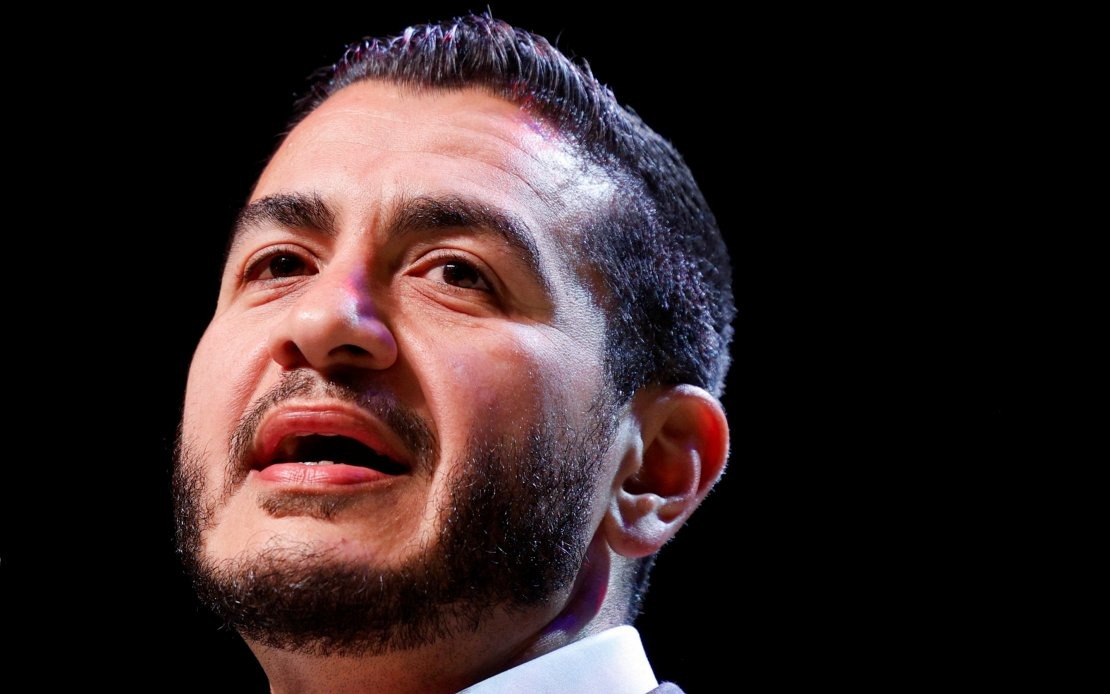
Abdul El-Sayed maintained a slender advantage in Michigan's Democratic Senate primary race as polls closed across five American states selecting their nominees for pivotal contests in the coming midterm elections. With over nine-tenths of ballots counted, El-Sayed positioned himself ahead of US Representative Haley Stevens, though the Associated Press had not yet officially declared him the winner. The contest carries particular significance as the winner will ultimately face Republican Mike Rogers in their bid to claim the Senate seat vacated by retiring Democrat Gary Peters, whose own preference for Stevens highlighted the deep dividing line between the party's progressive and centrist wings.
The Michigan primary demonstrated the intensifying ideological fault lines within the Democratic Party over both domestic and international issues. Stevens enjoyed endorsements from the Democratic establishment hierarchy, including Peters himself, who wielded considerable influence within Michigan political circles. By contrast, El-Sayed attracted support from the party's progressive faction, securing backing from prominent figures including Senator Bernie Sanders and Representatives Alexandria Ocasio-Cortez and Rashida Tlaib. This alignment reflected broader factional tensions that have increasingly shaped Democratic primary contests across the country.
The question of United States support for Israel and its military operations in Gaza emerged as a defining issue throughout the Michigan primary, resonating particularly with younger voters and Arab-American communities in the state. This issue represents a significant shift in Democratic primary dynamics compared to previous election cycles, reflecting evolving attitudes toward Middle Eastern policy within the party's base. The prominence of this question suggests that future Democratic candidates will need to articulate clear positions on Israeli-Palestinian issues to satisfy diverse segments of their party's coalition.
Michigan's congressional races presented a more predictable landscape, with established Republicans securing comfortable renomination victories. In the 1st Congressional District, Republican Representative Jack Bergman dominated his primary contest, capturing 74.3 per cent of votes against two challengers with 94 per cent of ballots counted. Similarly, Republican Bill Huizenga secured renomination in the 4th District with an overwhelming 85 per cent to 15 per cent margin against Philip Tanis, recorded with 83 per cent of precincts reporting. Huizenga will encounter a competitive general election matchup against Democratic state Senator Sean McCann, who triumphed in his own primary with 67.2 per cent support over Diop Harris II.
The Kansas Senate race displayed the characteristic Republican confidence in their incumbent despite primary opposition. Republican Senator Roger Marshall defeated challenger Pond Naramore with 79.9 per cent of the vote across virtually all reporting precincts, signalling strong support from the conservative base. Marshall will now prepare for a general election battle against Democrat Adam Hamilton, who navigated a crowded field to claim the Democratic nomination. In Kansas's gubernatorial race, Democrat Cindy Holscher emerged from a contested primary, positioning herself for a general election showdown against Republican Ty Masterson, who secured his party's nomination with President Donald Trump's explicit endorsement. The governor's race carries particular weight given that current Democratic Governor Laura Kelly faces term limits that prevent her from seeking another term.
Missouri's congressional primaries operated under newly redrawn district boundaries that Republican state legislators engineered specifically to favour their party, drawing explicit inspiration from Trump-backed redistricting strategies. This remapping effort underscores how control over electoral geography continues shaping legislative outcomes independent of voter preferences. In the 1st Congressional District, Democratic Representative Wesley Bell defeated four primary rivals, notably including former Representative Cori Bush, to secure his party's nomination. Bell's victory over a fellow progressive incumbent suggested pragmatic voter choices favouring an established incumbent over a newer alternative. He faces Republican Paul Berry III, who defeated Andrew Jones in the Republican primary.
Virginia's Senate contest featured Republican Bert Mizusawa capturing the Republican nomination to challenge Democratic Senator Mark Warner, who faced no opposition within his own party. This dynamic reflects Warner's commanding position within Virginia's Democratic establishment, contrasting with more vulnerable Republican senators in other states. Virginia's congressional races demonstrated varied competitive profiles. In the 1st Congressional District, Democrat Shannon Taylor secured 53.1 per cent in a nominating contest with 99 per cent of precincts reporting, positioning herself against Republican Representative Rob Wittman, who ran unopposed and pursues a tenth full term. The 2nd District race features former Democratic Representative Elaine Luria returning to the primary arena with 80.4 per cent support, readying herself to challenge Republican Representative Jen Kiggans.
Republican Doug Ollivant captured the 7th District Republican nomination with 56.6 per cent of votes, winning the right to challenge first-term Democratic Representative Eugene Vindman. The emergence of Vindman as a Democratic incumbent, a former military official who gained prominence during the first Trump impeachment, represents the party's recruitment of candidates with military and national security backgrounds. This recruitment strategy reflects Democratic efforts to compete effectively in districts traditionally dominated by Republican-leaning military communities.
Washington's all-party primary system produced distinct outcomes across multiple districts, allowing candidates from multiple parties to advance to November's general election. Democratic Representative Suzan DelBene and Republican Mary Silva both advanced from the 1st Congressional District under this system, each securing sufficient support to qualify for the general election. In another matchup shaped by Washington's primary format, Democratic Representative Marie Gluesenkamp Perez will face Republican John Braun, who benefited from Trump's endorsement. Democratic Representative Emily Randall similarly advanced to meet Republican Teresa Fox in the 6th District general election.
For Malaysian observers, these American midterm primaries offer insights into how electoral dynamics in mature democracies function during periods of significant polarization and ideological reassessment. The prominence of international relations issues, particularly questions surrounding American support for Israel and military operations affecting civilian populations, demonstrates how global events increasingly influence domestic electoral contests. The Michigan Senate race particularly illustrates how party establishments and grassroots movements contest for influence over candidate selection, a phenomenon with parallels in Malaysian political party dynamics. Furthermore, the successful pursuit of redistricting advantages by Republicans, particularly visible in Missouri, demonstrates how democratic processes can become contested terrain where technical electoral mechanisms yield substantial political consequences. These American primary contests, while context-specific, illuminate broader questions about representation, primary democracy, and the influence of ideological factions within large political coalitions that resonate across democratic systems worldwide.

