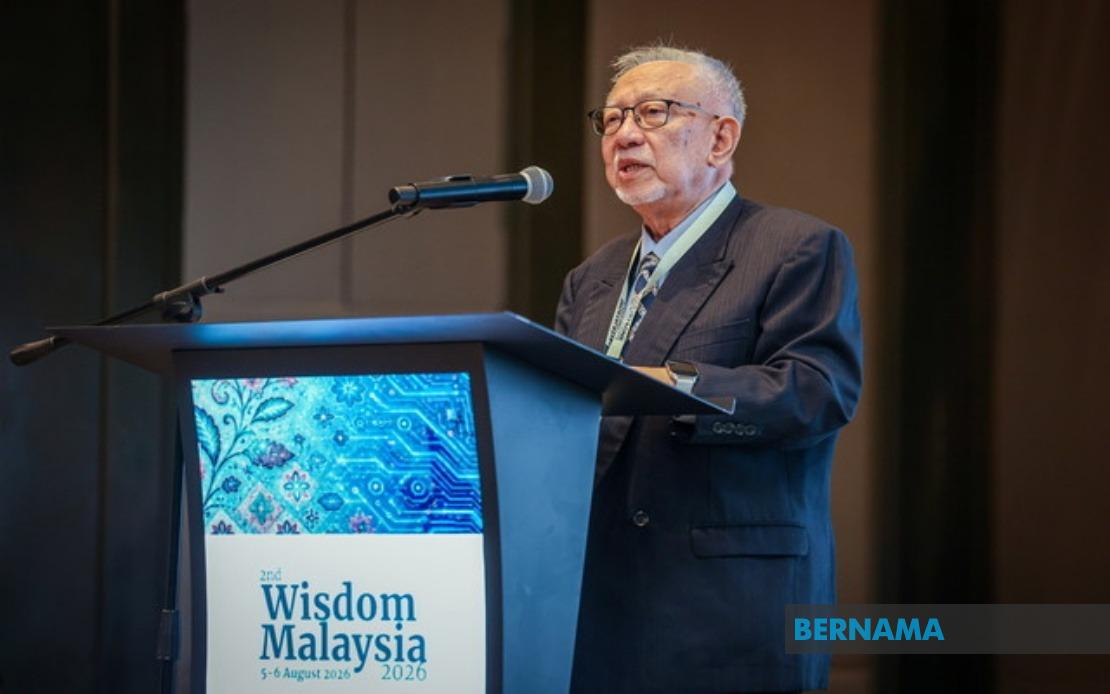
Safeguarding the security and credibility of those willing to expose wrongdoing remains central to any nation's ability to combat systemic graft, according to Datuk Syed Ahmad Idid Syed Abdullah, a retired High Court judge with extensive experience across Peninsular Malaysia and Borneo. Speaking at the 2nd Wisdom Malaysia Conference 2026 in Kuala Lumpur on August 6, he articulated a compelling argument about the cascading consequences of failing to shield whistleblowers from retaliation and intimidation. When institutional mechanisms punish rather than investigate those who raise corruption concerns, he cautioned, the result is an environment where ethical employees cease to act as internal checks on misconduct.
The logic underlying this concern reflects a broader understanding of organisational behaviour and institutional culture. When potential informants fear professional destruction, social ostracism, or worse, they rationally withdraw from the burden of disclosure. This creates a vacuum that corrupt actors readily exploit, knowing their activities will remain hidden from scrutiny. Syed Ahmad Idid's observation speaks directly to Malaysia's experience over recent decades, where several high-profile cases have involved whistleblowers facing severe consequences for coming forward, sometimes generating more public controversy than the original allegations themselves.
During a dialogue session titled 'The Life, Conscience and Costs of the Principled', Syed Ahmad Idid drew a crucial distinction between whistleblowing and defamation. He emphasised that legitimate reporting of malfeasance serves a fundamentally different purpose than slander; it represents an exercise of civic responsibility aimed at correcting systemic problems and protecting institutional integrity. This clarification matters considerably in a Malaysian context where cultural and legal traditions sometimes conflate public criticism with disrespect for authority, potentially chilling legitimate accountability mechanisms.
The retired judge highlighted a particularly striking economic dimension to anti-corruption efforts. Should Malaysia successfully recover the substantial sums lost through corrupt practices and financial leakages, those recaptured funds could finance transformative public investments. His specific examples underscore the magnitude of potential benefit: the recovered monies could support construction of at least two comprehensive general hospitals per state, alongside twenty to fifty well-equipped secondary schools nationwide. Such projections illustrate concretely why corruption imposes not merely an abstract ethical cost but a tangible price on citizens' access to quality healthcare and education.
Extending this analysis, Syed Ahmad Idid sketched a vision of how recovered anti-corruption resources could elevate Malaysia's human development metrics. Adequate funding would enable educational institutions to acquire state-of-the-art teaching materials, provide rigorous professional development for educators, and implement curriculum standards competitive with international benchmarks. The resulting improvement in educational quality would theoretically generate superior human capital across multiple domains—from security services to athletic performance—multiplying the economic returns on initial investment in institutional integrity.
This argument carries particular resonance for a nation like Malaysia competing regionally and globally for talent and investment. Singapore's success in establishing itself as a premier financial and technological hub rests substantially on its reputation for institutional probity and efficient governance. Malaysia's ability to attract high-value enterprises and skilled professionals depends partly on demonstrating comparable commitment to transparent, accountable systems. Corruption erodes that competitive advantage by signalling institutional weakness and directing capital toward patronage rather than productivity.
Syed Ahmad Idid also sounded a warning about interpretive flexibility regarding corrupt conduct. He called upon all sections of society—judicial, executive, media, and civil society—to resist normalising or minimising graft through sympathetic reinterpretation. In practice, this observation reflects legitimate concern about a gradual erosion of standards that occurs when officials, commentators, or judges incrementally redefine what constitutes unacceptable conduct. Once corruption becomes characterised as merely a cultural quirk or a victimless technical infraction, the moral and legal frameworks supporting accountability weaken substantially.
The conference itself, organised by Kerjaya One PLT, positioned Syed Ahmad Idid's remarks within a broader dialogue among current and former industry leaders. This context suggests that corruption concerns extend beyond government into the private sector. Malaysian businesses increasingly recognise that sound governance and ethical conduct represent competitive advantages, particularly as institutional investors and multinational partners impose stricter standards. The retired judge's emphasis on principled leadership therefore addresses both public and private institutional audiences.
For Southeast Asian policymakers monitoring Malaysia's approach to accountability, these remarks signal ongoing tension between institutional reform and political culture. Many countries in the region face similar dilemmas: how to pursue corruption investigations without appearing to weaponise institutions for factional advantage, and how to encourage reporting without creating incentives for malicious false allegations. Malaysia's constitutional framework provides legal mechanisms for whistleblower protection, yet practical implementation requires sustained political will and consistent institutional enforcement.
The emphasis on whistleblower security also reflects international best practice. Organisations ranging from Transparency International to the World Bank have documented that effective anti-corruption systems require robust protections for those reporting misconduct. Countries ranking highest on global integrity indices typically offer legal safeguards including confidentiality provisions, anti-retaliation measures, and sometimes financial incentives for disclosures that recover substantial sums. Malaysia's institutional framework could be strengthened by examining such comparative models and implementing targeted amendments.
Syed Ahmad Idid's intervention ultimately frames corruption not as an isolated criminal problem but as a governance challenge affecting national development priorities. By connecting whistleblower protection to healthcare investment, educational advancement, and human capital formation, he articulates why integrity matters beyond abstract principle. Citizens struggling to access adequate medical care or quality education have direct stakes in whether their institutions can effectively identify and eliminate financial leakage. Conversely, officials and business leaders who suppress legitimate reporting become, in effect, contributors to those same deficits in public service quality.
Looking forward, the challenge for Malaysian institutions involves translating such principled arguments into practical systems resilient to political pressure and cultural inertia. This requires not only formal legal protections but also professional norms and institutional cultures that genuinely value honesty and accountability. Recent experience in countries ranging from South Korea to Indonesia suggests that sustained anti-corruption campaigns can gradually shift expectations and behaviour, though the process requires consistent leadership and public support.

