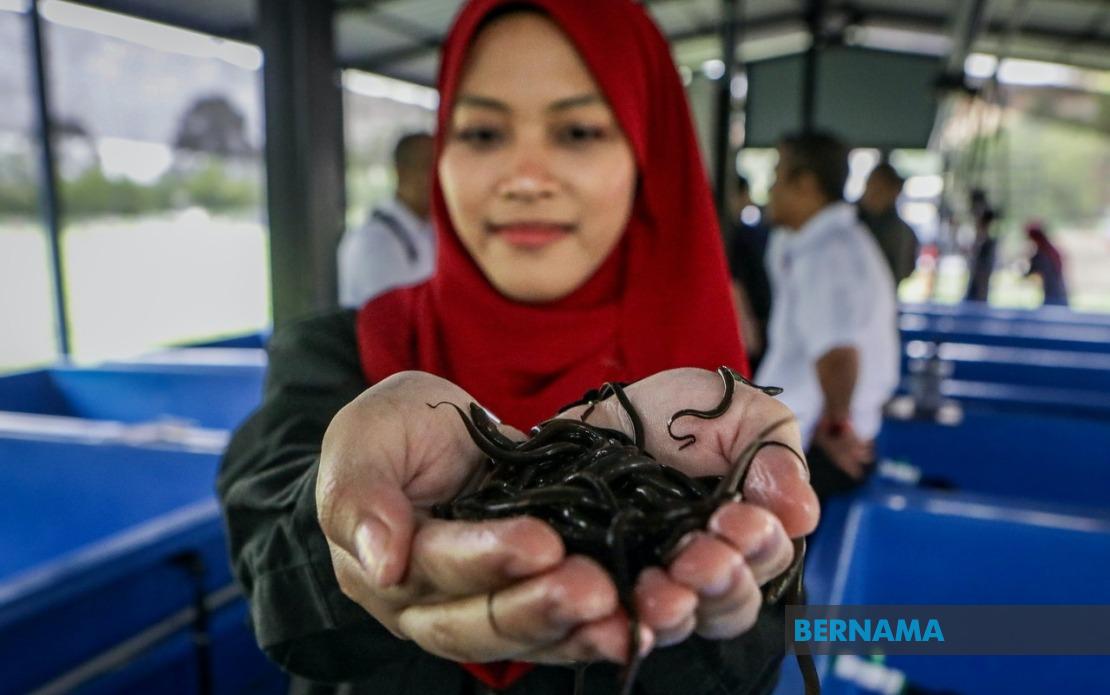
Politeknik Tuanku Syed Sirajuddin (PTSS) in Arau has embarked on an ambitious initiative to demonstrate how technical education institutions can serve as catalysts for rural economic development beyond producing qualified graduates. The Projek Penternakan Belut Komersial Geran Sejati MADANI, officially launched on July 1, represents a deliberate effort to translate classroom learning into tangible community benefits through knowledge transfer and practical technology deployment.
The RM500,000 project encompasses five distinct communities selected by the Prime Minister's Department's Implementation Coordination Unit (ICU JPM), each poised to establish eel farming operations as a supplementary income source. PTSS director Khairul Anuar Ishak articulated the institution's philosophy: that vocational and technical education providers bear responsibility not merely for credential conferment but for actively strengthening the economic capabilities of surrounding populations. This approach aligns with Malaysia's broader push to make rural development inclusive and skills-driven rather than reliant solely on government transfers.
The structural design of the initiative reflects careful attention to implementation feasibility. PTSS will oversee a comprehensive six-month management cycle beginning with foundational infrastructure development, equipment procurement, and distribution of 15,000 eel fingerlings to each participating community. This hands-on stewardship extends beyond material provision to encompass formal training programmes, ongoing technical mentorship, and financial management guidance. Only after this nurturing period concludes will operational control transfer completely to community members, ensuring they possess the competency and confidence to sustain operations independently.
Aquaculture represents a logical economic diversification pathway for Perlis, a state where agricultural employment has historically dominated regional demographics. Eels command premium market prices in domestic and regional contexts, particularly in Chinese cuisine segments. The five-to-six-month growth cycle projected by PTSS specialists suggests that participating communities could collectively harvest approximately 25,000 kilogrammes of marketable product within their first production cycle. Such volumes, distributed through structured contract farming arrangements rather than volatile spot markets, promise meaningful income stabilisation for participating households.
The involvement of ICU JPM, the government machinery responsible for translating policy into implementation across diverse sectors, underscores official recognition that such public-private-educational partnerships merit elevated coordination. Azlan Abdul Samat's presence as officiating director signals commitment from the federal development apparatus to regard TVET institutions not as peripheral service providers but as strategic assets for localised economic transformation. This positioning carries implications for how future government programmes might leverage polytechnic and technical college infrastructure nationwide.
Khairul Anuar emphasised the relational architecture underpinning the project's design: Educational institutions, government agencies, commercial enterprises, and community groups operate within an integrated framework rather than in compartmentalised silos. This collaborative model addresses a persistent challenge in Malaysian development initiatives where coordination failures or misaligned incentives undermine implementation. By placing PTSS in a central coordinating role rather than assigning responsibility to distant federal agencies or commercial contractors, the structure grounds accountability within an organisation physically present and institutionally invested in community outcomes.
The selection of eel farming specifically reflects pragmatic assessment of Perlis's agro-climatic advantages and market positioning. Unlike crops subject to seasonal fluctuations or climatic shocks, intensive eel farming operations function year-round within controlled environments. This consistency reduces income volatility for participant families, a critical consideration for populations previously dependent on rain-fed agriculture. Additionally, aquaculture enterprises require substantially less land than conventional farming, making them accessible to smallholder operators and landless labourers seeking income diversification.
For Malaysian vocational education policymakers, this initiative demonstrates tangible returns on TVET investment beyond graduate employment statistics. When polytechnic institutions actively contribute to community economic development, they strengthen political support for funding allocations and curriculum relevance. Students gain authentic learning contexts where theoretical knowledge encounters practical constraints, enriching pedagogical quality. Communities acquire capabilities that might otherwise require expensive external consultancies. The multiplier effects—improved household incomes enabling increased school enrolment, health expenditure, and consumer spending—ripple through local economies.
The contract farming dimension merits particular attention for Southeast Asian readers. Rather than exposing smallholder farmers to volatile international or even domestic commodity markets where large traders capture disproportionate margins, structured purchasing agreements guarantee buyers at predetermined prices. This risk reduction mechanism encourages participation among populations with limited capital reserves and risk tolerance. It simultaneously provides offtake security for processing facilities or exporters seeking consistent supply volumes, creating mutual interest in participant success.
PTSS's management of the transition from externally-directed implementation to community self-management across six months establishes a realistic timeframe for capacity building. Premature withdrawal or extended dependency both undermine sustainability; this middle path acknowledges that institutional knowledge and confidence require time to develop. By month six, participant communities should possess documented training records, established supply chains, and operational experience sufficient to navigate challenges without constant institutional support.
The RM500,000 investment, while significant for a single polytechnic's community outreach budget, remains modest relative to potential returns if the model proves replicable. Should participating communities achieve projected yields and profitability targets, the evidence base strengthens for scaling comparable aquaculture initiatives across other TVET institutions in Kedah, Perak, and Terengganu where polytechnic infrastructure already exists. Regional consideration of such expansion warrants investigation into whether eel farming or alternative aquaculture species better suit different local contexts.
Looking forward, the project's success metrics extend beyond production volumes to encompassing household income improvements, skill retention, and community willingness to engage subsequent PTSS initiatives. Should PTSS documentation systematically capture outcomes and learning, the institution could position itself as a research partner for other educational bodies navigating similar community engagement mandates. In an era when Malaysian development increasingly emphasises inclusion and skills distribution, PTSS's deliberate effort to marry educational excellence with tangible community empowerment offers a model worthy of broader institutional adoption.

