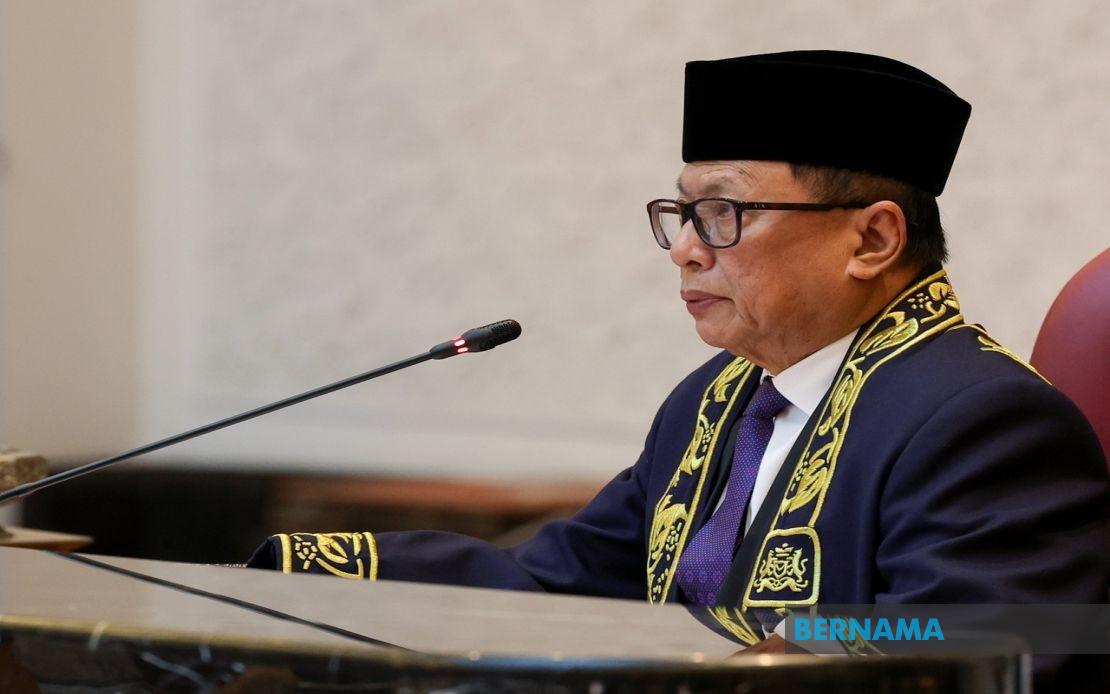
In a dramatic exit timed to underscore his grievances, Datuk Dr Mohd Puad Zarkashi, a member of UMNO's Supreme Council, formally announced his resignation from the party on June 25, 2026, citing the need to express himself without institutional constraints. The Rengit state assemblyman's decision to depart immediately circumvents any formal expulsion procedures and marks a significant rupture within Johor's ruling party hierarchy, a state where UMNO has long wielded considerable organisational muscle.
Through a carefully worded Facebook statement, Puad presented his departure as a principled stand rooted in intellectual freedom rather than personal grievance. He articulated a desire to critique UMNO's current trajectory without the threat of accusations that dissent constitutes disloyalty. This framing is strategically significant—it repositions his exit not as rejection of UMNO's foundational ideology but rather as a necessary step to safeguard his capacity to speak candidly about institutional failings. For Malaysian observers familiar with party politics, such language suggests deeper fractures within UMNO's traditionally hierarchical structure.
The substance of Puad's grievances centres on what he characterises as compromised leadership under Johor Chief Onn Hafiz Mohd Dahlan. Using the colloquial term "pak turut"—a yes-man—Puad levelled accusations suggesting that state UMNO has become little more than a controlled apparatus lacking genuine autonomy. This critique carries particular weight given Puad's institutional standing as a former Speaker of the Johor State Legislative Assembly, a position that provided intimate knowledge of internal party mechanics and decision-making processes.
Puad's timing deserves scrutiny. His announcement followed allegations he had made the previous day regarding irregularities in Barisan Nasional candidate selection for the imminent Johor state election. These claims hint at a broader controversy concerning how candidates are vetted and nominated—a process central to party legitimacy and member satisfaction. By coupling his resignation with references to selection anomalies, Puad has effectively positioned himself as a whistleblower exposing systemic problems rather than a disgruntled politician.
A significant element of Puad's public narrative involves his stated refusal to defend the Rengit seat despite winning it comfortably in the 2022 Johor state election. His earlier suggestion that younger candidates deserve opportunities to contest appears now in a different light—potentially masking disagreements over how the party allocates electoral responsibilities. This reframing of his non-candidacy as generational magnanimity rather than a response to candidate-selection disputes represents typical Malaysian political communication, where surface narratives often obscure underlying institutional tensions.
Puad's political trajectory reveals a figure of considerable experience within Malaysia's federal structures. His previous roles included Deputy Education Minister from 2009 to 2013 and Director-General of the Special Affairs Department (JASA) from March 2015 to April 2018, positions affording him exposure to high-level administrative and policy-making frameworks. At the parliamentary level, he captured the Batu Pahat seat in the 12th General Election with a substantial majority of 12,968 votes over PAS candidate Muhammad Abdullah. However, his 13th General Election challenge for the same seat ended in defeat to PKR's Datuk Mohd Idris Jusi, who prevailed by a narrower margin of 1,524 votes, suggesting shifting electoral dynamics within that constituency.
For Malaysian political analysts, Puad's exit signals potential strain within the Johor UMNO structure during a period when the party faces mounting pressure from both internal dissidents and external opposition. The charge that party leadership has become "tethered"—constrained and ineffectual—reflects concerns that merit serious examination, particularly as state UMNO prepares for electoral contests. Such criticism, voiced by someone with institutional credibility, may resonate among grassroots members questioning their party's strategic direction.
The broader Southeast Asian context is relevant here. Across the region, traditional ruling parties face challenges adapting to changing voter expectations and internal demands for greater accountability. UMNO, despite its historical dominance, is hardly exempt from these pressures. A senior figure's departure citing leadership deficiencies suggests generational and ideological fault lines that merit observation in coming months.
Puad's description of his resignation as "political courage" deserves careful consideration. In Malaysian political discourse, where party discipline traditionally carries significant weight and dissent often invites sanctions, public resignation coupled with institutional criticism does constitute a bold manoeuvre. Whether this resonates as principled leadership or appears as divisive factionalism likely depends on UMNO members' own assessments of party direction. The episode underscores ongoing tensions between institutional loyalty and individual conscience within Malaysia's dominant Malay-Muslim political formation, tensions that will shape intra-party dynamics and electoral outcomes in Johor and beyond.

