The Pulai Sebatang state constituency in Johor is set for a closely watched battle on July 11, crystallising a broader national debate between two governing philosophies. Pakatan Harapan's Haniff @ Ghazali Hosman, a 46-year-old contesting the seat for the third time, is positioning himself as an agent of change who can unlock the area's dormant economic potential. Across the campaign, his opponent, Barisan Nasional incumbent Hasrunizah Hassan, is making the case that her track record since 2022 warrants voter confidence and a renewed mandate. The contest encapsulates the tension between transformational promises and incremental delivery that has defined Malaysian electoral politics in recent years.
Handling significant responsibilities in a constituency that encompasses Pontian town and extends into neighbouring growth corridors, Haniff has crafted a campaign narrative around "balanced development." He argues that Pulai Sebatang possesses untapped commercial and tourism potential that remains underutilised by current leadership. His approach explicitly bridges modernisation with tradition, pledging to attract quality investments that would generate economic activity while preserving the livelihoods of the fishing and farming communities that have anchored the local economy for generations. This dual emphasis reflects recognition that rapid or poorly managed growth can alienate rural constituencies, a lesson both coalitions have absorbed from recent electoral feedback across Malaysia.
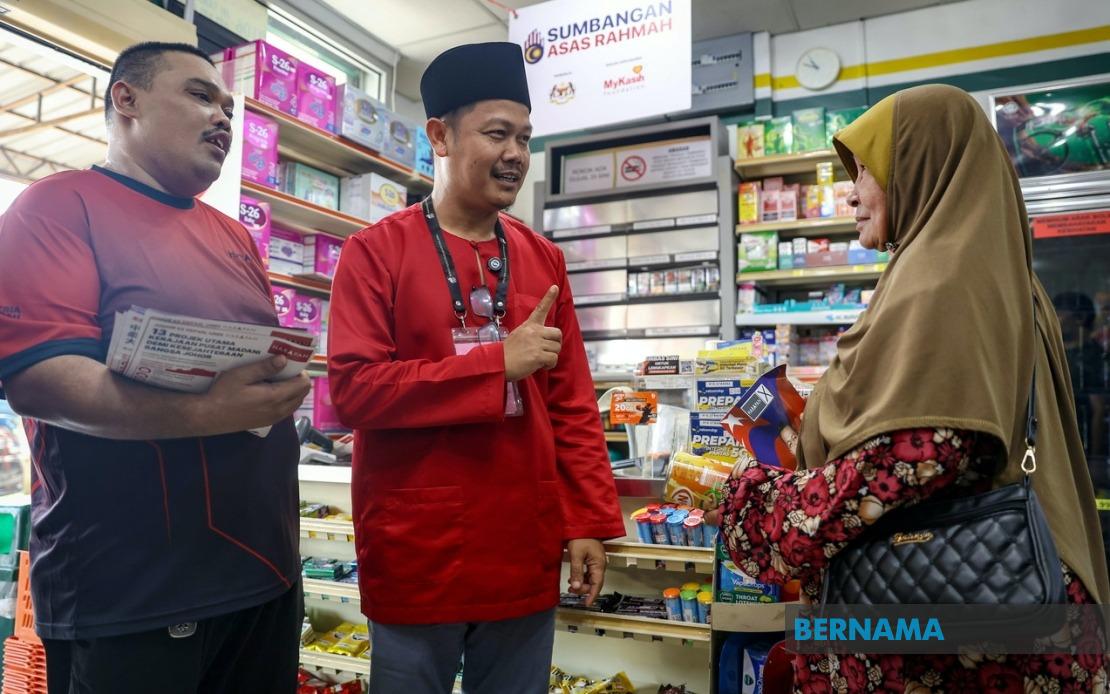
The candidate has identified specific grievances that resonate with grassroots opinion. Fishermen in Pontian Besar have long awaited compensation arrangements, whilst farmers in Parit Datuk struggle with recurring flooding from inadequate drainage infrastructure. By foregrounding these localised issues during house-to-house visits and walkabout campaigns, Haniff is attempting to demonstrate that his transformation agenda begins with listening to constituent needs rather than imposing top-down development blueprints. This granular engagement strategy has become increasingly valuable in Malaysian electoral contests, where voters frequently perceive national-level politicians as disconnected from daily hardships affecting rural and semi-rural populations.
Haniff's confidence draws partly from Pakatan Harapan's 2018 performance in the constituency, a result he believes signals latent receptivity to reform messaging. The coalition's experience governing at federal and state levels during 2018-2020 generated both tangible policy initiatives and residual voter memory of an alternative governing model. However, the intervening years have complicated that narrative. Hasrunizah's representation since 2022 has focused on translating voter demands into visible infrastructure projects, a strategy that directly counters claims that BN lacks responsiveness or innovation.
Hashrunizah's campaign emphasises concrete achievements and ongoing commitments rather than transformational rhetoric. The proposed expansion of Pontian Hospital represents her flagship infrastructure initiative, with approval recently granted for a new hospital block and procurement processes underway. In Malaysian electoral contexts, healthcare expansion carries substantial symbolic and practical weight, particularly in constituencies with ageing or dispersed populations requiring improved access to medical services. She positions this project as evidence that BN's administrative machinery can deliver substantive improvements to residents' quality of life, validating continued electoral support.
Beyond the hospital initiative, Hasrunizah has pledged to complete 25 remaining village road projects from a slate of 75 applications identified when she assumed office. Road connectivity in farming and fishing communities directly affects economic productivity and livelihood viability, making this commitment immediately tangible to voters. The completion rate of these infrastructure commitments will likely feature prominently in final campaign messaging, as both completed and ongoing projects provide measurable evidence of responsiveness to constituent priorities.
The incumbent's welfare agenda also targets vulnerable demographics through established state initiatives. The 'Kasih Johor' assistance programme, housing aid, and first-home ownership schemes represent targeted social safety nets addressing cost-of-living pressures that affect working-class and lower-middle-class households throughout Malaysia. These programmes function as both practical support and symbolic affirmation that the government recognises economic strain among ordinary citizens. For voters facing mortgage payments, rental instability, or limited disposable income, such targeted assistance often outweighs broader development narratives in determining electoral choices.
Hashrunizah's campaign methodology combines traditional grassroots organising with digital outreach, reflecting the increasingly hybrid nature of Malaysian electoral contests. This approach acknowledges that voter information consumption now spans multiple channels simultaneously. The presence of Pontian MP Datuk Seri Ahmad Maslan at campaign events amplifies BN's messaging through parliamentary-level endorsements, signalling party unity and institutional support behind local candidates. Ahmad's characterisation of Hasrunizah and fellow candidate Datuk Mohd Sumali Reduan as possessing strong educational credentials and proven track records attempts to rebut arguments that BN relies on political loyalty rather than merit-based candidate selection.
The Pulai Sebatang contest gains additional significance within Johor's 16th state election dynamics. Control of state seats determines legislative majorities and government formation, making individual constituencies consequential beyond their local impact. Johor's political alignment influences federal political calculations given the state's substantial parliamentary representation and traditionally significant role in national power-broking. A strong PH performance across multiple seats could signal shifting voter sentiment regarding coalition preference, whilst BN consolidation would reinforce its position as the dominant state governing force.
Socioeconomic factors underlying this contest reflect broader Malaysian economic trajectories. Pulai Sebatang's traditional fishing and farming sectors face structural pressures from resource depletion, younger generation outmigration, and uncertain commodity prices. Both candidates recognise that unmanaged economic transition threatens community stability, yet propose different solutions. Haniff's approach emphasises attracting new investment sectors that complement rather than displace traditional activities, whilst Hasrunizah emphasises expanding public services and welfare support that cushion economic stress. These strategies are not mutually exclusive, but voter perception of which offers more genuine hope for household prosperity remains contested.
Early voting scheduled for July 7 precedes the July 11 election proper, providing an advance indication of turnout patterns and potential swing dynamics. Electoral momentum frequently reflects cumulative campaign effectiveness across multiple dimensions including voter contact frequency, local media coverage, and perceived candidate visibility. The intensity of campaign activity during the final week before polling day often proves decisive in close contests, as undecided voters respond to final messaging pushes and media narratives crystallise around candidate differentiation.
For Malaysian and Southeast Asian observers tracking Johor's electoral evolution, the Pulai Sebatang contest exemplifies tensions characterising contemporary governance debates across the region. Rapid development imperatives clash with community preservation concerns, technocratic efficiency confronts grassroots accountability, and national-level coalition competition manifests through localised constituency contests where individual candidates embody broader political philosophies. Voter decisions in seats like Pulai Sebatang ultimately reflect judgments about which approach—transformation or continuity, reform or stability—better serves their material interests and reflects their preferred vision of community development.

