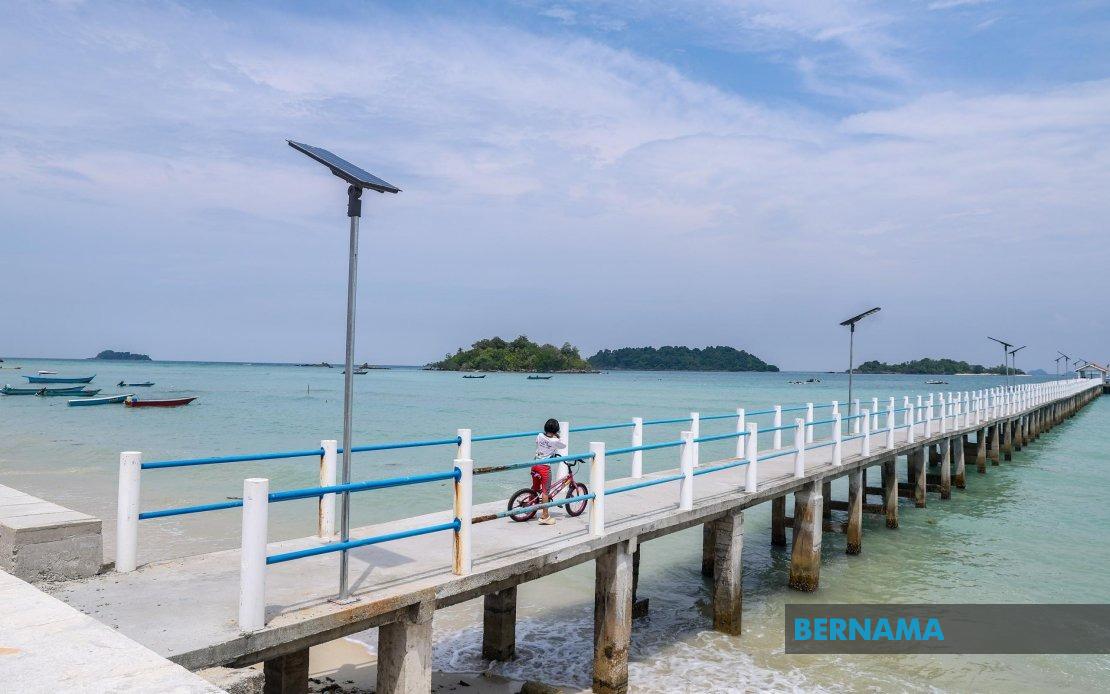
As Johor prepares to elect its 56 state lawmakers on Saturday, residents of Pulau Tinggi—a small island community off Mersing with just 150 inhabitants—are voicing urgent concerns about infrastructure decay and social welfare that they say demand immediate attention from the new government. The island's two villages, Kampung Pasir Panjang and Kampung Tanjung Balang, have become focal points for neglect in what should be a development priority for the state's maritime economy and fishing communities.
The centrepiece of residents' grievances is the Kampung Pasir Panjang jetty, a facility that has deteriorated markedly since around 2017 yet continues to serve both the island's fishing population and the tourism sector that once thrived here. Kampung Pulau Tinggi chief Rossana Hussin, who has held the position since 2024, explained that applications to upgrade the jetty were formally submitted to the Mersing District Office in March and received favourable preliminary responses. However, favourable feedback has not translated into action, leaving the facility in a precarious state that poses safety risks to both fishermen and visitors alike.
The second major complaint centres on housing assistance for the island's B40 category fishermen—those earning below RM4,000 monthly—particularly in Kampung Tanjung Balang. Many families in this demographic require either comprehensive housing repairs or completion of partially finished structures. Rossana noted that the majority of Pulau Tinggi's residents depend entirely on fishing for their livelihoods, making them especially vulnerable to economic shocks and living conditions that further diminish their quality of life. The housing predicament is not merely a comfort issue but directly affects the dignity and resilience of vulnerable communities.
The backdrop to these local demands reflects broader demographic challenges facing the island. Mariam Mamat, an 85-year-old resident, highlighted how Pulau Tinggi's population has contracted significantly as younger generations have departed in search of employment opportunities elsewhere or relocated to Felda schemes on the mainland. This outmigration represents both a human tragedy and an economic loss for the island, as the exodus of working-age residents undermines the viability of local industries and leaves behind an ageing population less able to sustain traditional livelihoods.
Revitalising the tourism sector emerged as a critical counterbalance to this demographic decline. Mariam and other residents believe that renewed investment in tourism infrastructure and promotion could reverse the migration trend by creating viable employment for young people who might otherwise see no future on the island. Prior to the current downturn, Pulau Tinggi attracted visitors seeking authentic island experiences, and residents argue that with proper attention and resources, this potential remains untapped. The failure to capitalise on tourism represents not just lost revenue but a failure to provide pathways for younger residents to remain in their home communities.
The election contest for the Tenggaroh state seat—the constituency encompassing Pulau Tinggi—has become an opportunity for residents to articulate these grievances and extract commitments from candidates seeking their votes. Rossana's explicit hope that the elected representative would coordinate efforts across government departments reflects local frustration with bureaucratic fragmentation, where applications languish in district offices without clear timelines or responsible parties driving implementation. This coordination challenge is common across Malaysia's rural and maritime communities, where local government capacity constraints and inter-agency communication gaps frequently delay critical infrastructure projects.
The jetty issue particularly exemplifies how deferred maintenance in public facilities can spiral into crises. Six years of deterioration have compounded structural damage, meaning that upgrades now required will cost significantly more than preventive maintenance would have in 2017. Safety concerns have not stopped residents from using the facility—a testament to both necessity and limited alternatives—but continued deterioration risks an eventual incident that could have been avoided through timely action. The jetty's dual role serving fishermen and tourists underscores its importance to both economic and cultural dimensions of island life.
For Johor's incoming government, Pulau Tinggi presents a microcosm of challenges affecting rural and maritime constituencies throughout the state: ageing infrastructure, B40 poverty, youth unemployment, and demographic decline. While the island's small population might suggest limited electoral weight, the issues residents raise reflect concerns shared across numerous fishing villages and remote communities. Addressing Pulau Tinggi comprehensively would signal to other similar communities that the new administration takes their development seriously.
The approximately 2.7 million Johor voters heading to polls represent diverse interests and geographies, yet often rural and maritime communities receive disproportionately less attention during campaign cycles compared to urban centres. Pulau Tinggi residents, through Rossana and community elders, are attempting to ensure their voices penetrate the electoral discourse. Their request is notably modest: a jetty upgrade and housing assistance—foundational infrastructure and welfare support rather than ambitious new development schemes.
The resolution of Pulau Tinggi's issues will likely depend on whether the elected Tenggaroh representative and the incoming state government make good on promises to coordinate with Mersing District Office and relevant federal agencies. Federal rural development programmes, state allocation mechanisms, and district-level implementation capacity will all intersect in determining whether applications approved in principle finally translate into concrete improvements. The island's residents, having submitted formal requests and articulated their needs clearly, now await demonstration that the electoral process generates responsive governance.

