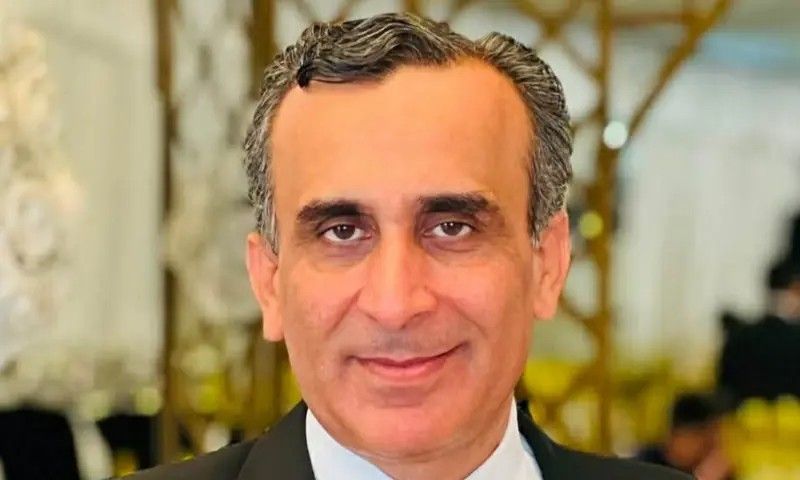
The government of Punjab has moved to fill a key prosecutorial position by appointing Irfan Sadiq Tarar as the province's new Prosecutor General, according to an official notification issued on Saturday. The appointment comes at a time when judicial and prosecutorial leadership transitions are shaping the province's legal infrastructure, with Tarar assuming responsibility for overseeing criminal prosecution matters across Pakistan's most populous province.
The vacancy that Tarar now fills arose from the elevation of his predecessor, Farhad Ali Shah, who received nomination as an additional judge of the Lahore High Court. Shah's transition from the prosecution service to the bench reflects common career progression within Pakistan's legal establishment, where senior prosecutors often move into judicial roles after substantial tenure in the executive branch of the justice system. This shift creates new dynamics in how criminal cases are pursued and adjudicated at the provincial level.
The formal appointment of Tarar was made under the authority of Section 6 of the Punjab Criminal Prosecution Service Act 2006, the statutory framework governing prosecutorial appointments in the province. His tenure will span three years, establishing a fixed term during which he will direct the state's criminal prosecution strategy across Punjab's jurisdictions. The defined appointment period provides institutional continuity while allowing for periodic review and potential renewal based on performance and evolving provincial needs.
Tarar brings considerable experience from the bar, having held senior positions within Punjab's legal professional bodies. He previously served as vice chairman of the Punjab Bar Council, the self-regulating body responsible for professional standards and discipline among practicing advocates. Additionally, he held the office of vice president of the Lahore Bar Association, one of the country's most influential bar associations given Lahore's status as a major legal and judicial hub.
His background reflects the revolving relationships between the private bar, professional bodies, and government prosecution services in Pakistan's legal system. Bar leaders often transition into prosecutorial roles, bringing courtroom experience and professional networks that inform their approach to criminal justice administration. Tarar's visibility and standing within Lahore's legal community may influence prosecutorial priorities and relationships with the judiciary during his tenure.
As vice chairman of the Punjab Bar Council, Tarar would have been involved in regulatory matters, ethical standards, and policy discussions affecting the broader legal profession. Such positions expose leaders to systemic challenges within the criminal justice system, institutional reform debates, and the concerns of practicing lawyers navigating prosecution and defense work. His involvement in professional governance may inform his prosecutorial approach toward systemic efficiency and fairness.
Tarar is affiliated with the Independent group led by Ahsan Bhoon, a political alignment that situates him within Pakistan's complex coalition politics. Independent candidates and groups have become increasingly significant in recent elections, often attracting professionals and technocrats seeking positions outside traditional party structures. This affiliation may provide certain political support while potentially insulating the prosecution service from explicit party-political interference, though such claims require scrutiny given Pakistan's history of prosecutorial politicization.
The appointment occurs within a broader context of institutional change in Punjab's governance. The prosecution service is fundamental to criminal justice delivery, determining which cases proceed to trial, the vigor with which charges are pursued, and resource allocation across different categories of crime. A new Prosecutor General's priorities will shape enforcement patterns, from white-collar crime to organized crime and terrorism-related prosecutions, influencing the overall character of the province's legal landscape.
For Malaysian and Southeast Asian observers, Punjab's prosecutorial transition illustrates patterns common across South Asian legal systems, where professional experience in bar associations often translates into government positions. The three-year appointment term reflects a balance between stability and periodic accountability, a model that contrasts with different tenure arrangements in various jurisdictions. The reliance on statutory frameworks for prosecutorial appointment also demonstrates how countries structure leadership transitions to maintain institutional independence.
The effectiveness of Tarar's tenure will likely be measured against criteria including conviction rates, case disposal times, and institutional morale within the prosecution service. Punjab's prosecution infrastructure handles millions of cases annually, from summary offenses to serious felonies, making prosecutorial leadership consequential for public confidence in the justice system. The new Prosecutor General's management approach and prosecutorial philosophy will ripple through lower courts and investigating agencies dependent on the state's legal strategy.
Historically, prosecutorial independence has been contested terrain in Pakistan, with concerns about political pressure influencing case selection and prosecution vigor. An appointee from the independent bar, rather than a party-political background, may be perceived as having greater autonomy. However, institutional independence ultimately depends on resourcing, legal protections against dismissal, and cultural norms within the prosecution service respecting professional autonomy regardless of political pressures.
The transition from Farhad Ali Shah's leadership to Tarar's administration will also be observed by legal practitioners, judges, and civil society organizations monitoring prosecutorial performance. Continuity in policy, institutional memory, and prosecutorial standards becomes essential during such transitions, requiring careful knowledge transfer and stakeholder communication. The appointment represents both a personnel change and a moment of potential institutional vulnerability or opportunity, depending on how transitions are managed.
As Punjab consolidates its prosecutorial leadership, attention will focus on Tarar's priorities within the criminal justice framework. Whether he emphasizes particular crime categories, pursues institutional reforms, or maintains existing prosecution strategies will signal his prosecutorial philosophy and potential administrative approach. The appointment thus represents not merely a bureaucratic succession but a substantive moment shaping Punjab's criminal justice trajectory for the coming three years.

