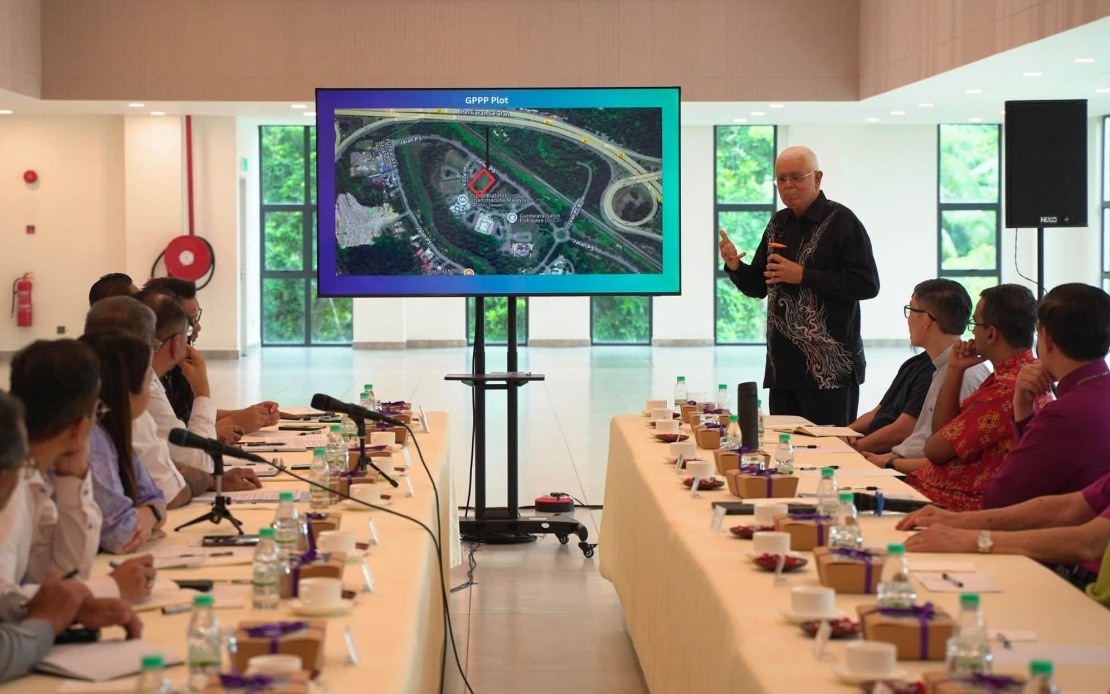
The federal government has designated Precinct 20 in Putrajaya as a dedicated zone for non-Muslim places of worship, with planning for the initiative stretching back more than a decade. National Unity Minister Datuk Aaron Ago Dagang confirmed on August 26 that the systematic allocation of religious sites reflects a comprehensive approach to urban development that prioritises social cohesion and peaceful coexistence among Malaysia's diverse faith communities.
This strategic initiative extends beyond mere land allocation. According to Datuk Aaron, the vision encompasses creating spaces where communities of varying religious backgrounds can freely observe their spiritual practices within a framework of mutual respect and neighbourly harmony. The approach demonstrates how modern urban planning can integrate religious plurality as a foundational principle rather than treating it as an afterthought to development schemes.
Precinct 20's development aligns with Policy 17 of the Putrajaya Structure Plan 2050, which explicitly prioritises building what authorities term an inclusive and compassionate community. The overarching goal centres on fostering mutual respect and harmonious coexistence as essential characteristics of urban life in the federal capital. This policy framework provides institutional backing for interfaith initiatives at the municipal level, signalling a broader governmental commitment to religious pluralism within planned communities.
The initiative also resonates with the Harmoni MADANI framework introduced by the National Unity Ministry in 2024. This programme operationalises the principle of "Understand, Respect, Accept and Celebrate" across Malaysia's multireligious landscape. By anchoring Precinct 20's development within this broader national initiative, authorities position the religious hub as a microcosm of the nation's aspirational approach to religious diversity and social integration.
Currently, the precinct hosts several functioning places of worship. The Prince of Peace Church represents a relatively recent addition to the spiritual infrastructure, while the Dhammaduta Malaysia Buddhist Centre has served its community since 2023. These operational facilities demonstrate that the governmental vision for interfaith spaces has moved beyond planning documents into tangible community engagement and worship activities.
Further development projects within Precinct 20 are advancing in various stages of construction and planning. Gurdwara Sahib Putrajaya, Dewi Sri Lalithaambigai Alayam, and San Qing Taoist Temple are among the religious structures currently under development, with their presence reflecting the representation of Sikh, Hindu, and Taoist communities respectively. Additionally, authorities have reserved land for a Roman Catholic church, indicating that the designation process continues to accommodate emerging religious communities' needs.
The concept of Precinct 20 functioning as an interfaith hub carries significance beyond individual worship spaces. Datuk Aaron articulated that the zone's potential extends to fostering direct interaction and dialogue among adherents of different faiths. Such structured proximity creates organic opportunities for interfaith understanding without imposing artificial frameworks for religious engagement. The intermingling of worshippers, combined with shared community facilities and public spaces, naturally encourages the relationship-building that theoretical interfaith dialogue seeks to achieve.
For Malaysia's multireligious society, Precinct 20 presents a model for how planned communities can accommodate religious diversity within a cohesive urban environment. The approach contrasts with unplanned urban sprawl that often results in segregated religious communities. By intentionally clustering diverse places of worship, the precinct creates visibility for minority faith communities while normalising religious plurality as an intrinsic aspect of urban life.
The initiative carries particular relevance for Southeast Asian readers observing various nations' approaches to managing religious diversity within rapid urbanisation. Putrajaya's experience offers a case study in how deliberate planning can prevent the religious fragmentation that sometimes accompanies urban development. The project demonstrates that inclusive city design requires forward planning that anticipates and accommodates religious community needs rather than addressing them reactively.
For Malaysian communities, especially religious minorities, Precinct 20 symbolises formal governmental recognition of their place within the nation's urban fabric. The allocation of land and infrastructure resources signals that minority faiths merit the same planning consideration accorded to majority religions. This institutional-level validation carries implications beyond Putrajaya, potentially influencing how other Malaysian municipalities approach religious accommodation within development planning.

