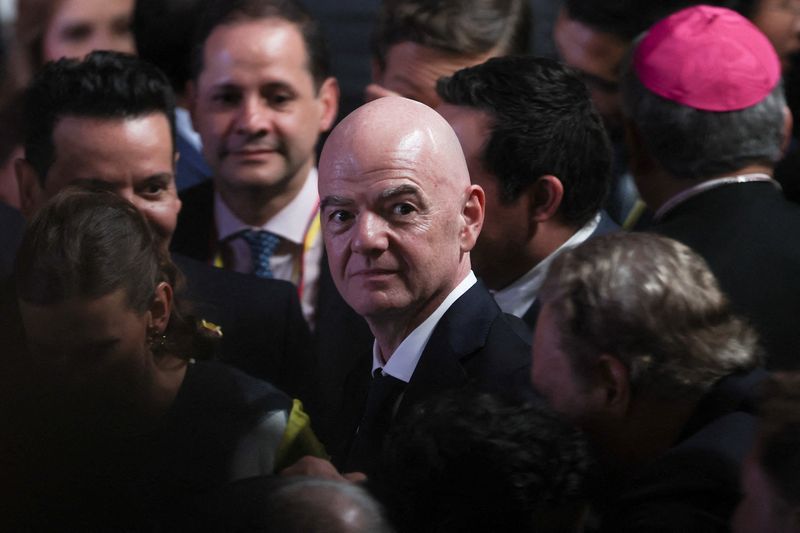
Tensions within Asian football governance have erupted into public dispute as Qatar's Football Association publicly challenges the Asian Football Confederation over its involvement in a coordinated international attack on FIFA President Gianni Infantino. The conflict reveals deepening fractures within the AFC at a pivotal moment when Infantino faces mounting pressure from multiple confederations and opposition to his reelection bid next year.
The rift emerged when Qatar Football Association President Hamad bin Khalifa Al-Thani penned a formal letter to AFC President Sheikh Salman bin Ibrahim Al Khalifa, formally objecting to the confederation's decision to align with UEFA and CONCACAF in issuing a damning open letter. Al-Thani's core grievance centers on procedural integrity: neither he nor the QFA was consulted before the three confederations released their collective statement on Monday that purported to represent the unified position of their member associations.
At the heart of the dispute lies a fundamental governance question about how multinational sports bodies should exercise collective authority. Al-Thani articulated this principle explicitly in his written communication, arguing that "a collective view must first be ascertained; it cannot be presumed, and it cannot be brought into existence by declaration." This position carries particular weight given his dual standing as both an AFC Executive Committee member and a FIFA Council member, lending his objection institutional credibility within football's hierarchical structures.
The Qatar Football Association president demanded transparency and accountability from the AFC, specifically requesting detailed explanations of what consultation process, if any, had occurred before the confederation claimed to speak on behalf of all 47 member associations. More pointedly, he questioned the legal and organizational basis upon which the AFC considered itself authorized to issue such a sweeping statement without prior coordination with member federations. No advance notification was provided to Qatar, no draft was circulated for comment, and no opportunity existed for the association to shape or contribute to the content before the AFC released the letter publicly in its collective name.
Infantino's controversial proposal to monetize World Cup commercial rights by offering 20 percent equity stakes to private investors—expected to generate approximately $4.2 billion—triggered the international backlash. The FIFA president subsequently abandoned the initiative following intense opposition, yet the damage to his standing persisted. UEFA, the AFC, and CONCACAF coordinated their public criticism of his conduct and explicitly called for his resignation, creating unprecedented pressure against an incumbent leader seeking another term.
The timing of Qatar's intervention proves strategically significant, arriving just days after a cohort of Arab football association leaders issued a competing statement demonstrating support for Infantino. Six heads of national football associations—including representatives from Qatar and Morocco, a scheduled 2030 World Cup co-host—publicly endorsed the FIFA president on Thursday, praising his "sustained efforts to advance football globally, expand opportunities across all regions and strengthen the game's role in bringing people and communities together." Four of these six signatories, notably including Al-Thani, also serve as FIFA Council members, positioning them at the intersection of regional and global football governance.
This alignment reveals the fragmentation of AFC positions regarding Infantino's leadership. While the confederation's official posture, as expressed in the open letter, presented a unified continental voice opposed to the FIFA president, the reality on the ground reflects competing power centers and divergent national interests within Asian football. The Arab football establishment, which carries considerable influence within the broader AFC framework given the region's demographic and economic weight, clearly maintains a more favorable view of Infantino than the confederation's public statement suggested.
The AFC declined to provide any response when contacted by media organizations, maintaining official silence while the dispute unfolded publicly. This reticence suggests potential embarrassment or recognition that the confederation had proceeded without securing genuine consensus among its diverse membership, which spans from wealthy Gulf states to developing football nations with varying interests and capabilities. The confederation's inability or unwillingness to defend its decision-making process implicitly validates Al-Thani's criticism regarding consultation procedures.
For Malaysian stakeholders and Southeast Asian football interests more broadly, this internal conflict within the AFC carries significant implications. The confederation's credibility and effective governance depend upon transparent, inclusive decision-making processes that respect member autonomy. When major confederations bypass proper consultation mechanisms and unilaterally issue collective statements, they undermine the democratic principles essential to multinational sports governance. This precedent could affect future AFC decisions on tournament hosting, competition formats, and other matters affecting Southeast Asian federations.
The dispute also illustrates how FIFA's internal politics increasingly play out through regional and continental alignments rather than through formal governance structures. Infantino's political survival appears to depend on maintaining support across diverse geographic constituencies, particularly from wealthier nations capable of advancing football development through substantial financial investment. The competing statements from AFC-level bodies reflect these deeper economic and political divisions that transcend formal organizational hierarchies.
Moreover, the Qatar-AFC confrontation demonstrates the limited effectiveness of attempts to build coordinated international pressure against Infantino when fundamental disagreements persist over process and substantive positions. The AFC's open letter, intended to project unified continental opposition to the FIFA president, has instead been undermined by public contradictions from significant member associations, weakening whatever leverage the confederation sought to exert in FIFA's internal struggles.

