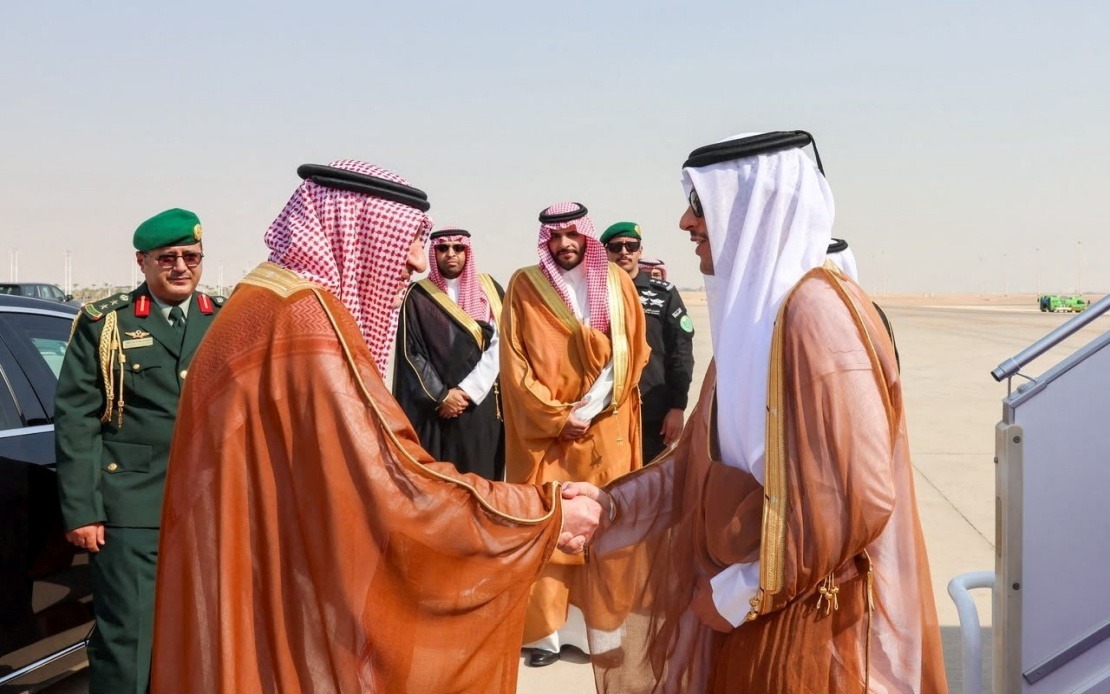
Qatar's Prime Minister Sheikh Mohammed bin Abdulrahman bin Jassim Al Thani touched down in Riyadh on Wednesday for a state visit aimed at advancing diplomatic efforts to reduce mounting tensions across the Middle East. The visit underscores the critical role both Gulf monarchies are playing in attempting to broker stability in a region increasingly fractured by competing interests and military posturing, particularly involving Iran and the United States.
Upon arrival, Sheikh Mohammed was received by Saudi Deputy Foreign Minister Waleed bin Abdulkarim Al-Khereiji, signalling the importance Saudi Arabia places on the engagement. The Qatari leader, who holds the dual portfolio of Prime Minister and Foreign Minister, subsequently held substantive discussions with Saudi Foreign Minister Faisal bin Farhan to assess the current diplomatic landscape and explore avenues for reducing regional volatility.
Central to their talks was a reaffirmation of both nations' commitment to resolving interstate disputes through peaceful negotiation rather than military confrontation. This emphasis on dialogue reflects a broader understanding among Gulf leadership that the region's prosperity depends on reducing the risk of conflict escalation. The officials reiterated their mutual position that diplomatic channels remain the appropriate mechanism for addressing differences, a stance that carries particular weight given the military capabilities and geopolitical interests arrayed across the Gulf.
The two countries also emphasised the necessity of coordinating responses at both regional and international levels, demonstrating recognition that unilateral approaches prove insufficient in an interconnected security environment. This coordination imperative extends beyond bilateral relations to encompass broader Gulf Cooperation Council dynamics and engagement with other stakeholders invested in Middle Eastern stability. By explicitly calling for such coordination, both delegations signalled willingness to work within multilateral frameworks rather than pursue narrow national advantage.
Maritime security emerged as a particularly urgent agenda item, with both officials stressing the importance of safeguarding navigation corridors in the Arabian Gulf and Red Sea. These strategic waterways handle enormous volumes of global commerce, making their security not merely a regional concern but an international economic imperative. The Qatari and Saudi governments recognised that ensuring unobstructed trade flows strengthens stability and reduces the likelihood of accidental escalation stemming from maritime incidents. For Malaysian readers, the implications are substantial—disruption to these critical shipping lanes would directly impact trade routes connecting Malaysia to European and African markets.
The timing of this visit carries considerable significance, arriving amid what observers describe as unprecedented tensions arising from the protracted Iran-United States confrontation. Saudi Arabia's long-standing alliance with Washington positions it alongside American strategic interests in the region, yet the kingdom also maintains complex relationships with other Gulf actors and possesses its own security concerns independent of American preferences. Qatar, meanwhile, has pursued a more balanced diplomatic posture, maintaining channels with multiple regional actors including Iran. The convergence of these perspectives in Riyadh suggests both nations believe some middle ground exists between military escalation and strategic capitulation.
The Qatari Foreign Ministry's official statement characterised the discussions as focused on bilateral relations alongside broader regional developments, though notably avoided specific reference to any particular conflict or crisis. This diplomatic language masks genuine complexities—both nations grapple with the fallout from various regional disputes, proxy conflicts, and long-standing grievances that resist easy resolution. Yet by framing discussions around general principles of de-escalation and enhanced security cooperation, the two leaders created space for substantive engagement without requiring immediate resolution of intractable differences.
For Southeast Asian observers, this Gulf diplomacy carries implications beyond the immediate region. Malaysia and other ASEAN nations depend on stable Gulf security architectures for energy supplies, trade continuity, and regional predictability. Should tensions escalate into direct conflict, the consequences would ripple through global supply chains and regional economics. The deliberate engagement between Qatar and Saudi Arabia therefore represents an attempt to prevent scenarios that would damage broader international stability and prosperity.
The absence of any announced duration for Sheikh Mohammed's visit leaves room for speculation about the depth of negotiations occurring behind closed doors. Such discretion in diplomatic announcements often indicates that more sensitive matters—potentially involving mediation proposals, security assurances, or coordination on specific international issues—are under discussion beyond what officials are prepared to communicate publicly. The restricted information flow demonstrates how Gulf diplomacy balances transparency with strategic confidentiality.
Both nations face domestic pressures that influence their foreign policy calculations. Saudi Arabia must manage its position as the Islamic world's spiritual centre while navigating great power competition between the United States and Russia. Qatar similarly balances multiple constituencies and commitments across its foreign relations. These state visits and high-level discussions serve multiple functions simultaneously: they signal commitment to stability, demonstrate active leadership in regional affairs, and provide platforms for exploring solutions to problems that conventional bilateral channels might not adequately address.
The emphasis on dialogue and diplomatic resolution reflects a maturation in Gulf leadership thinking that military solutions to regional problems have proven costly and often ineffective. This represents potential progress in a region historically prone to escalation cycles. Whether such diplomatic engagement can meaningfully reduce tensions depends partly on parallel developments elsewhere in the Middle East and on the willingness of all regional actors—not merely Qatar and Saudi Arabia—to prioritise stability over competing objectives.

