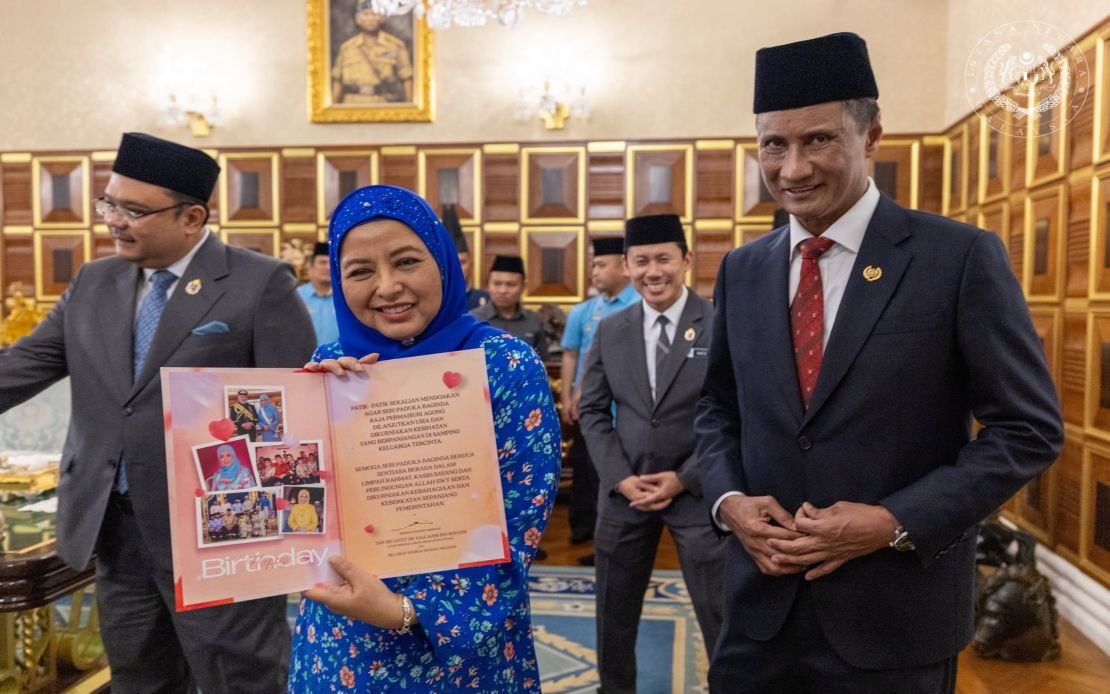
Her Majesty Raja Zarith Sofiah, Queen of Malaysia, marked her birthday with a formal courtesy visit from the senior management of Istana Negara on Wednesday. The Comptroller of the Royal Household Tan Sri Dr Azmi Rohani and the Grand Chamberlain Datuk Azuan Effendy Zairakithnaini called on the Queen at Istana Bukit Serene in Johor to extend their birthday greetings and felicitations. The visit, announced through Sultan Ibrahim Sultan Iskandar's official Facebook page, underscores the longstanding protocol observed within Malaysia's royal institutions to honour members of the royal family on significant personal occasions.
The ceremony of birthday courtesy calls reflects the formality and structured nature of palace life in Malaysia, where even personal milestones are marked through official channels and hierarchical procedures. These visits serve both ceremonial and symbolic purposes, reinforcing the bonds between the monarchy and the institutions that support the royal household. The presence of senior palace officials at such occasions demonstrates the significance attached to acknowledging the Queen's role within the broader Malaysian state apparatus and the royal family's prominence in national life.
Accompanying Tan Sri Dr Azmi to the meeting was Puan Sri Dr Noor Azizah Abdul Latif, the wife of the Royal Household Comptroller. Her participation added a personal dimension to what is otherwise a formal institutional observance. The inclusion of family members in such delegations is customary within palace protocol, creating a more intimate atmosphere while maintaining the requisite dignity expected at such occasions. This balance between formality and personal warmth characterises much of the royal household's approach to celebrating significant dates.
Central to the birthday observance was the presentation of gifts and delicacies prepared by the Istana Negara staff. Her Majesty received a specially prepared cake and traditional yellow glutinous rice, items that carry cultural significance within Malaysian royal customs. The yellow colour holds particular importance in Malay-Muslim tradition, symbolising prosperity and auspicious occasions. By presenting these items, the palace staff extended not merely token gifts but items laden with cultural meaning, reflecting the depth of tradition embedded within royal celebrations in Malaysia.
The gesture of presenting the cake and glutinous rice originated from the collective management and staff of Istana Negara, signifying that the birthday wishes extended beyond the senior officials to encompass the entire palace workforce. This inclusive approach underscores the importance placed on acknowledging all tiers of the royal household in participating in celebrations honouring the Queen. Such collective participation reinforces institutional cohesion and demonstrates how even formal state bodies can foster a sense of shared purpose and unity around significant occasions.
Tan Sri Dr Azmi, in his capacity as Comptroller, formally conveyed the heartfelt wishes of the palace management and entire staff contingent for Her Majesty's continued good health, well-being and happiness. The formal articulation of these wishes through the senior official present ensures that the sentiments expressed carry the weight and authority of the institution behind them. Such protocols, while appearing ceremonial, serve important functions in maintaining institutional culture and demonstrating respect for the constitutional position occupied by the Queen within Malaysia's framework of government.
The meeting's venue at Istana Bukit Serene in Johor carries its own significance within Malaysian royal geography. This palace serves as one of the royal residences associated with the Johor royal family, with whom Queen Raja Zarith Sofiah is connected through her marriage to Sultan Ibrahim. The choice of location thus reflects familial ties and the intertwined nature of royal households across Malaysia's various sultanates. Johor, as one of Malaysia's most prominent and historically significant states, has long maintained particular importance within the federation's royal structure.
Queen Raja Zarith Sofiah's role as Queen of Malaysia represents the culmination of Malaysia's unique constitutional monarchy system, wherein the position of Yang di-Pertuan Agong rotates among the rulers of the nine Malay-Muslim states every five years. Her status as Queen reflects both her position within the Johor royal family and the broader constitutional arrangements that govern Malaysia's head of state. Birthday observations for members of the royal family thus carry significance beyond personal celebration, touching upon matters of state protocol and constitutional custom.
The public announcement of this courtesy call through Sultan Ibrahim's official social media channels demonstrates the modern approach taken by the royal household in maintaining transparency and keeping the public informed about significant events. Where such occasions might previously have remained known only through palace announcements, the utilisation of digital platforms ensures wider accessibility to information about royal activities. This openness reflects broader trends within Asian monarchies toward greater public engagement while preserving the dignity and formality expected of royal institutions.
Birthday celebrations within the Malaysian royal context often extend beyond individual occasions to encompass broader expressions of the nation's respect for its constitutional institutions. Public holidays such as the King's Birthday and celebration of state rulers' birthdays represent formal national observances, yet the private courtesies exchanged within palace walls equally reflect the values underpinning Malaysia's system of constitutional monarchy. The visit described here, though intimate in scale, participates in these broader patterns of honouring the Queen's position and role.

