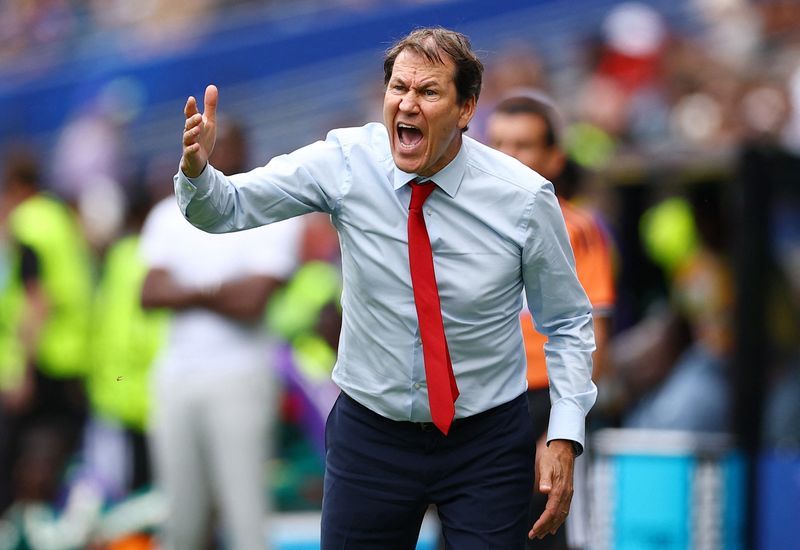
The World Cup has become the latest arena where racially coded language in sports commentary has come under intense scrutiny. Belgium coach Rudi Garcia's characterisation of Senegal as one of "those teams" prone to losing tactical discipline late in matches has reignited a broader conversation about how language masquerading as technical analysis frequently reinforces outdated racial stereotypes about African football and Black athletes.
Garcia's remarks surfaced after Belgium's dramatic comeback victory over Senegal on Wednesday. Two days later, the coach attempted to clarify his position through social media, asserting that he had merely been referring to teams inexperienced in managing leads during high-level World Cup competition, and that his observation could apply to any region. However, critics and academic researchers argue that such explanations fail to address the underlying pattern: commentary that depicts Black players and African teams as physically dominant yet tactically unsophisticated has deep historical roots in colonial-era racial stereotyping.
Ben Carrington, a professor of journalism and sociology at USC Annenberg whose research examines the intersection of race and sport, characterises Garcia's language as reproducing long-standing racial hierarchies. According to Carrington, the framing of African teams as lacking tactical control or emotional restraint directly echoes colonial frameworks that portrayed Black people as inherently animalistic and prone to uncontrolled instinct. This distinction between technical sophistication and physical prowess has become one of sport's most persistent mechanisms for racial categorisation, shaping not only how teams and players are perceived but also influencing opportunities and advancement within the sport.
Peter Alegi, a history professor at Michigan State University specialising in African football, expressed concern that Senegal's late-match difficulties could reinforce familiar prejudices precisely at a moment when African football has been working to overcome such assumptions. Alegi pointed to South Africa's successful hosting of the 2010 World Cup as evidence of African capacity to organise and shape global sporting narratives. Yet a single match, he warned, can quickly reverse years of accumulated goodwill and genuine accomplishment, allowing outdated stereotypes to resurface in media coverage and public discourse.
Empirical research supports these concerns about systematic bias in football commentary. Academic studies examining media coverage during the 2018 World Cup found striking disparities in how praise was distributed. Researchers from Leicester and Coventry universities discovered that 70 percent of compliments directed toward Black players focused on physical attributes such as speed and power, compared to only 18 percent for white players. Conversely, less than 20 percent of commentary about Black players emphasised learned skills, tactical awareness, character, or cognitive abilities—categories that accounted for 73 percent of the praise given to white players. These statistics illuminate how ostensibly neutral commentary perpetuates racial hierarchies through language.
Matthew Hughey, a sociology professor at the University of Connecticut specialising in race and sport, traces the origins of these patterns to the twentieth century's early decades, when Black athletes began achieving athletic success at international levels. The stereotypes emerged not as natural observation but as a rationalisation for explaining Black athletic achievement while simultaneously denying Black athletes the intellectual and technical credit they deserved. Hughey identifies two foundational yet erroneous beliefs undergirding this commentary: racial essentialism, the notion that race constitutes a biologically real category with inherent traits, and biological determinism, the idea that these supposed traits predetermined outcomes.
Garcia's comments are not isolated incidents but part of a troubling pattern witnessed throughout this tournament. German pundit and former footballer Bastian Schweinsteiger characterised Ivory Coast's playing style as "African football" that was "unorthodox" and "wild" rather than tactical before Germany's group-stage match against the West African nation. Ivory Coast coach Emerse Fae identified the remarks as racist, though Schweinsteiger maintained he was simply analysing stylistic differences. Similarly, Serbian commentator Rade Bogdanovic apologised after questioning the focus and endurance of Belgium's Black players following a goalless draw with Iran, comments that exemplify how such stereotypes materialise across different broadcasting contexts and national media environments.
These recurring incidents have prompted conversations about whether current frameworks for media training and broadcaster accountability are sufficient. Leon Mann, founder of Black Collective Media in Sports, an organisation advising broadcasters on diversity and inclusion, characterised Schweinsteiger's remarks as ignorant and stereotype-driven. Yet Mann argued that such controversies, while uncomfortable, create opportunities for institutional reform if stakeholders approach them constructively. The broader implications extend far beyond football commentary: Mann noted that terms like "wild" and "unsophisticated" have material consequences for Black athletes and professionals, affecting hiring decisions, leadership opportunities, and ultimately economic security within the sport and related industries.
FIFA has acknowledged these concerns through various initiatives, including penalties for racist conduct and educational programmes addressing discrimination. The governing body established an advisory panel comprising former players from ethnically diverse backgrounds and created a Players' Voice Panel specifically focused on combatting racism. However, scholars argue that incremental efforts remain insufficient given the depth and persistence of systemic bias in global football coverage.
Briana Scurry, the legendary American goalkeeper whose penalty save secured the United States' 1999 Women's World Cup victory, serves on FIFA's Players' Voice Panel. Scurry has reflected on how media coverage throughout her career consistently emphasised her athleticism and strength while overlooking her intelligence and technical skill. Her jersey now resides in the Smithsonian's National Museum of African American History and Culture, yet Scurry observes troubling continuities between how her performance was framed in the 1990s and how Black players' abilities are still depicted today. This demeaning pattern—reducing athletes to physical attributes while denying them credit for intelligence and skill—persists across generations of Black players.
Carrington emphasised that transforming football's media landscape requires sustained, comprehensive anti-racism education and campaigns extending far beyond symbolic gestures. True reform demands that the sport's stated commitment to "the beautiful game" extends beyond marketing slogans to embrace genuine inclusion and equitable representation of diverse nations and populations. For Malaysia and Southeast Asia, where football represents a major cultural institution and broadcasting medium, these international patterns carry local resonance. As regional nations continue developing football programmes and media infrastructure, the opportunity exists to build coverage standards that avoid replicating historical racial biases embedded in Western sports media frameworks. The challenge lies in whether football's governing bodies and media institutions will commit to the sustained institutional change necessary to realise that possibility.

