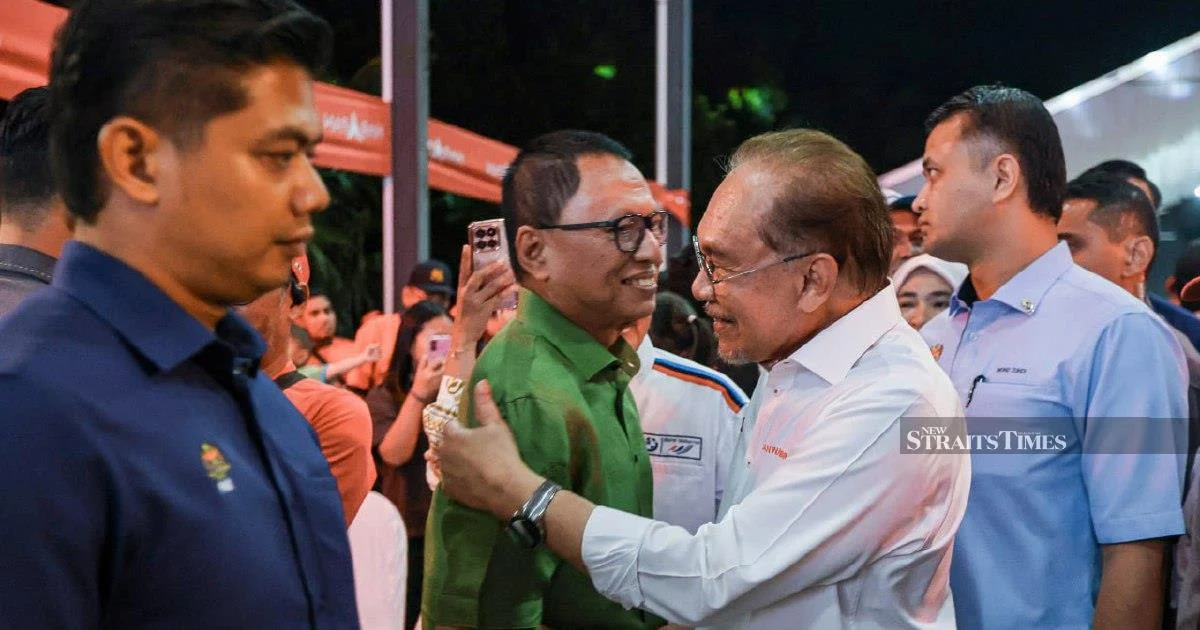
Bersama leader Datuk Seri Rafizi Ramli has taken aim at Datuk Dr Mohd Puad Zarkashi with a pointed jest, following the latter's display of public warmth towards Prime Minister Anwar Ibrahim on Saturday. The remark reflects the underlying tensions within Malaysian politics as various political figures recalibrate their allegiances in response to shifts in the ruling coalition's composition and influence.
Rafizi's criticism, delivered in his characteristic style, centres on the suggestion that Puad has effectively switched his political portfolio from Umno to PKR, Malaysia's primary ruling party under Anwar's leadership. Such mockery touches on a persistent theme in Malaysian political discourse: the fluidity of political identities and the pragmatic reconfiguring of factional loyalties that characterise the country's complex parliamentary landscape. The jab carries implications about how political figures navigate personal advancement through strategic positioning within competing power structures.
The public embrace between Puad and Anwar represents more than a ceremonial gesture. In Malaysia's political ecosystem, such visible demonstrations of closeness between senior figures carry symbolic weight, signalling potential shifts in influence and access to executive favour. These moments are carefully noted by political observers and rival factions, as they may presage changes in ministerial portfolios, parliamentary committee assignments, or policy directions favoured by particular stakeholders.
Puad's apparent warming towards the Anwar administration comes at a time when political realignments continue to reshape Malaysia's governing coalitions. The country has experienced unprecedented volatility in its political configurations over recent years, with multiple changes of government, coalition restructuring, and shifting parliamentary mathematics. Individual political leaders have had to adapt their strategies to remain relevant and maintain their influence in this uncertain environment.
The Bersama party, which Rafizi leads, occupies a distinctive position within Malaysia's political framework. As a relatively newer entrant to the parliamentary landscape, Bersama must assert itself amid competition from established parties and coalitions. Rafizi's barbs directed at other political figures often serve a dual purpose: they generate public attention for his party's perspectives while simultaneously attempting to paint rival figures as unprincipled or overly ambitious.
Umno's traditional dominance in Malaysian politics has been challenged in recent years by internal divisions and electoral setbacks. The party remains a powerful force, but its ability to set the national political agenda has diminished compared to previous decades. For figures like Puad, formerly closely associated with Umno's institutional interests, the temptation to align more visibly with the ascendant PKR-led administration may reflect calculations about where power is concentrated and where future opportunities might lie.
The timing of Puad's public moment with Anwar also warrants consideration within the broader context of parliamentary mathematics and coalition stability. Prime Minister Anwar Ibrahim's government has required careful management of various political interests to maintain its parliamentary majority. Cultivating closer relationships with figures who previously operated within opposition or competing party structures can serve governmental objectives while simultaneously creating vulnerabilities for those figures within their original political homes.
Rafizi's public commentary operates within a strategic framework designed to position Bersama as a party willing to critique the establishment while maintaining pragmatic engagement with governing structures. His jests about political figures switching allegiances resonate with a Malaysian electorate that has grown increasingly cynical about political sincerity following years of coalition collapses, defections, and policy reversals. By highlighting perceived hypocrisy or opportunism among rival politicians, Rafizi seeks to build Bersama's brand as a force for greater political accountability.
The dynamics between Rafizi, Puad, and the broader political establishment reflect deeper questions about political identity and loyalty in contemporary Malaysia. As traditional party structures have weakened and new possibilities for political organisation have emerged, individual politicians have enjoyed greater freedom to recalibrate their positions. However, this freedom comes with reputational risks, as other political actors are quick to seize upon perceived inconsistencies or opportunistic manoeuvres.
For Malaysian voters attempting to assess their representatives' credibility and consistency, such exchanges underscore the importance of scrutinising the actual policy positions and governance records of political figures beyond their public declarations of loyalty or affiliation. The substance of what politicians deliver through their legislative work and administrative responsibilities ultimately matters more than the theatrical elements of political positioning, though the latter continues to dominate public discourse.
The Anwar Ibrahim administration's cultivation of figures from varying political backgrounds reflects an attempt to broaden its base of support and demonstrate cross-factional appeal. Whether such outreach translates into substantive policy coordination or represents mere performative politics remains a question for ongoing political analysis. What is evident is that Malaysian politics continues to operate according to its own distinctive logic, where public displays of connection between political figures carry significance far beyond mere etiquette, and where critics like Rafizi will not hesitate to highlight apparent shifts in political orientation.

