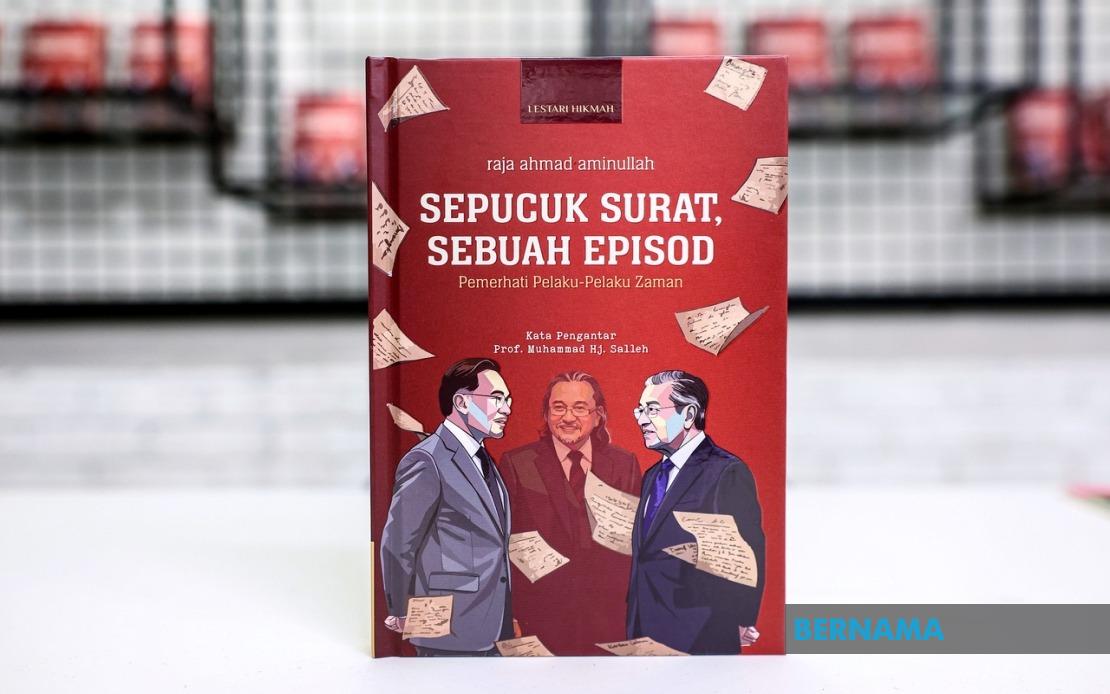
Prominent Malaysian cultural commentator Raja Ahmad Aminullah, known affectionately as Pak Engku, has released a new book that documents decades of personal correspondence with some of the country's most influential figures. Titled "Sepucuk Surat Sebuah Episod: Rakaman Pelaku-Pelaku Zaman", the 169-page collection was officially launched by Mohd Khair Ngadiron, director of the National Book Council of Malaysia (MBKM), at an event in Kuala Lumpur attended by writers, academics, artists and long-time associates of Raja Ahmad.
The book represents a departure from conventional political memoir, instead positioning itself as a socio-cultural archive of observations spanning approximately 25 years. Raja Ahmad has deliberately framed the work as something beyond partisan analysis, emphasizing that it captures a specific moment in Malaysian history through a more intimate, human-centred lens. This approach offers contemporary readers and future historians an alternative perspective on the personalities and circumstances that have defined the nation's trajectory, moving beyond traditional political narratives into the personal dimensions of public figures.
During his address at the launch event, Raja Ahmad clarified that the publication is not designed to elevate any particular individual or advance any specific political agenda. Instead, he positioned the work as a documentary record of interactions and exchanges that reveal how prominent Malaysians thought, communicated and navigated the complexities of their respective roles. By publishing these letters and recollections, Raja Ahmad aims to create a resource for reflection and learning, allowing readers to draw their own conclusions about the historical period and the figures involved.
The cultural commentator emphasized his role as an observer rather than a political analyst. "I don't write political books. I write about my observations of the world around me and the socio-cultural issues affecting society," he explained. This distinction is significant in the Malaysian context, where much published commentary tends toward explicit political positioning. By maintaining observational distance, Raja Ahmad's approach potentially offers a more nuanced examination of how Malaysia's leadership navigated major decisions, personal relationships and the broader transformation of society during the periods covered in the correspondence.
Raja Ahmad's decision to include letters involving prominent figures such as former Prime Minister Tun Dr Mahathir Mohamad and opposition leader Datuk Seri Anwar Ibrahim demonstrates the breadth of his documented interactions across Malaysia's political and social landscape. Rather than presenting these individuals as heroes or villains, the collection appears designed to humanize them through their written words and personal exchanges. This approach acknowledges that historical figures operate within complex circumstances and personal relationships that often remain obscured in conventional historical accounts.
The book's publication by Lestari Hikmah makes it accessible through multiple distribution channels, including bookstores, literary events and online platforms. The dual-format pricing—RM30 for softcover and RM80 for hardcover—reflects an attempt to reach both general readers and those seeking collector's editions or library acquisitions. This pricing strategy suggests publisher confidence that the work will appeal to a substantive audience interested in Malaysian cultural history and contemporary political understanding.
For scholars and students of Malaysian history, the book promises value beyond its narrative content. Raja Ahmad's position as a cultural observer who has maintained relationships across different political constituencies means the letters likely document perspectives that might otherwise disappear from the historical record. In an era where much political communication becomes increasingly transient and digital, the preservation of personal correspondence in physical form offers permanence and deliberate reflection absent from ephemeral social media exchanges.
The launch event's composition—drawing together artists, literary figures and academics rather than primarily political figures—suggests the book is being positioned within cultural and intellectual circles rather than as a contribution to active political discourse. This positioning may allow for more dispassionate analysis of the personalities and periods examined. Malaysian intellectuals have increasingly sought sources that provide texture and complexity to understanding the nation's recent history, and Raja Ahmad's collection appears to fill that gap.
Raja Ahmad's explicit statement that he is "inconsequential" in the narrative represents an important methodological choice. By minimizing his own role and positioning himself as a recorder of moments and interactions, he invites readers to focus on the subjects themselves and their words rather than on his interpretations or judgments. This approach aligns with broader trends in oral and documentary history that emphasize primary source preservation and reader interpretation.
The work's focus on preserving memories for future generations addresses a particular anxiety in Malaysian intellectual circles about the loss of undocumented knowledge and personal perspectives from key historical actors. As prominent figures age and pass away, opportunities to document their personal communications and relationships become increasingly limited. By publishing these letters now, Raja Ahmad contributes to the archival record available to historians, researchers and curious Malaysians seeking deeper understanding of how the nation has evolved.
For readers interested in contemporary Southeast Asian politics and history, the book offers potential insights into how Malaysian leaders of different political persuasions approached common challenges and maintained personal relationships across ideological divides. These dimensions of political life—the personal humanity of public figures and their capacity for civil correspondence despite disagreement—have contemporary relevance as Malaysian society navigates ongoing political divisions and social tensions.
The broader cultural significance of this publication lies in its assertion that Malaysian history is not merely a collection of policy decisions and political events, but a rich tapestry of personal relationships, cultural observations and individual perspectives. By documenting his own role as an interlocutor among influential figures, Raja Ahmad has created a resource that permits multiple interpretations and invites readers to form their own judgments about the period and personalities involved, ultimately contributing to a more textured understanding of Malaysia's contemporary history.

