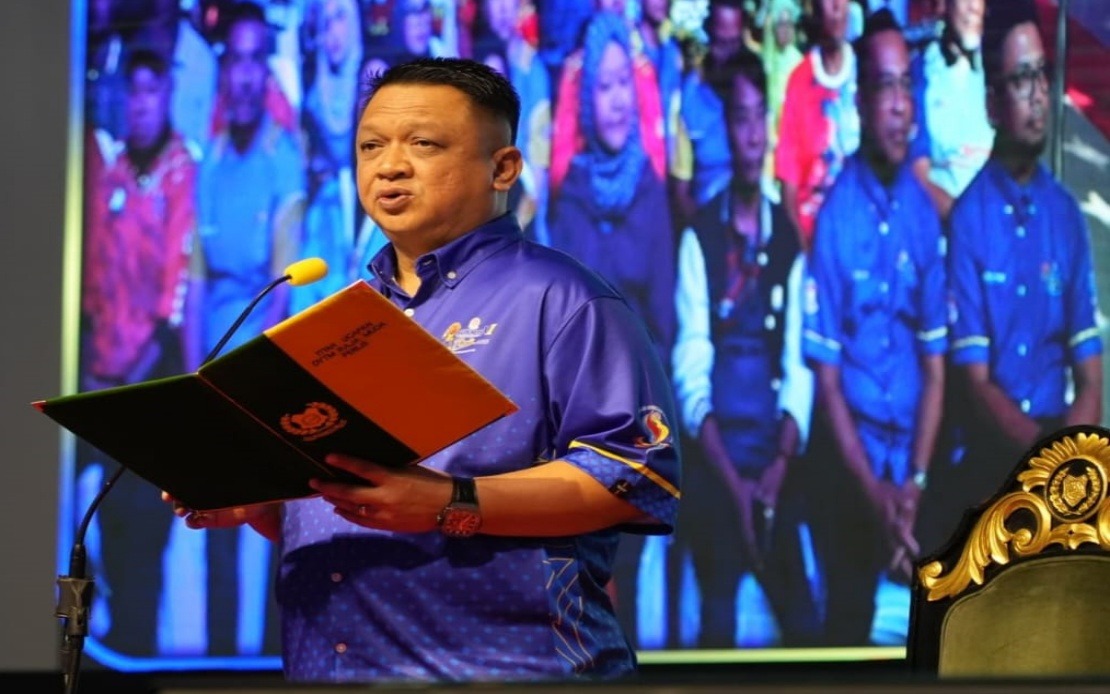
The Raja Muda of Perlis Tuanku Syed Faizuddin Putra Jamalullail has set out an ambitious roadmap for Majlis Amanah Rakyat (MARA), the government-linked agency tasked with nurturing Bumiputera entrepreneurship and development across Malaysia. Speaking at the 11th Sukan MARA Se-Malaysia (SUKMAS) in Kangar on August 30, His Royal Highness articulated three pillars that should guide the organisation's strategic direction in an era of rapid technological and economic transformation. The vision presented reflects growing recognition within Malaysia's institutional leadership that adaptation alone is insufficient—MARA must position itself as an active shaper of national economic trajectories rather than merely responding to external shifts.
The first pillar centres on technological innovation and artificial intelligence. Tuanku Syed Faizuddin Putra emphasised that MARA personnel must move beyond passive adoption of new tools to become pioneers in leveraging AI and emerging technologies for enhanced operational efficiency and creative problem-solving. This directive carries particular weight for a developing nation like Malaysia, where strategic deployment of digital capabilities increasingly determines competitiveness at both the corporate and national levels. By positioning MARA at the forefront of technological integration, the Raja Muda signals that the agency should serve as a model for how government institutions can modernise their approaches to economic development. For MARA's beneficiaries—primarily small and medium-sized Bumiputera enterprises—this emphasis on AI adoption could translate into better access to digital tools, data analytics capabilities, and innovation support that currently remain concentrated among larger corporations.
The second thrust addresses entrepreneurial excellence and global market penetration. The Raja Muda called for MARA to cultivate entrepreneurs who are not only innovative and resilient but also bold enough to compete on international stages. This represents a critical evolution in Malaysia's approach to business development. Historically, many MARA-supported enterprises have remained focused on the domestic market, where they enjoy preferential procurement policies and institutional support. However, the directive to build companies capable of making their mark globally acknowledges that long-term prosperity requires Malaysian enterprises to generate wealth through genuine competitive advantage rather than regulatory protection alone. For a country increasingly exposed to regional and global economic competition from Singapore, Vietnam, and Thailand, this shift toward export-oriented, internationally competitive Bumiputera businesses addresses a structural weakness in Malaysia's economy. The implication is clear: MARA's mission must expand beyond creating beneficiary jobs to fostering enterprises that can contribute substantively to national export earnings and foreign exchange reserves.
The third pillar focuses on leadership development and strategic decision-making capabilities. Tuanku Syed Faizuddin Putra stressed that future leaders must not merely respond to change but act as agents of transformation within their organisations and sectors. This emphasis on catalytic leadership addresses a gap frequently identified in Malaysian institutional capacity discussions—the distinction between management competence and strategic visionary thinking. Leaders who are quick, decisive, and strategic can navigate complexity more effectively than those bound by procedural compliance. For MARA, this means the organisation should prioritise developing leaders who can make calculated risks in supporting entrepreneurial ventures, identify emerging sectoral opportunities ahead of competitors, and drive organisational renewal. This is particularly relevant in contexts where rapid decision-making can determine market success or failure, especially for startups and growth-stage enterprises that MARA seeks to support.
The Raja Muda's remarks, delivered during the opening of SUKMAS, were contextualised within the broader mission of strengthening MARA's institutional culture and cohesion. The biennial tournament, now in its 11th edition, serves as more than a recreational outlet—it functions as a mechanism for binding together MARA's workforce across geographic and functional divisions. By gathering three thousand athletes and officials from 14 MARA teams nationwide, the event reinforces organisational identity and facilitates cross-functional relationships that can enhance coordination and knowledge-sharing. For a geographically dispersed agency operating across Malaysia's diverse states, such unity-building exercises have strategic value in creating shared purpose and enabling informal networks that improve institutional effectiveness.
The 11th SUKMAS, running from August 30 through September 3, encompasses 15 sporting disciplines including football, netball, volleyball, sepak takraw, and tennis. This diverse sporting programme reflects both contemporary athletic interests and cultural sports rooted in Malaysian tradition. MARA Director-General Datuk Seri Zulfikri Osman noted that the event provides valuable opportunity for personnel engagement with Perlis communities, reinforcing MARA's community-oriented mission beyond purely institutional objectives. This regional dimension is significant—by hosting SUKMAS in Kangar, the agency demonstrates commitment to decentralised activities that elevate the profile and engagement of state-level operations beyond Kuala Lumpur-centric institutional narratives.
The Raja Muda's three-pillar framework aligns with broader Southeast Asian economic trends and Malaysia's positioning within regional competition. As artificial intelligence, digital entrepreneurship, and global supply chain integration reshape economic opportunities across the region, MARA's strategic pivot toward technological leadership and internationally competitive businesses reflects pragmatic acknowledgment of contemporary realities. Thailand, Indonesia, and Vietnam have similarly prioritised entrepreneurship ecosystems and digital capability development. Malaysia's success in implementing the Raja Muda's proposed thrusts will substantially influence the nation's capacity to retain and grow Bumiputera entrepreneurial participation in high-value sectors increasingly dominated by digital-native companies and globally-oriented ventures.
The emphasis on decision-making speed and strategic leadership also responds to institutional critiques frequently directed at government-linked development agencies. In a hypercompetitive entrepreneurial environment where venture-backed startups can move from concept to market dominance within months, institutional sluggishness becomes a competitive liability. By cultivating leaders empowered to make quick, calculated decisions, MARA can theoretically respond more effectively to emerging opportunities and market signals, reducing the time-lag between identifying promising sectoral trends and deploying institutional resources to support entrepreneurial action. This requires not only personnel development but potentially structural and procedural reforms enabling faster decision-making within bureaucratic frameworks.
The Raja Muda's articulation of MARA's future also carries implications for Malaysia's broader Bumiputera economic agenda. Rather than defending existing market share and regulatory protections, the proposed strategic direction reframes the Bumiputera mission as one focused on building genuinely competitive, innovation-driven, globally-engaged enterprises. This represents a maturation of economic affirmative action philosophy—moving from proportional representation concerns toward capability development and competitive excellence. For Malaysian policymakers and institutional leaders, this signals that future justifications for preferential policies may increasingly centre on demonstrable competitive performance and economic contribution rather than community representation alone.
Implementing these three pillars presents substantial operational challenges for MARA. Building artificial intelligence capabilities requires sustained investment in personnel training, technology infrastructure, and partnerships with technology providers. Nurturing globally competitive entrepreneurs demands portfolio diversification beyond traditional manufacturing and retail sectors toward technology, creative industries, and knowledge-based services where Malaysia faces significant skill development gaps. Developing catalytic leaders requires transforming institutional culture and performance incentive systems to reward strategic vision and calculated risk-taking rather than risk-averse compliance. Collectively, these imperatives suggest MARA faces a significant transformation agenda over the coming years, with success requiring sustained commitment from institutional leadership, government support, and importantly, buy-in from MARA personnel themselves. The Raja Muda's vision articulates direction; operationalising that vision within Malaysia's institutional context remains an ongoing institutional challenge.

