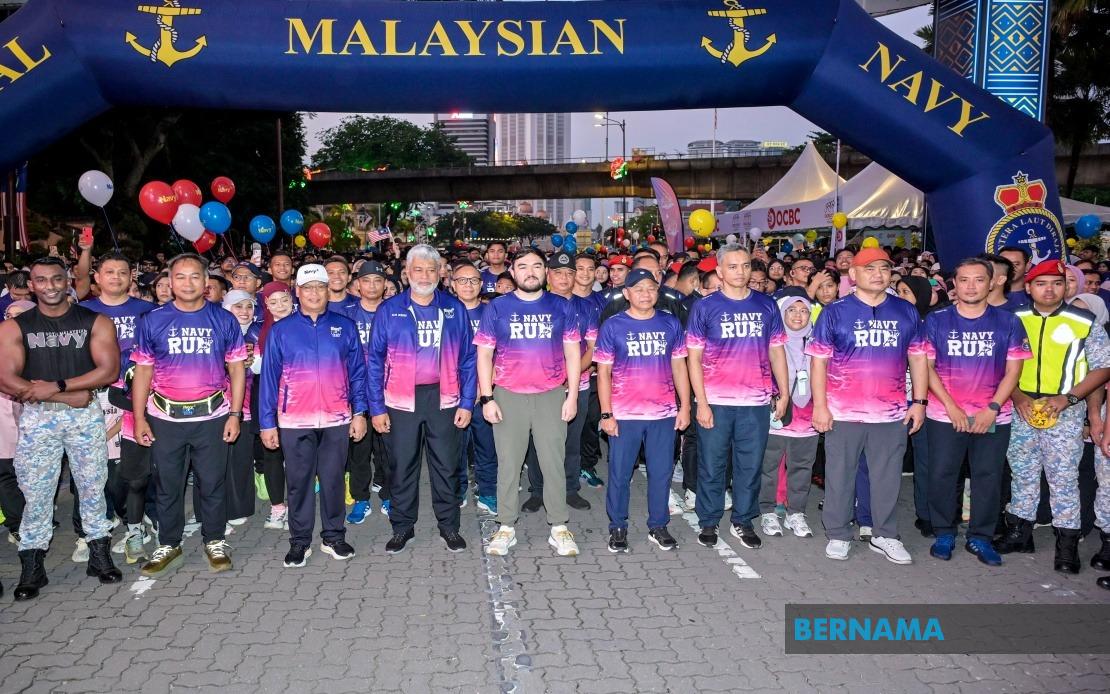
The Raja Muda of Selangor, Tengku Amir Shah Sultan Sharafuddin Idris Shah, formally inaugurated Navy Run 2026 at Dataran DBKL on Friday, marking a significant milestone for one of Malaysia's premier military community engagement initiatives. The event shattered previous participation records, drawing an unprecedented 15,000 runners to the seven-kilometre course that wound through the heart of Kuala Lumpur. The royal's decision to personally join the race and complete the full distance reflected the symbolic importance the royal house places on strengthening ties between the armed forces and the broader Malaysian public.
Now in its fourth successive year, Navy Run has evolved considerably since its inaugural staging in 2023. What began as a modest initiative to introduce Malaysians to the Royal Malaysian Navy has matured into one of the country's most well-attended military-sponsored sporting events, demonstrating the growing appetite among ordinary Malaysians for direct interaction with defence institutions. The expansion in participant numbers—climbing steadily with each iteration—suggests the event has successfully transcended its narrow military appeal to become a genuine grassroots expression of national unity and civic participation.
The morning's proceedings benefited from the presence of several senior officials whose attendance underscored the run's significance within Malaysia's defence and administrative frameworks. Admiral Tan Sri Dr Zulhelmy Ithnain, who holds the position of RMN chief, personally graced the event, signalling the navy's institutional commitment to community outreach. Kuala Lumpur mayor Datuk Fadlun Mak Ujud's participation highlighted the local authority's recognition of the event's value in promoting active lifestyles and civic engagement across the federal capital. Azhar Jumaat, chief executive officer of Lumut Naval Shipyard Sdn Bhd, represented the maritime industrial sector's alignment with defence initiatives.
The organisers extended the event's reach far beyond Kuala Lumpur's geographic boundaries through simultaneous live-streamed participation across multiple naval installations. Personnel stationed at RMN facilities in Lumut, Kuantan and Kota Kinabalu participated concurrently, creating a nationwide expression of naval unity that transcended conventional distance limitations. This distributed approach to the event reflected contemporary communications capabilities whilst ensuring that naval personnel posted in distant stations could meaningfully contribute to the collective endeavour without geographical disadvantage.
Royals' messaging around Navy Run 2026 articulated a broader strategic philosophy concerning civil-military relations in Malaysia. The formal statement emphasised that the occasion transcended ordinary sporting participation, instead functioning as a foundational mechanism for deepening public understanding of naval operations and institutional purpose. By facilitating informal, non-confrontational interaction between civilians and military personnel in a recreational context, the navy seeks to cultivate authentic grassroots support grounded in genuine familiarity rather than abstract patriotic appeals.
The connection between public familiarity with military institutions and sustainable national resilience remains underexplored in Malaysian policy discourse, yet the navy's approach suggests recognition of this relationship. When civilian populations develop personal relationships with service personnel and gain first-hand exposure to institutional values and operational realities, the resulting social capital translates into political durability and institutional legitimacy. Navy Run functions as a mechanism for converting abstract concepts of national defence into tangible human connections that transcend socioeconomic, ethnic and generational boundaries.
Beyond the running component itself, organisers deliberately incorporated diverse programming designed to deepen participant engagement and facilitate ongoing connection with naval operations. An early-morning aerobics session energised attendees before the formal race commencement, whilst performances by the RMN Central Band provided musical accompaniment that fostered celebratory atmosphere. A silent drill display offered spectators insight into the precise coordination and discipline characterising naval personnel training, demonstrating professionalism in visual form accessible to non-specialist audiences.
Career exhibition booths strategically positioned throughout the event venue served practical recruitment and public information functions simultaneously. Young Malaysians contemplating military service could investigate career pathways and employment conditions directly with naval representatives, reducing informational barriers that might otherwise prevent military service consideration. For general attendees without recruitment interest, these booths provided transparent insight into the navy's organisational structure, technological capabilities and personnel composition.
The inclusion of a lucky draw component acknowledged that sustainable public engagement requires elements of reward and entertainment alongside institutional messaging. Modest prize incentives encourage wider participation across demographic groups that might otherwise view structured military events with indifference or suspicion. Such inclusive programming design reflects sophisticated understanding that genuine national unity emerges from voluntary participation in shared civic endeavours rather than mandatory compliance with patriotic directives.
For Malaysia's defence establishment, events like Navy Run 2026 serve strategic purposes extending well beyond immediate public relations objectives. As maritime security challenges intensify across Southeast Asia—ranging from territorial disputes to transnational maritime criminal networks—the Royal Malaysian Navy's capacity to mobilise public support becomes increasingly consequential. A civilian population intimately familiar with naval capabilities and institutional culture proves more likely to support adequate defence expenditure and understand military security imperatives when policy debates arise.
The record participation figure carries particular significance within Malaysia's current demographic and social context. In an era when misinformation circulates rapidly through digital channels and public trust in institutions faces persistent erosion, the willingness of 15,000 Malaysians to participate in a military-sponsored event suggests resilient reservoir of goodwill towards defence institutions. This represents neither uncritical militarism nor blind nationalism, but rather pragmatic recognition among ordinary Malaysians that professional military establishments constitute essential national infrastructure worthy of informed public engagement.

