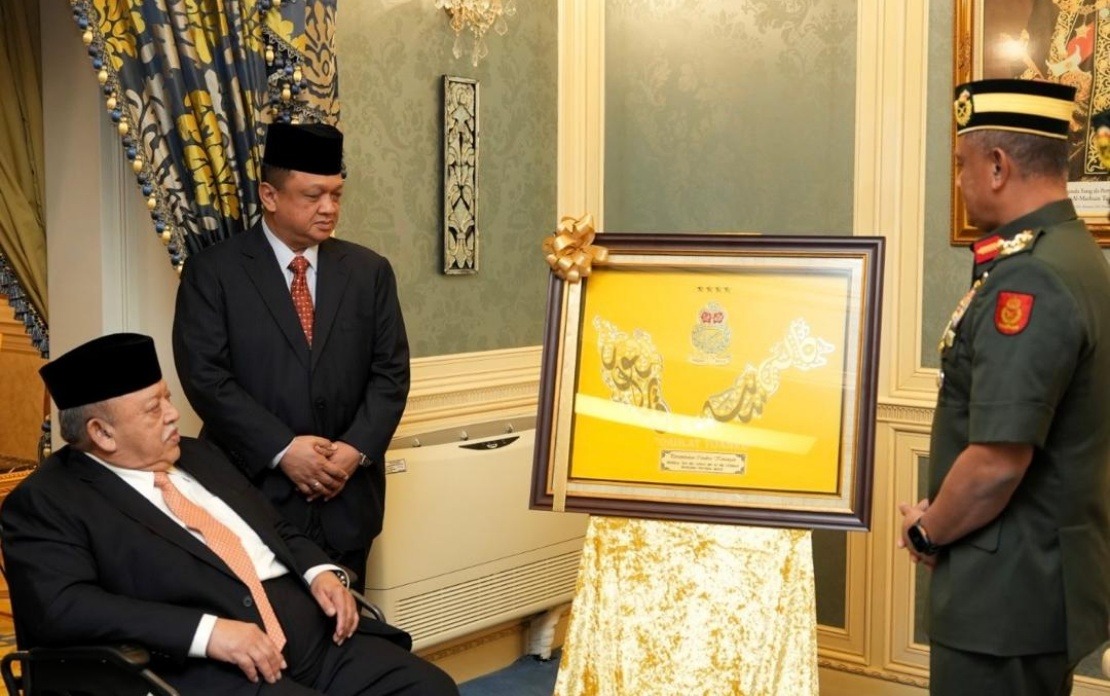
Tuanku Syed Sirajuddin Jamalullail, the Raja of Perlis, extended a formal audience to General Tan Sri Azhan Md Othman, the chief of Malaysia's armed forces, during a ceremonial reception held on July 29 at the Balai Menghadap Biru within Istana Arau. The engagement brought together two pillars of Malaysia's institutional framework—the state's royal authority and the military establishment—in a gathering designed to reinforce their collaborative relationship.
The Raja Muda of Perlis, Brigadier General Tuanku Syed Faizuddin Putra Jamalullail, participated in the proceedings alongside his father. The Raja Muda carries the additional responsibility of commanding the 504th Territorial Army Regiment, which operates from Kem Bukit Keteri near Padang Besar, underscoring the direct military connection within Perlis's royal household. This dual role bridges civil and military spheres, creating a tangible link between state governance and defence operations.
According to Istana Arau's official statement, the audience served multiple strategic purposes beyond ceremonial convention. The palace emphasized that the gathering aimed to deepen the already established bonds between Perlis's royal institution and the armed forces, while simultaneously acknowledging the military's ongoing efforts to protect national sovereignty and maintain public security. Such formal engagements carry symbolic weight in Malaysia's constitutional framework, where the Yang di-Pertuan Agong and state rulers hold ceremonial military positions.
Tuanku Syed Sirajuddin holds the honorary title of Colonel-in-Chief for both the Royal Ranger Regiment (RRD) and the Royal Military Police Corps (KPTD), positions that formalize his institutional connection to these defence organizations. These ceremonial roles, though non-executive, carry significant meaning within Malaysia's civil-military culture, representing the crown's constitutional oversight of armed forces and their alignment with broader national values.
The palace statement characterized the meeting as a platform for advancing strategic cooperation between the military's leadership and Perlis's state administration. The discussions apparently encompassed security matters, public welfare considerations, and initiatives supporting national development. This broader remit suggests that such audiences extend beyond ceremonial formality to encompass substantive policy conversations affecting the state and nation.
The emphasis on strengthening ties between defence and royal institutions reflects an underlying principle in Malaysia's governance structure: the interconnection between constitutional monarchy and military responsibilities. The nation's security apparatus operates within a framework where the monarchy maintains symbolic and constitutional oversight, requiring regular coordination and dialogue between these entities to ensure alignment on defence priorities and national interests.
Perlis, as Malaysia's northernmost peninsular state, occupies a geographically significant position in the nation's security architecture. Proximity to the Thai border and the state's role as a gateway region make its security environment strategically important. The 504th Territorial Army Regiment's presence at Kem Bukit Keteri reflects this reality, positioning military resources to address regional defence requirements. Engagements between state rulers and military leadership in such locations carry practical significance beyond ceremonial considerations.
The palace highlighted that the meeting reflected a shared dedication to maintaining national peace, stability, and prosperity through collaborative efforts between defence and royal institutions. This language points to a broader recognition that Malaysia's security and development cannot be achieved through isolated institutional action but require coordinated engagement across governmental structures. Such cooperative frameworks become increasingly important as nations face complex security challenges ranging from transnational threats to internal stability concerns.
For Malaysian readers and regional observers, such state-level engagements between royal and military leadership offer insight into how Malaysia's constitutional system functions in practice. While the Yang di-Pertuan Agong holds the supreme constitutional role as Commander-in-Chief of the armed forces, state rulers maintain parallel responsibilities and ceremonial positions that require active relationship management with military counterparts. These regular audiences serve as mechanisms for maintaining institutional coherence and ensuring that Malaysia's multiple layers of governance operate in concert.
The timing and formality of such engagements also signal confidence in civil-military relations, a consideration of importance in any nation. Malaysia's constitutional framework places significant responsibility on military leadership while maintaining royal and civil oversight. Regular, formal consultations between these spheres indicate healthy institutional functioning and commitment to constitutional principles.
From a regional perspective, such civil-military coordination reflects Malaysia's approach to governance and security management. The emphasis on balanced engagement between royal institutions and defence forces, rather than concentration of power in any single entity, shapes how Malaysia approaches both domestic security and regional partnerships. Understanding these institutional relationships provides context for Malaysia's defence policy decisions and diplomatic positioning in Southeast Asia.

