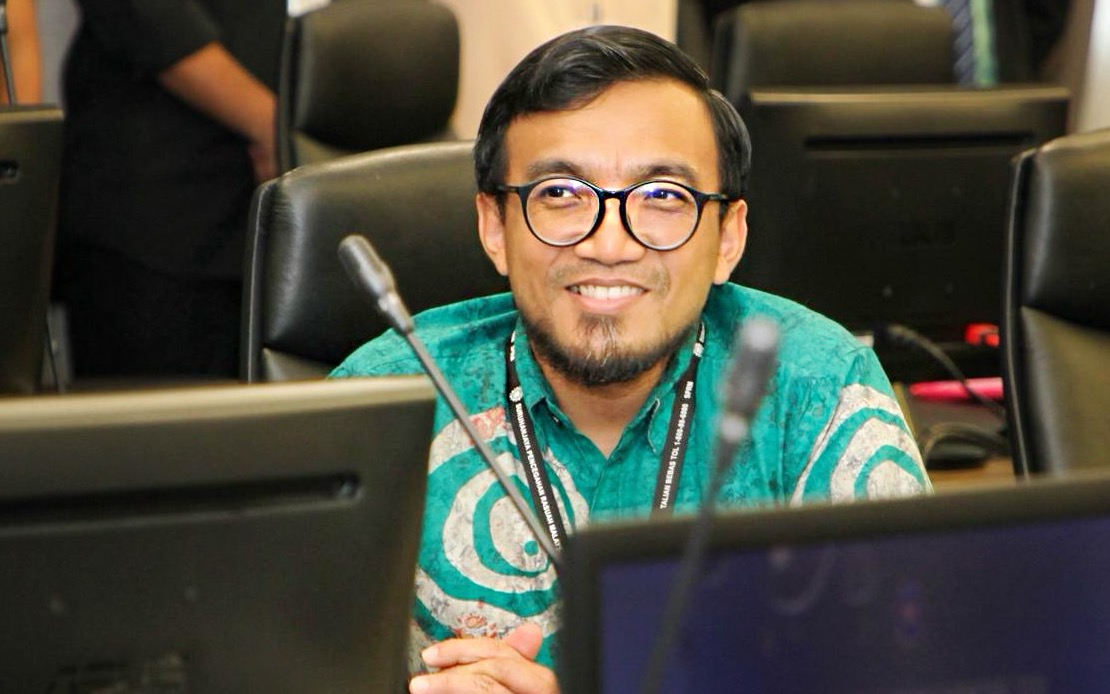
The path forward for Lembaga Tabung Haji (LTH) following the Royal Commission of Inquiry recommendations lies not merely in ticking boxes on timelines, but in establishing concrete, measurable performance indicators that demonstrate genuine reform, according to an Islamic economist at the country's leading Islamic university.
Dr Muhammad Irwan Ariffin, a lecturer in the Department of Economics at the Kulliyyah of Economics and Management Sciences at International Islamic University Malaysia, emphasizes that executing the RCI recommendations requires a multi-layered approach extending well beyond mechanical adherence to implementation schedules. The institution's leadership must anchor its reform agenda to quantifiable metrics that allow stakeholders to objectively assess whether the changes are delivering meaningful results.
The significance of this perspective becomes clear when considering the psychological dimension of financial institutions. Public confidence in organizations like Tabung Haji rests substantially on intangible factors—how people perceive management competence, whether they believe their savings are protected, and whether they sense genuine commitment to change. Regular progress reports detailing not just what has been done but measured outcomes would serve as a crucial confidence-building mechanism, particularly for the millions of Malaysians whose hajj aspirations depend on these institutions remaining solvent and trustworthy.
Information gaps and delayed explanations regarding implementation create vacuums that public anxiety rushes to fill. When depositors lack clarity about reform progress, uncertainty breeds fear. This psychological instability has tangible consequences—skittish account holders may withdraw funds prematurely, creating liquidity pressure that compounds institutional difficulties. Dr Irwan correctly identifies that incomplete communication around RCI recommendations risks triggering exactly the kind of panic withdrawals that could undermine Tabung Haji's recovery efforts.
On the governance front, Dr Irwan advocates for periodic reviews of existing frameworks to permit organic institutional improvements. The composition of Tabung Haji's board merits particular attention; board members should be selected primarily on the basis of technical expertise and proven integrity rather than political connections or patronage considerations. This represents a fundamental shift from how such positions have traditionally been filled in Malaysia, where institutional appointments often reflect political equations rather than capability assessments.
The separation of duties between executive management and board committees requires reinforcement through structural clarity and accountability mechanisms. Committees tasked with oversight functions must operate demonstrably free from conflicts of interest and political interference, supported by rigorous accounting standards that leave no room for discretionary interpretation. These governance safeguards form the institutional architecture upon which depositor trust ultimately depends.
From an Islamic economics perspective, the proposed reforms carry profound significance. The concepts of amanah (trust), 'adalah (justice), and hifz al-mal (protection of wealth) form core principles of Islamic finance, and strengthening Tabung Haji's governance framework operationalizes these theological values in practical institutional form. The notion of 'sadd al-dhari'ah—preventing harm before it manifests—applies directly to preemptive governance improvements that ward off future scandals or financial mismanagement before they occur.
Enhanced governance creates conditions for Tabung Haji to achieve transparency regarding actual profit generation, permissible reserve levels, and distributable hibah amounts. Auditing and compliance frameworks must move beyond simplistic halal-haram classifications of individual investment products to encompass the broader integrity of decision-making processes. True Islamic finance compliance means ensuring that the institution as a whole operates according to principles of justice and sound stewardship, not merely that individual transactions conform to religious requirements.
Retaining the confidence of younger Malaysians presents a distinct challenge requiring tailored messaging. Individuals entering their working years and beginning to contemplate hajj pilgrimage demonstrate higher financial literacy and greater skepticism toward institutions than their parents' generation. Comprehensive, understandable financial reporting coupled with risk disclosure serves this demographic's appetite for informed decision-making. Similarly, financial literacy initiatives that demystify investment mechanics and governance structures empower younger depositors to engage with Tabung Haji as informed participants rather than passive account holders.
The investment strategy underpinning Tabung Haji's medium and long-term sustainability should embrace portfolio diversification that balances competing objectives: preserving capital through stable, liquid assets while pursuing growth through appropriately structured equities and growth instruments. This moderate approach acknowledges that hajj represents a fixed-timeline goal for most depositors—the pilgrimage cannot be postponed indefinitely—yet simultaneously must achieve real returns sufficient to accommodate thousands of new contributors annually without depleting reserves through the distribution of hibah.
The interconnection between governance quality, transparent communication, and investment performance creates a virtuous cycle. When depositors perceive robust institutional oversight and consistent progress reporting, they exhibit greater patience with market cycles and tolerate reasonable investment volatility. This stability permits management to pursue appropriately calibrated long-term strategies rather than reactive, short-term measures designed solely to stem withdrawals. Conversely, governance failures feed public anxiety, accelerating withdrawal patterns that force desperate measures that ultimately damage long-term returns.
Implementing the RCI recommendations represents an opportunity for Tabung Haji to establish itself as a model for institutional reform in Malaysia. Success requires moving beyond compliance theater—simply following the RCI timeline—toward genuine institutional transformation anchored to measurable performance standards, transparent communication, and governance frameworks that embody both Islamic principles and international best practices in financial administration.

