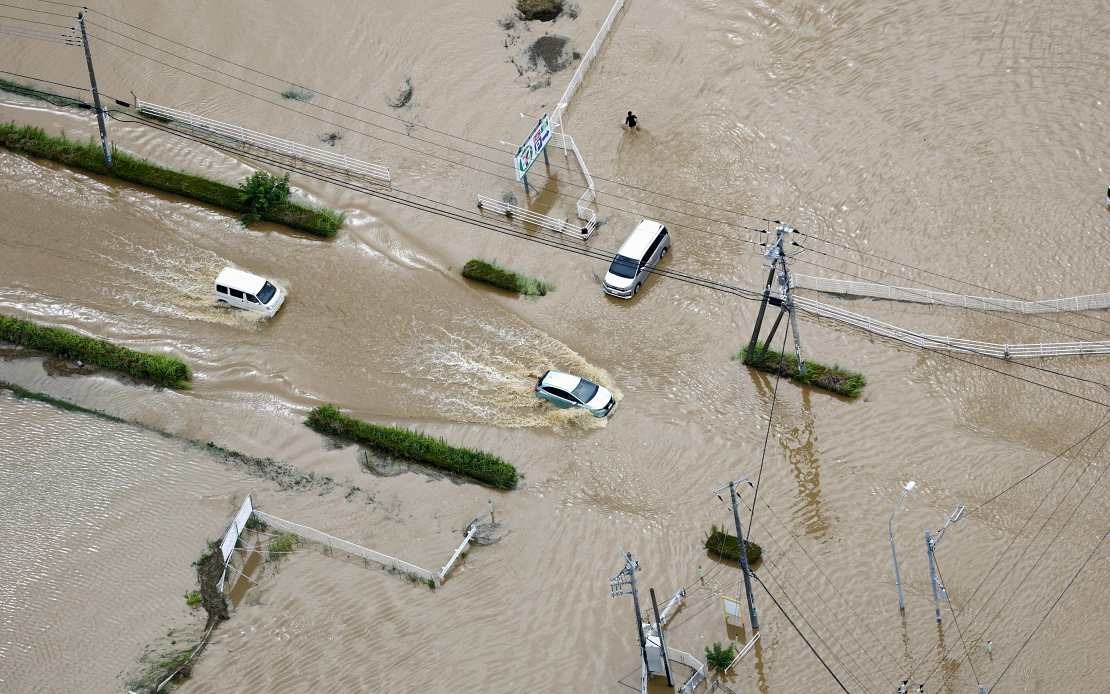
Eastern Japan confronted a deadly meteorological crisis as record-breaking rainfall swept through Chiba Prefecture, resulting in eight confirmed fatalities and extensive disruption to daily life across the region. The severe weather system battered the area through early Friday, affecting multiple municipalities including Chiba, Kashiwa, Ichikawa, Sakura, and Yachiyo, where residents grappled with flash flooding and landslide risks that emergency services struggled to manage.
The scale of the precipitation was extraordinary by local standards. Chiba City received 348 millimetres of rain concentrated within just twelve hours ending at 1.40 am local time Friday morning, according to readings from the Japan Meteorological Agency. To contextualise this intensity, the accumulated rainfall represented approximately three times the city's typical precipitation for an entire month of August, compressed into half a day. Such concentrated downpours overwhelm drainage infrastructure and natural water absorption capacity, creating dangerous flash-flood conditions that leave little time for residents to evacuate safely.
Recognising the exceptional threat posed by this weather pattern, the Japan Meteorological Agency had escalated its warning to Level 5, the highest emergency alert designation available in Japan's weather alert system. These warnings specifically flagged heavy rain and potential landslides across affected areas of Chiba Prefecture. However, as the intensity of the rainfall began to moderate by Friday morning, authorities downgraded these critical warnings to Level 4 or below, suggesting the immediate peak danger had passed, though risks remained elevated. The agency cautioned that additional heavy downpours remained possible and encouraged the public to maintain defensive vigilance.
The humanitarian toll extended beyond the fatal casualties. Four individuals suffered minor injuries across the prefecture, while the prefectural government confirmed the eight deaths across the affected municipalities. The actual scope of displacement proved extensive, with approximately 102,600 residents placed under active evacuation orders as of 11 am Friday. These figures underscore the comprehensive disruption the weather event triggered, forcing hundreds of thousands to abandon their homes and seek safer ground.
For regional and international connectivity, the consequences proved immediately apparent at Narita Airport, one of Asia's major aviation hubs. Approximately 7,000 passengers found themselves unexpectedly stranded overnight as the torrential conditions made train and bus operations impossible. Airport authorities struggle to manage such extended passenger detentions, creating logistical nightmares for travellers and complicating the movement of goods and personnel through one of Japan's critical gateways. The paralysis of ground transportation networks demonstrates how extreme weather in Japan's densely populated regions cascades rapidly through interconnected infrastructure systems.
For Malaysian and Southeast Asian observers, this event carries particular relevance given the region's increasing vulnerability to extreme weather phenomena. Chiba Prefecture's experience illustrates how even highly developed nations with sophisticated early warning systems and robust infrastructure can experience significant loss of life and extensive disruption when rainfall intensity exceeds historical precedent. The concentration of 348 millimetres in twelve hours mirrors the pattern of tropical downpours familiar to Southeast Asia, where monsoon seasons regularly generate comparable precipitation.
Japan's well-established disaster management protocols and the existence of the Fire and Disaster Management Agency demonstrate institutional preparedness, yet the fatality count suggests that warning systems and evacuation mechanisms, while improving, cannot entirely neutralise the risks posed by meteorological events of record intensity. The rapid downgrade from Level 5 to Level 4 alerts also illustrates the challenge emergency managers face in calibrating response intensity to evolving conditions, particularly when the primary danger shifts from immediate rainfall to secondary hazards like landslides and flooding.
The implications for Japanese infrastructure planning extend beyond immediate recovery. These events accumulate data that engineers and planners use to reassess design standards for drainage systems, emergency shelters, and transportation networks. A rainfall event setting new records in a prefecture with centuries of meteorological observation suggests climate patterns may be shifting, making historical data increasingly unreliable as a predictor of future extremes. This recognition has prompted many developed Asian nations, including Japan, to incorporate climate scenario modelling into long-term infrastructure investment decisions.
For travellers and international businesses, disruptions like those experienced at Narita Airport highlight the vulnerability of major transport hubs to weather events. As global supply chains grow more dependent on specific chokepoints for goods movement, and as air travel becomes increasingly central to regional commerce and tourism, such weather-induced paralysis carries economic consequences that ripple far beyond the immediately affected region. Companies throughout Southeast Asia relying on Narita connections for supply chains or personnel movement would experience secondary effects from such disruptions.
As Japanese authorities continued post-event assessment Friday, the broader question of climate adaptation moved centre-stage. Whether this rainfall event represents a new normal or an outlier remains uncertain, but the readiness of systems to accommodate progressively more intense meteorological events will determine whether future casualties can be minimised. For policymakers throughout Southeast Asia, Japan's experience provides instructive lessons in both the capabilities and limitations of disaster response infrastructure when confronted with conditions exceeding historical experience.

