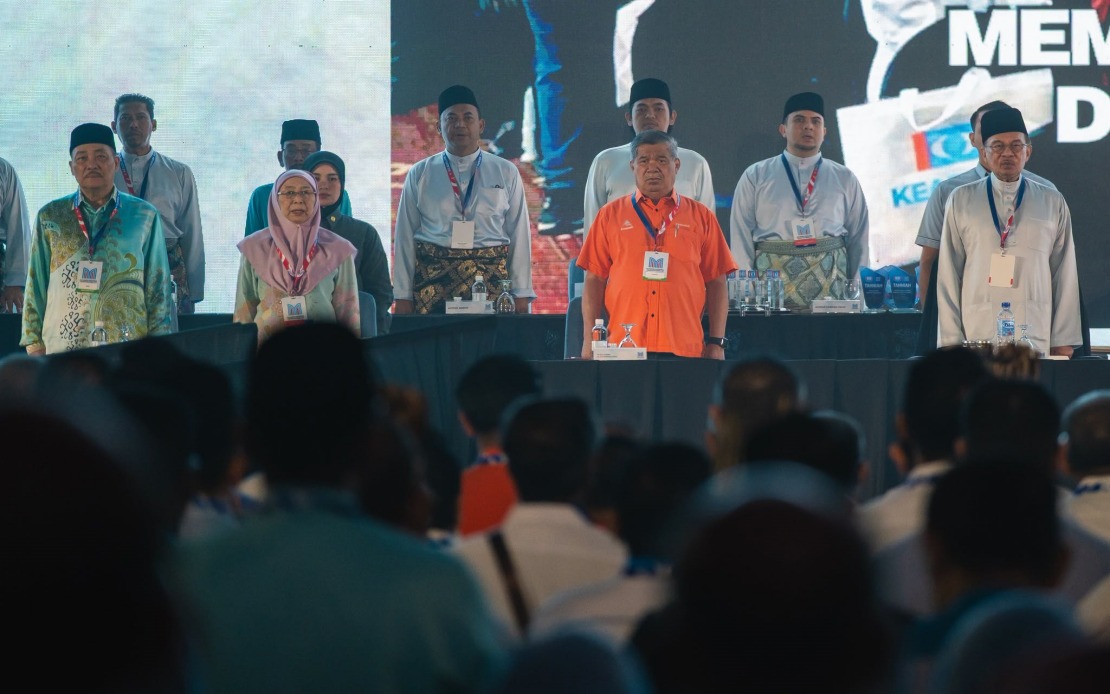
Parti Amanah Negara (Amanah) president Datuk Seri Mohamad Sabu has underscored the necessity of sustaining the nation's reform agenda well beyond the point when political parties secure electoral mandates, emphasising that reform represents far more than mere campaign rhetoric. Speaking at the 2026 PKR National Congress held at the Melaka International Trade Centre (MITC) in Ayer Keroh on August 15, the Agriculture and Food Security Minister articulated a vision of governance that treats the people's confidence as a sacred trust requiring constant validation through tangible performance and measurable outcomes.
For Malaysian political observers accustomed to seeing reform promises fade once ballots are counted, Mohamad Sabu's remarks carry particular significance. His insistence that anti-corruption efforts must transcend partisan boundaries and position status signals a departure from the transactional politics that has historically plagued the nation's administrative landscape. The commitment extends beyond rhetoric to encompass a fundamental reorientation of how those wielding state power should approach their responsibilities, particularly when confronting officials and figures who exploit public resources regardless of their standing or influence within government hierarchies.
The Amanah president articulated this principle with deliberate clarity, asserting that the party's struggle against those siphoning off public finances remains unwavering regardless of individual identity or bureaucratic rank. This stance addresses a persistent challenge within Malaysian governance: the tendency for anti-corruption campaigns to become selective or politically expedient tools rather than comprehensive systems of accountability. By explicitly rejecting such flexibility, Mohamad Sabu positioned his party against the normalised patterns of institutional capture that have undermined public confidence in state institutions across successive administrations.
The broader context of his remarks reflects growing recognition within Malaysia's political establishment that economic indicators alone cannot justify governance legitimacy. Mohamad Sabu contextualised reform efforts within the framework of tangible improvements to citizen welfare, distinguishing between abstract statistical growth and substantive enhancements in household purchasing power and financial security. This distinction holds particular resonance given Malaysia's persistent cost-of-living pressures that continue straining middle and lower-income households despite overall macroeconomic expansion.
His attendance and engagement with Parti Keadilan Rakyat (PKR) president Datuk Seri Anwar Ibrahim's address to the same gathering underscores a deliberate coalition messaging around sustained institutional reform. The synchronisation of rhetoric across allied parties demonstrates an attempt to embed reform commitments within collective political identity rather than allowing them to remain individual party positions vulnerable to internal political shifts. Such coordinated positioning carries strategic importance for the ruling coalition's narrative management, particularly amid ongoing questions concerning the pace and genuineness of institutional transformations.
The Malaysia Agreement 1963 (MA63) featured prominently within Mohamad Sabu's remarks, reflecting longstanding commitments to addressing East Malaysian autonomy concerns through structured constitutional implementation. The emphasis on championing Sabah and Sarawak's rights signals recognition that Malaysian federalism requires active state commitment beyond ceremonial acknowledgment, particularly given historical grievances regarding resource allocation and political representation. For constituencies in both states, such declarations provide benchmarks against which governmental performance can be assessed and held accountable.
Cost-of-living challenges have emerged as defining pressures shaping public satisfaction with Malaysia's administration. The government's acknowledgment that economic growth metrics must translate into tangible improvements in living standards represents important analytical evolution, suggesting receptiveness to critiques that growth figures often obscure persistent household financial stress. This framing resonates across Southeast Asia, where numerous economies have experienced similar disconnects between headline economic performance and citizen experiences of financial hardship.
The announcement regarding repeal of the Universities and University Colleges Act 1971 (AUKU) featured within Mohamad Sabu's remarks as emblematic of reform's educational dimensions. The legislation's restrictions on student political expression have long generated civil liberties concerns among democratic advocates and international observers. Its planned repeal represents substantive institutional loosening rather than cosmetic adjustment, potentially reshaping campus political culture and student engagement patterns across Malaysian higher education institutions.
For regional observers monitoring Malaysia's political trajectory, Mohamad Sabu's statements provide insight into how coalition partners are negotiating governance priorities and reform commitments. The emphasis on continuity across electoral cycles and administrative transitions suggests attempts to institutionalise reform processes beyond the vulnerabilities that typically accompany political transitions. Whether such institutional embedding can withstand internal coalition pressures and competing fiscal priorities remains an open question within Malaysian political analysis.
The language of mandate and accountability that Mohamad Sabu employed carries implications extending beyond immediate political messaging. By framing reform as an obligation derived from electoral trust, he positioned anti-corruption efforts and governance improvements within framework of democratic reciprocity rather than optional policy preferences. This rhetorical grounding potentially constrains future governmental flexibility regarding anti-corruption enforcement and institutional reform, creating documented expectations against which performance can be measured by both supporters and critics.
Within Malaysian political discourse, such emphasis on reform continuity addresses persistent scepticism regarding whether administrative change can survive the routines and pressures accompanying power. The repeated assertions that reform constitutes genuine commitment rather than election-specific posturing reflect awareness of deep public cynicism toward political transformation claims. Whether Malaysia's government can sustain such commitments through successive policy cycles while managing competing interests remains among the defining challenges confronting its administration as it enters its fourth year in office.

