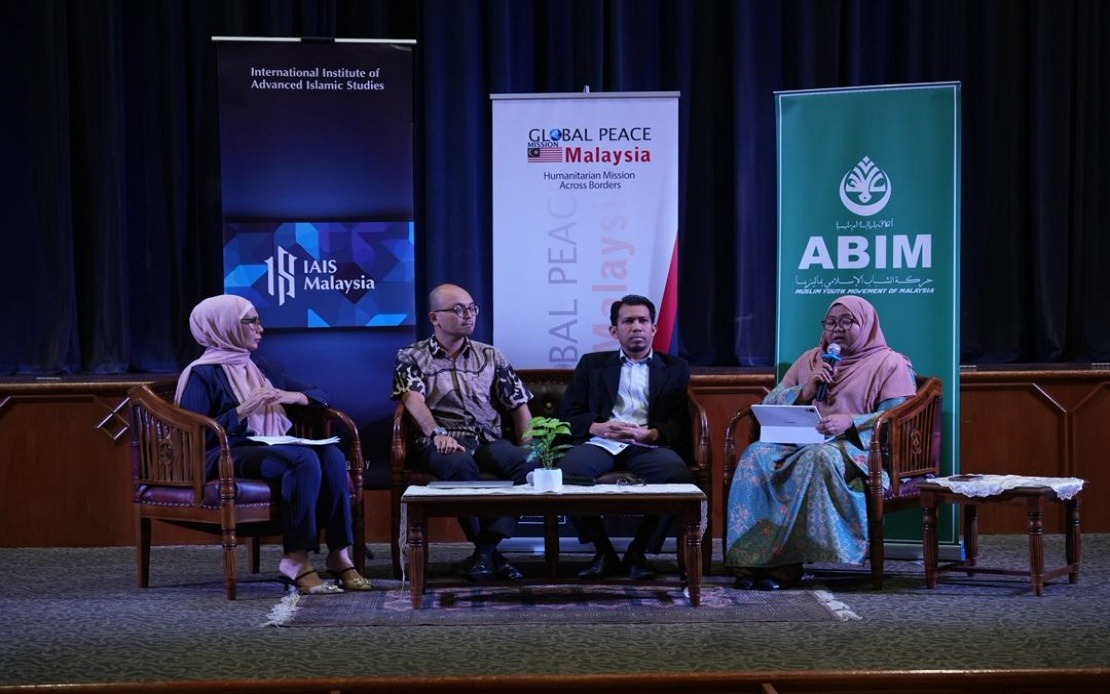
A major conference held in Kuala Lumpur on June 20 to commemorate World Refugee Day 2026 has produced 10 resolutions calling on the government to develop a comprehensive action plan that weighs national security concerns against humanitarian obligations and the welfare of local communities. The gathering, hosted at the International Institute of Advanced Islamic Studies (IAIS) Malaysia, brought together representatives from civil society organisations, academic institutions, humanitarian bodies, international organisations and community leaders to discuss Malaysia's approach to refugee management and integration.
The conference was jointly organised by Global Peace Mission (GPM) Malaysia, Angkatan Belia Islam Malaysia (ABIM) and IAIS Malaysia, reflecting a coordinated effort by key stakeholders to advance constructive dialogue on refugee issues. Angkatan Belia Islam Malaysia (ABIM) president Ahmad Fahmi Mohd Samsudin announced that the resolutions and a formal declaration would be distributed to Members of Parliament and other relevant authorities, creating an official channel for advocacy and policy discussion. This approach signals an intent to move refugee policy discussions from public discourse into formal governmental consideration, potentially influencing legislative and administrative responses.
Ahmad Fahmi emphasised that the resolutions emerged from the direct experiences and expertise of non-governmental organisations actively engaged with refugee populations on the ground. By grounding the recommendations in practical knowledge rather than abstract principles, the conference participants sought to strengthen the credibility and implementability of their proposals. The ABIM president indicated that follow-up discussions would be pursued with key ministries, particularly the Home Ministry and the National Security Council (MKN), signalling a strategic focus on institutions with direct responsibility for refugee policy and security matters.
A central objective of the conference was to reshape public perception and political discourse around refugee issues in Malaysia. Ahmad Fahmi articulated concern about growing anti-refugee sentiment and acknowledged the role of misinformation and misconceptions in fuelling hostility toward vulnerable populations. By promoting what he described as a "balanced approach," the conference aimed to move beyond polarised narratives that frame refugee presence as either a humanitarian imperative or a security threat, instead positioning both perspectives as legitimate concerns requiring evidence-based solutions.
Malaysia's position as a non-signatory to the 1951 Refugee Convention creates a unique policy context. Despite this formal distance from the international refugee regime, Malaysia has accumulated substantial operational experience managing refugee populations from Vietnam, Syria, Bosnia and Palestine over several decades. This historical experience positions the country as possessing genuine expertise in refugee management, yet also reflects ambiguity in its international obligations and domestic legal frameworks. The conference participants appeared to recognise that Malaysia's approach must be distinctly calibrated to local conditions rather than simply replicated from other jurisdictions.
Among the substantive resolutions adopted was an explicit rejection of hatred, discrimination, dehumanisation and incitement directed against refugees and asylum seekers. Critically, this resolution simultaneously acknowledged legitimate public concerns regarding security, law enforcement, social cohesion and community harmony. This dual framing is significant for Southeast Asian context, where concerns about irregular migration and security risks are widespread and politically salient. By explicitly validating security concerns while condemning discrimination, the conference sought to occupy intellectual and political middle ground that acknowledges both humanitarian and governance imperatives.
Participants endorsed strengthening the infrastructure for refugee data collection, registration and documentation in collaboration with the United Nations High Commissioner for Refugees (UNHCR) and other international partners. Enhanced data management systems would support more transparent, orderly and effective administration of refugee populations, potentially addressing public anxiety rooted in uncertainty about refugee numbers and distribution. This technical governance approach offers a pathway to building public confidence through improved information systems and administrative efficiency.
Another significant resolution focused on public education and media literacy as counterweights to misinformation and xenophobic sentiment. The conference recognised that anti-refugee narratives gain traction partly through information gaps and deliberate distortion on social media platforms. By supporting education and media literacy initiatives, participants advocated for preventive approaches that address root causes of prejudice rather than merely responding to hostile expressions. This reflects growing recognition across Southeast Asia that managing migration and refugee issues requires sustained effort to shape public understanding and discourse.
The resolutions further supported the creation of advocacy and communication mechanisms to protect humanitarian organisations, activists and non-governmental bodies from attacks, slander and hate campaigns on social media and other platforms. This resolution addresses the practical vulnerability of civil society actors engaged in refugee protection work, who have increasingly become targets of coordinated harassment campaigns. By calling for protective mechanisms, the conference highlighted the critical role of civil society in maintaining humanitarian space and how that space faces erosion through online hostility and reputational attacks.
Ahmad Fahmi's closing remarks underscored an important strategic concern: anti-refugee sentiment, if left unaddressed, may create precedent for broader prejudice against other vulnerable groups. This argument frames refugee protection not merely as an isolated humanitarian issue but as integral to broader social cohesion and the maintenance of inclusive institutions. In the Malaysian context, where religious and ethnic sensitivities carry significant weight, this framing connects refugee protection to fundamental principles of social harmony and democratic governance.
The conference outcomes reflect evolving civil society engagement with refugee policy in Malaysia, moving beyond advocacy for expanded refugee rights toward pragmatic proposals for improved management systems, data governance and public understanding. By simultaneously addressing security concerns and condemning discrimination, the resolutions attempt to build broader consensus around refugee policy reform. Whether these proposals gain governmental traction depends on political will and institutional capacity within the Home Ministry and National Security Council, as well as the strength of follow-up advocacy by the conference organisers and their networks.