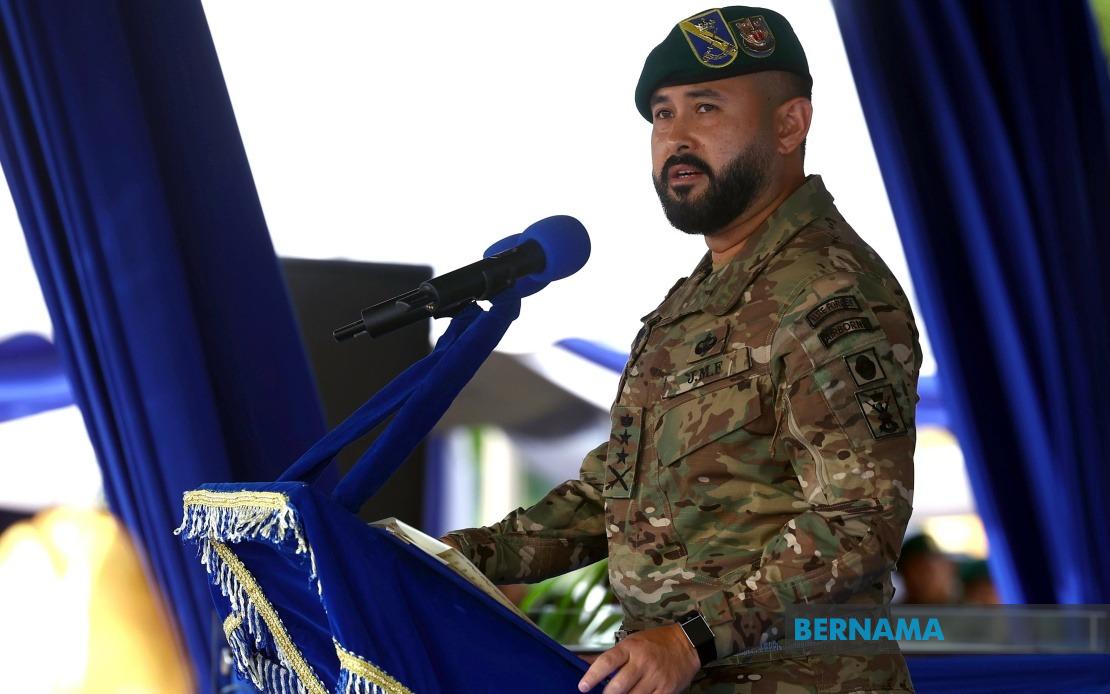
Tunku Mahkota Ismail, the Regent of Johor, has issued a stern warning that all planning decisions for the Regimen Gerak Khas (RGK) approved by His Majesty Sultan Ibrahim, King of Malaysia, must not be altered by any party for personal gain. The caution came during remarks at a ceremony in Mersing marking the elite commando unit's 61st anniversary, underscoring royal concern about the integrity of defence procurement and organisational development in Malaysia's most sensitive military institution.
The Regent's intervention reflects broader anxieties about how strategic military decisions are being implemented and administered. He emphasised that the RGK, as the Colonel Commandant's special command, operates under a framework of royal oversight precisely because of its critical role in national security. This oversight mechanism, he suggested, exists to protect against the erosion of carefully considered plans through political manoeuvring or bureaucratic self-interest. The Regent invoked a traditional Malay saying—"harapkan pagar, pagar makan padi," meaning to trust a guardian only to have them betray that trust—to illustrate the danger of allowing approved frameworks to be compromised.
Beyond the immediate warning, Tunku Mahkota Ismail took the opportunity to address what he described as systemic "cancer" within the Ministry of Defence and the broader Malaysian Armed Forces structure. He made pointed reference to knowledge of who controls the secretary-general position at the Defence Ministry, declaring his intention to meet with relevant parties to root out problems he views as fundamental to organisational health. This candid language signals deep frustration with governance challenges that he believes undermine military effectiveness and command cohesion.
The Regent stressed that Malaysia's strategic environment has become markedly more demanding and unpredictable. Geopolitical shifts across the Indo-Pacific region, evolving tensions in the South China Sea, and intensifying competition among major powers have fundamentally altered the security calculus. In this context, he argued, the RGK cannot afford complacency or mediocrity. The unit requires sustained investment in equipment, weaponry, mobility and technology to remain operationally credible against contemporary and emerging threats. Allowing plans to be derailed or diluted would leave Malaysia exposed at precisely the moment when strategic clarity is most essential.
Central to his message was a call for the government to prioritise RGK development and procurement under the 13th Malaysia Plan (13MP) based on rigorous criteria: capability, quality, operational effectiveness, and value for money. The Regent's insistence on these standards reflects concern that procurement decisions might otherwise be influenced by considerations divorced from military necessity—a pattern that, if left unchecked, could result in equipment poorly suited to operational demands or wasteful spending. He emphasised that the latest technology, cost-effectiveness, operational suitability and long-term strategic requirements must all feature prominently in decision-making.
Equally important to the Regent's remarks was his assertion that personnel management within the RGK must be conducted with complete transparency and strict adherence to merit-based advancement. The explicit rejection of nepotism, favouritism and vested interests signals recognition that organisational culture directly affects military capability. When promotion and career development depend on personal connections rather than demonstrated competence, the unit loses its most capable personnel while retaining those whose advancement rests on patronage rather than skill. Over time, such practices hollow out institutions from within, compromising their ability to function effectively.
The Regent's concerns about governance extend to the broader Malaysian defence establishment. His willingness to invoke his status and speaking plainly about identified problems suggests that civilian and military leadership faces pressure to correct course. The timing of his remarks—at a military anniversary parade where his words would reach senior officers, ministry officials and, through media coverage, the public—appears deliberately designed to signal that royal attention is focused on these issues and that accountability will be pursued.
For Malaysian defence policy and regional security considerations, the Regent's intervention carries particular weight. The RGK functions as the tip of the spear in counterterrorism and national security operations, requiring the highest standards of training, equipment and operational readiness. Any institutional degradation—whether through compromised procurement, merit-divorced personnel decisions, or erosion of strategic planning—has cascading effects on Malaysia's ability to respond to security challenges. The Regent's emphasis on the unit remaining at maximum readiness reflects awareness of this critical role.
The larger context involves Malaysia's position within Southeast Asia's evolving security landscape. As regional powers compete for influence and as transnational security threats persist, Malaysian defence capabilities directly affect not only national security but also regional stability. An elite military unit undermined by internal governance failures cannot contribute effectively to these strategic imperatives. The Regent's message, therefore, carries implications beyond the RGK itself, speaking to broader questions about how Malaysia will sustain the institutional capacity to manage its security interests.
Tunku Mahkota Ismail concluded by reminding RGK personnel of their obligation to maintain exceptional standards of skill, resilience, integrity and loyalty in accordance with the Commando Soldier's Oath. This appeal to institutional values and personal responsibility complements his structural criticisms, suggesting that restoring organisational health requires both top-level governance reform and individual commitment to professional standards. The combination of royal oversight, managerial accountability and personal integrity represents the framework through which he believes the RGK can remain operationally effective and worthy of the nation's trust.
The Regent's remarks ultimately serve as both warning and rallying cry. They make clear that the royal institution takes military governance seriously and will not tolerate the watering down of approved strategic plans or the corruption of merit-based advancement. For defence officials and military leadership, the message is unmistakable: alignment with approved frameworks, transparent and merit-based management, and prioritisation of operational effectiveness over political convenience are not optional preferences but essential requirements for maintaining confidence in Malaysia's defence establishment.

