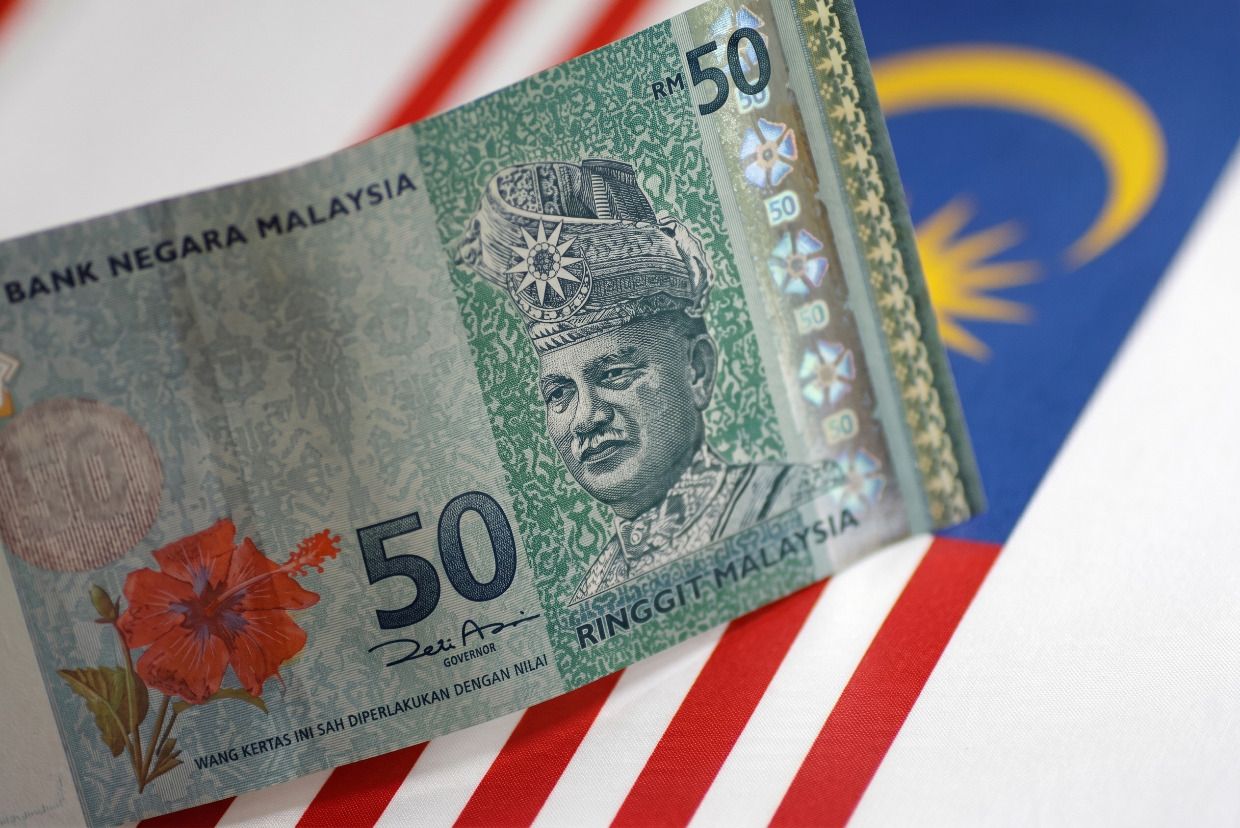
The Malaysian ringgit is on course to reverse its disappointing first-half performance after Bank Negara Malaysia intensified efforts to channel foreign-currency earnings back into the domestic economy. Having ended June as Asia's weakest currency, the ringgit has since emerged as the region's top performer, prompting financial institutions to revise their outlooks upward. Industry specialists now anticipate the unit could appreciate to between 3.80 and 3.95 against the US dollar by the close of 2025, marking a recovery that would restore confidence in Malaysia's macroeconomic management and reinvigorate foreign investor appetite for ringgit-denominated assets.
Royal Bank of Canada has positioned itself at the bullish end of analyst projections, estimating the ringgit will trade at 3.95 per dollar by year-end, contingent on BNM's ability to execute its repatriation programme effectively. The central bank's pledges, formally announced on 24 June, centre on persuading multinational corporations and Malaysian exporters to convert foreign-earned revenues into ringgit rather than retaining them in offshore accounts. Such a shift would mechanically boost demand for the domestic currency while simultaneously channelling fresh liquidity into the financial system. Australia & New Zealand Banking Group holds an even more optimistic position, forecasting strength to 3.80 per dollar—a level not seen since 2015—underscoring confidence that structural economic factors will reinforce policy initiatives.
The turnaround from June's lows represents a dramatic reversal in sentiment. The currency had slumped to its weakest level against the dollar in nearly three decades during the first quarter, prompting widespread concern about Malaysia's external competitiveness and capital flight. BNM's intervention strategy, while not without precedent—similar measures were deployed during 2024—appears to have succeeded in stabilising sentiment and reversing the currency's downward momentum. The ringgit's 0.2% gain to close Friday at 4.0722 per dollar, though modest in absolute terms, signals that market participants are beginning to price in recovery expectations, with the currency now substantially outperforming regional peers since mid-June.
The foundation for this optimistic outlook rests substantially on Malaysia's formidable trade performance. The country's export sector surged 45% year-on-year in May, an exceptional result driven by multiple tailwinds that have reshaped Malaysia's competitive position. The artificial intelligence revolution has proven particularly beneficial, generating explosive demand for data centre infrastructure and the semiconductors, electronic components, and electrical equipment that Malaysia manufactures at scale. This export boom lifted the monthly trade surplus to an unprecedented 40 billion ringgit (approximately USD 9.8 billion) in May, providing the external surplus that historically supports currency appreciation over the medium term. Such robust merchandise trade fundamentals distinguish Malaysia from several regional peers grappling with external vulnerabilities, and they validate analyst confidence that the ringgit has sufficient macroeconomic support for sustained recovery.
Beyond trade dynamics, Malaysia has successfully attracted substantial foreign capital inflows into ringgit-denominated bonds, reflecting global investors' reassessment of the country's risk profile. Through 29 June, external funds had purchased approximately USD 2.1 billion of local-currency debt securities, according to official BNM data, positioning the market for its largest monthly inflow since May of the previous year. This appetite for Malaysian fixed income demonstrates that international portfolio managers view the country as offering attractive risk-adjusted returns, particularly as domestic yields remain elevated relative to developed markets. The combination of foreign bond inflows and BNM's push to convert overseas corporate deposits into ringgit creates a dual support mechanism for the currency that should sustain appreciation momentum through the remainder of the year.
Analists underscore the critical importance of BNM's repatriation initiatives in translating Malaysia's trade surplus into effective currency support. Abbas Keshvani, macro strategist at Royal Bank of Canada's Singapore office, explicitly identifies the conversion measures as the vital transmission mechanism linking Malaysia's healthy current account position with observable currency strength. Without such targeted intervention to encourage businesses to repatriate foreign earnings, the trade surplus could manifest primarily as accumulated foreign-currency reserves rather than direct demand for ringgit in the foreign-exchange market. BNM's programme thus addresses a specific market friction—the tendency for corporations to retain earnings offshore to minimise currency conversion costs and hedging expenses—that can prevent natural economic strengths from translating into currency appreciation.
The central bank's current approach draws on lessons from 2024, when comparable initiatives succeeded in stabilising the ringgit after it had depreciated to multi-decade lows. That earlier round of measures, combined with firming global commodity prices and improved regional risk sentiment, enabled Malaysia's currency to rebound and ultimately record the strongest performance across Asia for the full-year period. Policymakers appear confident that a repeat of this script is feasible in 2025, particularly given that underlying economic fundamentals—export growth, foreign investment, and bond inflows—remain robust. The institutional memory from last year's successful intervention has likely refined BNM's execution capability and increased market credibility for the current initiative.
Yet the outlook is not unambiguously favourable. The ringgit confronts countervailing pressures from US monetary policy and domestic political uncertainty that could constrain appreciation. The Federal Reserve's relatively hawkish posture, reflected in sticky inflation expectations and the delayed trajectory for interest-rate cuts, naturally supports the US dollar and creates headwinds for emerging-market currencies including the ringgit. Furthermore, Malaysia faces an important electoral calendar that could generate domestic political noise and potentially unsettle investor confidence. Upcoming state elections will serve as an informal referendum on Prime Minister Anwar Ibrahim's coalition government before the scheduled national parliamentary polls, and any significant erosion of support could trigger capital outflows among international investors concerned about political stability and policy continuity.
Despite these headwinds, specialists such as Kausani Basak of Australia & New Zealand Banking Group emphasise that structural economic support should dominate near-term currency dynamics. Basak specifically highlights the measurable increase in foreign-currency deposits accumulated by Malaysian businesses during the March-to-May period, noting that BNM's conversion measures will provide the mechanism to transform these holdings into ringgit demand. Simultaneously, foreign direct investment inflows remain resilient, with multinational enterprises continuing to establish or expand operations in Malaysia to diversify supply chains away from higher-risk geographies and to access the country's semiconductor ecosystem. These fundamental flows should provide sufficient ballast to carry the ringgit toward the 3.80-3.95 range that analysts have identified as reasonable year-end targets, absent a major disruption to regional or global financial conditions.
For Malaysian policymakers, the currency's recovery trajectory carries broader significance beyond foreign-exchange markets. A strengthening ringgit enhances the purchasing power of the country's middle class when acquiring imported goods and services, potentially supporting domestic consumption and living standards. Simultaneously, a more appreciated currency assists in moderating inflation and could provide the central bank with additional policy flexibility in its own monetary deliberations. For regional observers, Malaysia's experience offers a case study in how targeted, credible intervention aligned with underlying macroeconomic fundamentals can successfully reverse currency weakness and restore investor confidence—a template potentially relevant for other emerging markets navigating similar external pressures.

