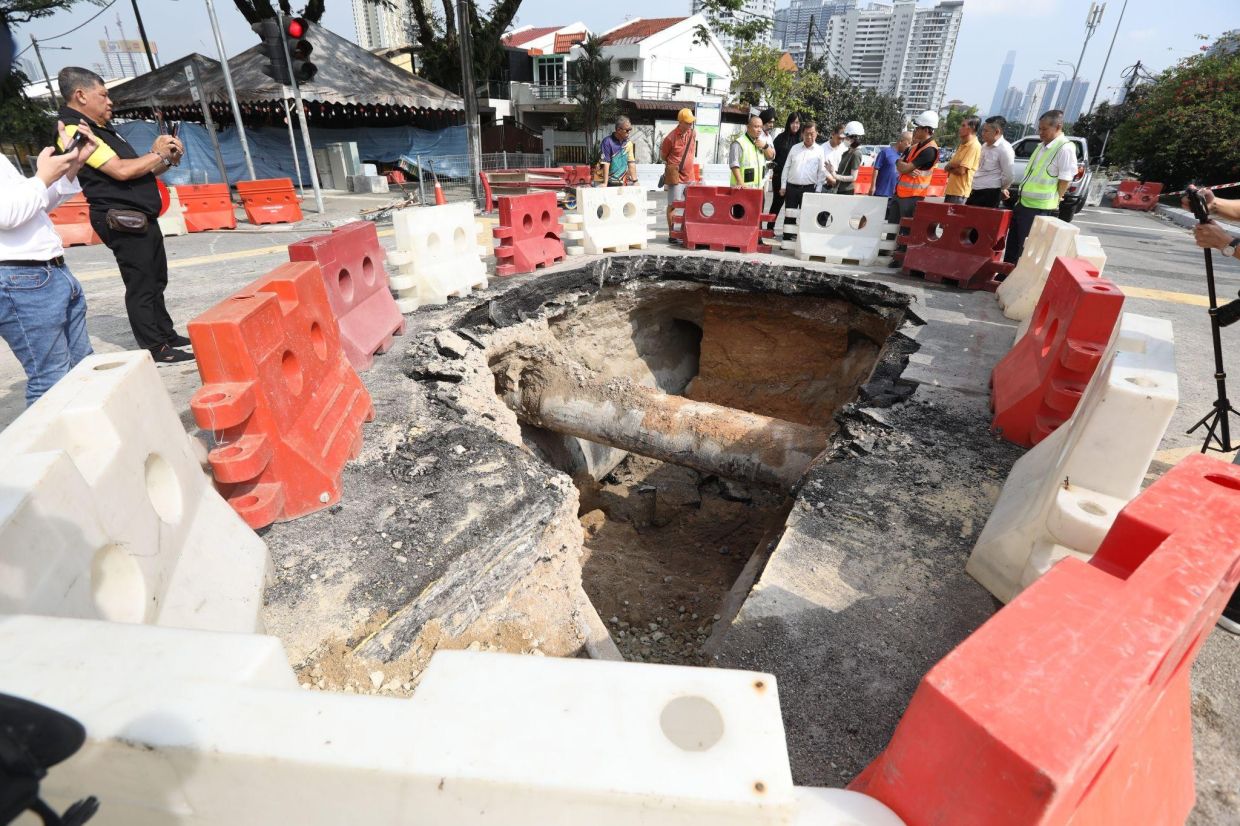
Malaysia's escalating sinkhole problem is increasingly linked to the country's shifting weather patterns, with more frequent and intense rainfall creating cascading pressures on underground infrastructure that was not designed for such extremes. Indah Water Konsortium, the nation's primary sewerage operator, is now confronting a multifaceted challenge: protecting critical infrastructure from geological instability while maintaining service reliability across a vast national network.
Sinkholes emerge through a convergence of factors that vary by location and circumstance. Natural geological composition, subsurface water dynamics, human construction activities, and the structural condition of buried pipes and conduits all contribute to ground collapse. IWK chief executive Narendran Maniam emphasises that each incident requires bespoke technical investigation, as no two sinkholes present identical root causes. The complexity underscores why a one-size-fits-all prevention strategy is insufficient in a country with Malaysia's geological and climatic diversity.
The scale of IWK's responsibility is staggering. Managing approximately 22,500 kilometres of public sewer pipelines nationwide, the organisation must prioritise its limited resources strategically. Critical infrastructure—particularly reinforced concrete trunk sewers with diameters of 600 millimetres and above—receives heightened scrutiny. These large conduits operate under extreme stress, frequently running at or near full capacity while conveying sewage at high velocities. Over time, hydrogen sulphide gas accumulates within these pipes, accelerating concrete corrosion and compromising structural integrity. The combination of hydraulic stress and chemical degradation creates a ticking clock for many aging installations.
Extreme rainfall intensifies these vulnerabilities through multiple mechanisms. When torrential downpours saturate surrounding soil, the ground loses bearing strength and becomes unstable. This instability can shift or misalign sewer pipes, causing blockages and fractures. Simultaneously, the volume of water infiltrating the sewer network through cracks, joints, and manhole covers creates internal pressure surges. Aging pipes particularly suffer under these conditions, potentially cracking or bursting—failures that demand complete pipeline replacement rather than minor repairs. The financial and operational consequences are substantial, yet the threat to public safety is paramount.
The progression from pipe failure to sinkhole formation follows a dangerous sequence. When saturated ground destabilises and pressurised sewage systems rupture, surrounding soil migrates into the void left by the broken pipe. As this underground cavity expands undetected, the surface remains seemingly stable until the void grows sufficiently large that overlying earth can no longer support its own weight. The sudden collapse creates a sinkhole—a hazard that threatens public safety, damages vehicles and infrastructure, and disrupts traffic and community services. This process can occur with alarming speed once ground conditions reach critical thresholds.
Recognising these interconnected risks, IWK has adopted a proactive, risk-based asset management methodology rather than reactive crisis response. The strategy centres on early detection and condition assessment of critical infrastructure using contemporary inspection technologies. Ground Penetrating Radar surveys subsurface conditions without excavation, while Closed-Circuit Television crawler systems and push rod cameras provide direct visual inspection of pipe interiors. Pole cameras reach locations where other equipment cannot access. The selection of technology depends on site-specific factors including accessibility and operational constraints, ensuring that inspection data informs targeted rehabilitation priorities.
Following inspection findings, IWK implements preventive rehabilitation measures designed to restore structural integrity before failure occurs. Trenchless sewer lining techniques insert protective sleeves into existing pipes without excavation, minimising surface disruption and cost. Where pipes have deteriorated beyond recovery, replacement occurs with modern materials and improved specifications. These interventions represent substantial capital expenditure, but they forestall the exponentially higher costs of emergency repairs, infrastructure damage claims, and service disruptions that characterise sinkhole incidents.
Understanding the interaction between extreme weather and underground infrastructure has become a core competency for Malaysia's water utilities. Narendran explains that as weather patterns grow increasingly unpredictable, the relationship between intense rainfall and subsurface vulnerability demands constant attention and adaptation. Heavy precipitation destabilises ground, increases groundwater pressure, and inundates sewer systems with rainwater infiltration. Each of these phenomena independently stresses aging infrastructure; their simultaneous occurrence creates compound risk that traditional design standards did not anticipate. The reality of climate variability has rendered decades-old infrastructure planning assumptions obsolete.
To strengthen operational readiness, IWK recently conducted a comprehensive Crisis Simulation Exercise at its Asian Sewerage Training, Research & Innovation Centre of Excellence facility. The controlled scenario modelled a major sinkhole involving multiple casualties and suspected damage to a large trunk sewer line. The exercise mobilised operational teams, tested crisis management protocols, and evaluated communication and coordination with the Fire and Rescue Department, Royal Malaysia Police, and other emergency agencies. By stress-testing response procedures in a safe environment, IWK identified gaps in coordination, clarified decision-making authorities, and reinforced employee understanding of emergency roles.
The simulation revealed opportunities to strengthen standard operating procedures and ensure consistent employee preparation for actual emergencies. Crisis management frameworks that exist only on paper prove inadequate when real incidents occur; regular exercises build institutional muscle memory and confidence. The interdependency between IWK and emergency response agencies requires rehearsal to function smoothly under pressure. Clear communication protocols, defined command structures, and pre-arranged resource mobilisation can mean the difference between effective containment and catastrophic escalation.
As Malaysian communities experience increasingly severe weather events, the strategic importance of sewerage infrastructure resilience cannot be overstated. IWK's commitment to continuous planning, regular training, and institutional collaboration with emergency services reflects a maturation of risk management philosophy. Rather than hoping that aging infrastructure proves durable enough, the organisation now invests systematically in assessment, prevention, and preparedness. For Malaysian residents and businesses, this translates into greater confidence that underground systems will withstand the hydraulic and mechanical stresses that intensifying rainfall will inevitably impose.

