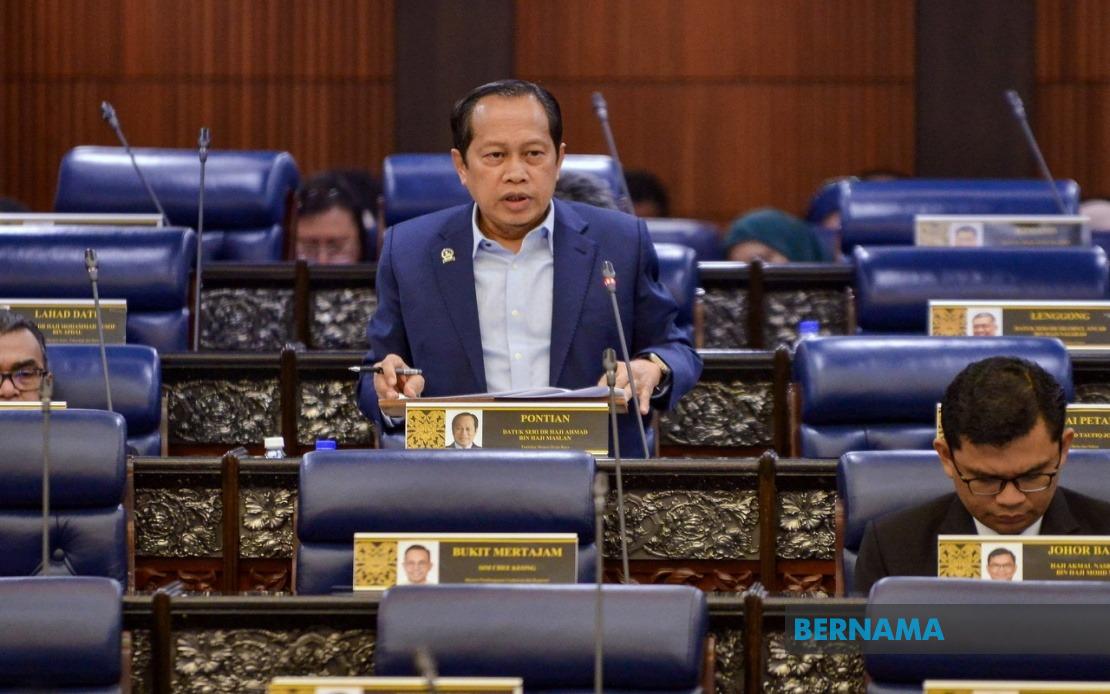
The Malaysian federal government has paid out RM1.2 billion in land compensation for the Sabah Pan Borneo Highway (PBH) Phase 1 Project to date, according to Deputy Minister of Works Datuk Seri Ahmad Maslan. The announcement, made during parliamentary question-and-answer proceedings, underscores the government's commitment to ensuring landowners affected by the major infrastructure development do not incur financial losses. A corresponding compensation package of RM737 million has been allocated for similar acquisitions in Sarawak's portion of the highway project.
The substantial compensation payouts come as the Sabah PBH Phase 1 Project has experienced a significant cost escalation, climbing to RM24.889 billion from the original 2015 estimate of RM12.86 billion—nearly double the initially projected expenditure. This dramatic increase prompted parliamentary scrutiny, with Kota Belud MP Isnaraissah Munirah Majilis from WARISAN raising questions about cost justifications and the rationale behind the budget revision. The deputy minister's detailed response outlined multiple interconnected factors driving the cost growth, providing insight into how major infrastructure projects in Southeast Asia can face substantial financial pressures.
According to Ahmad Maslan, a critical turning point came in 2019 when the federal government terminated the Project Delivery Partner (PDP) model and transitioned to the Federal Conventional Contractor method. This operational restructuring occurred following what he described as national interest considerations, though the specific motivations for the change were not elaborated. The shift necessitated comprehensive reassessment of all remaining work packages and project scope, effectively resetting the financial parameters that had been established five years into the original planning cycle. This type of mid-project methodology change, while sometimes necessary for governance or efficiency reasons, typically introduces additional costs and timeline complications.
The technical dimensions of cost escalation reveal the engineering complexity inherent in constructing a major highway across Sabah's challenging terrain. Changes to the project's scope and design parameters contributed substantially to budget increases, reflecting evolving requirements that emerged during preliminary surveys and planning phases. Geotechnical studies and soil treatment specifications, crucial for ensuring highway durability in Sabah's varied geological conditions, required more extensive intervention than originally anticipated. Additionally, large-scale utility relocation operations—necessary to move water pipelines, electrical infrastructure, and telecommunications networks out of the highway's right-of-way—represented a significant, often-underestimated expense category in Malaysian infrastructure projects.
The Phase 1 project structure divides into two distinct components: Phase 1A encompasses 16 work packages valued at RM10.9 billion, whilst Phase 1B comprises 19 work packages with a RM13.989 billion price tag. This bifurcation allows for phased implementation and potentially permits selective acceleration of critical sections. The proliferation of work packages reflects the project's scale and geographic distribution across Sabah, involving multiple contractors and concurrent construction activities across different regions.
Macroeconomic factors beyond the project's direct control have compounded cost pressures throughout the construction period. Inflation has steadily eroded the purchasing power of budget allocations made in 2015, a challenge acutely felt in infrastructure projects spanning multiple years. Global and domestic commodity price volatility has particularly affected construction material costs, with iron, cement, and bitumen prices experiencing significant fluctuations during the project's execution phase. These materials, essential for highway construction, are subject to international market dynamics that individual projects cannot influence or predict with certainty.
Labour and machinery costs have similarly increased, reflecting both wage pressures in Malaysia's construction sector and the rising expense of operating heavy equipment in an environment with constrained resource availability. Equipment import costs have likely risen due to currency fluctuations and changing global supply chains. These cumulative cost drivers—technical scope adjustments, utility relocations, material and labour inflation, and methodology changes—interact complexly to produce the near-doubling of the original budget estimate.
The compensation framework itself represents a policy decision to shield property owners from any financial detriment resulting from land acquisition for national infrastructure. This approach, whilst administratively demanding, reflects a commitment to ensuring that infrastructure development benefits the broader economy without imposing concentrated losses on individual landholders. The substantial compensation figures suggest that land acquisition has involved significant tracts of property, potentially including plantations, agricultural holdings, and commercial land throughout Sabah and Sarawak.
For Malaysian readers and policymakers, the Sabah and Sarawak Pan Borneo Highway projects illustrate broader challenges in estimating and managing large infrastructure costs in Southeast Asian contexts. The doubling of project costs, whilst concerning from a fiscal perspective, represents a reality that many major infrastructure initiatives face as projects progress from theoretical planning to physical implementation. The government's assumption of all compensation and administrative costs demonstrates a willingness to absorb acquisition-related expenses, though it raises questions about the adequacy of initial cost estimation methodologies and the feasibility of future project planning.
The transition from the PDP model to conventional contracting may offer greater government oversight and control, though it simultaneously removes the private sector's financial risk exposure that sometimes incentivises cost discipline. Moving forward, the completion of these critical Pan Borneo Highway phases will significantly enhance connectivity across Sabah and Sarawak, regions where transportation infrastructure has historically lagged peninsular Malaysia. The improved highway network promises to facilitate commerce, reduce travel times, and integrate these states more effectively into Malaysia's broader economic framework, potentially offsetting the substantial public investment through enhanced productivity and development opportunities across East Malaysia.

