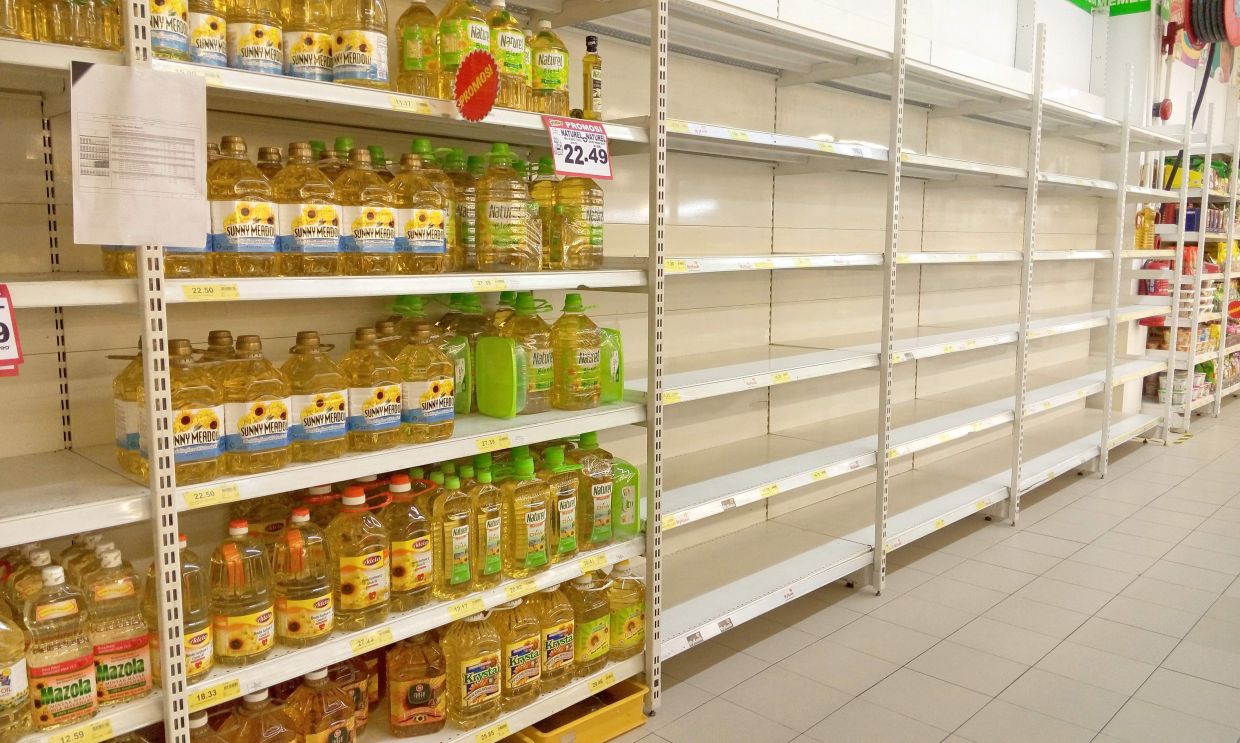
Malaysia's Public Accounts Committee (PAC) has disclosed a startling shortfall: RM10.879 billion allocated for cooking oil subsidies between 2019 and February 2025 never reached the consumers it was meant to support. The finding represents a dramatic failure in one of the government's most visible welfare programmes and exposes systemic vulnerabilities in how the nation manages, monitors and enforces subsidy distribution.
The cooking oil subsidy scheme carries particular political significance in Malaysia, where food affordability directly affects the daily lives of millions of households. Cooking oil is a staple ingredient in Malaysian kitchens, essential for everything from domestic meal preparation to small food businesses. When the subsidy fails, consumers face either inflated prices at the pump or, as reports have indicated, empty shelves as suppliers divert stock to more profitable markets. This gap between allocated funds and consumer access represents not merely a budgetary inefficiency but a betrayal of public trust and policy intent.
The government has repeatedly justified its pivot toward targeted subsidies as a more rational approach to welfare spending. Officials have argued that narrowing subsidies to those genuinely in need—rather than blanket support—reduces wastage and ensures taxpayer money reaches its intended recipients. The RM10.879 billion leak substantially undermines this narrative. If a supposedly reformed, more tightly controlled system is now in place, the persistence and scale of this leakage suggests either the reforms are incomplete, inadequately resourced, or fundamentally flawed in design and execution.
Several structural vulnerabilities likely contributed to the loss. Supply chain opacity in Malaysia's cooking oil distribution remains a persistent challenge, with multiple intermediaries between government procurement and retail counters providing opportunities for diversion and black-market sales. Enforcement agencies responsible for monitoring compliance with subsidy conditions have historically faced resource constraints and coordination difficulties across federal and state jurisdictions. Without real-time tracking systems or regular audits of supplier inventories, authorities struggle to trace where subsidised product ends up.
The problem extends beyond administrative incompetence. Economic incentives drive leakage when subsidised prices in Malaysia undercut international market rates, creating arbitrage opportunities. Smuggling cooking oil to neighbouring countries or selling into unregulated markets offers significantly higher margins than honouring the subsidy framework. Unless enforcement mechanisms carry genuine teeth—through penalties that exceed the profit from diversion—suppliers operating on tight margins face rational temptation to breach the system.
The timing compounds the concern. The RM10.879 billion loss spans a period of substantial economic strain for Malaysian households. Inflation, currency weakness and rising living costs made the cooking oil subsidy increasingly important as a cost-of-living buffer for working families and pensioners. That such a vast sum failed to reach them meant many struggled with substantially higher food bills than the government's budget statements suggested ordinary Malaysians were paying. The statistical fiction of subsidies on paper diverged sharply from price reality at markets and grocers.
Geographic disparities in subsidy effectiveness have also emerged. Urban areas with sophisticated retail infrastructure and stronger regulatory presence tend to maintain better subsidy compliance than rural regions, where distribution is more fragmented and monitoring capabilities thinner. This means the leakage likely fell disproportionately on Malaysians living in less accessible areas—precisely those who depend most heavily on subsidy protection. The regressive impact of this failure warrants specific investigation.
Accountability mechanisms appear weak. The PAC has identified the problem, but converting that revelation into concrete action requires identifying responsible parties and imposing meaningful consequences. Questions arise about whether the Ministry of Domestic Trade and Cost of Living, which oversees the scheme, lacked adequate oversight capacity, whether supplier monitoring was delegated to inadequately equipped agencies, or whether enforcement bodies simply prioritised other matters. Without clarity on where responsibility lies, institutional learning becomes impossible and similar failures will likely recur.
The cooking oil subsidy leak also carries implications for Malaysian policymakers considering broader subsidy reform. Any future restructuring of welfare support must address why this highly visible, ostensibly well-monitored programme failed so dramatically. If cooking oil—a basic commodity with straightforward distribution channels—proves impossible to subsidy effectively, scepticism about the government's capacity to manage more complex assistance schemes is justified. This demands either substantial investment in monitoring infrastructure, legislative measures imposing stricter penalties for diversion, or fundamental reconsideration of whether subsidies remain the optimal policy tool for protecting consumer food affordability.
Regionally, Malaysia's experience resonates with challenges facing other Southeast Asian nations attempting similar welfare reforms. Indonesia, Thailand and the Philippines have battled comparable subsidy leakage issues, suggesting the problem reflects deeper structural challenges in how emerging economies manage price controls and targeted assistance. Information-sharing among ASEAN neighbours about effective enforcement approaches could help prevent repetition of costly mistakes.
Moving forward, the government must initiate a comprehensive audit tracing the RM10.879 billion loss and establishing clearly where responsibility lies—whether with procurement agencies, distribution networks, retail suppliers or enforcement bodies. Performance metrics for subsidy schemes should incorporate direct beneficiary surveys and spot checks, not merely fund disbursement figures. Technology investment in supply chain tracking systems could substantially reduce opportunities for diversion. Until such measures materialise, public confidence in subsidy programmes will remain justifiably shaken, and the real cost of government assistance will continue to exceed what budgets claim.

