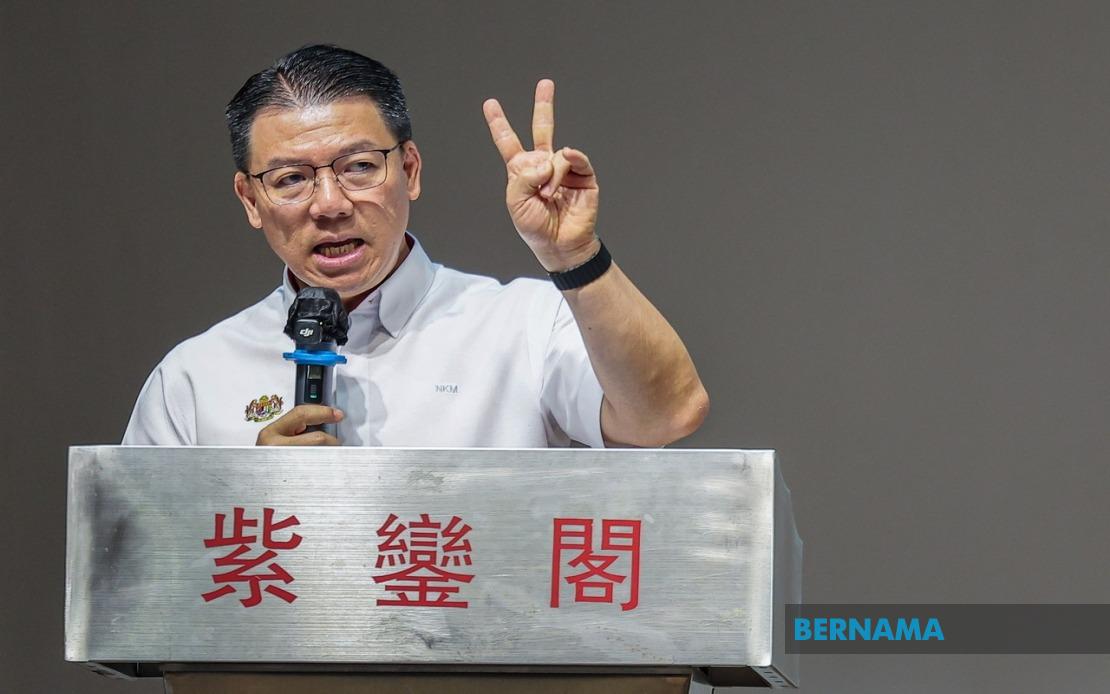
The Ministry of Housing and Local Government has earmarked RM200 million for the Non-Muslim Houses of Worship Maintenance Initiative, a four-year programme that commenced in 2023 and reflects the government's commitment to equitable community support regardless of faith. Housing Minister Nga Kor Ming made the announcement during a handover ceremony in Kluang, Johor, underscoring the MADANI administration's philosophy of ensuring no segment of Malaysian society faces marginalisation in development efforts.
The initiative encompasses maintenance, renovation, and emergency repairs for churches, gurdwaras, Hindu temples, Buddhist temples, and other religious institutions throughout the country. Since its launch, the programme has attracted considerable uptake from faith communities, with 1,478 applications received through the dedicated e-RIBI digital system representing a combined maintenance value exceeding RM279 million. This high application rate indicates substantial deferred maintenance needs across Malaysia's diverse religious infrastructure, suggesting communities have long awaited structured government support for their worship facilities.
Johor has emerged as a significant beneficiary of this initiative, receiving total allocations worth RM18.75 million from 2023 through May 2026, directly supporting maintenance work across 154 religious premises throughout the state. During the Kluang ceremony, Nga announced an additional RM3.14 million allocation specifically for 27 Johor religious institutions in the current year, funds designated for renovation, structural repairs, new construction components, and urgent remedial work necessary to maintain safe, functional worship spaces for congregations.
Nga framed the initiative within a broader narrative about national cohesion and inclusive governance. He emphasised that the MADANI government deliberately rejects development frameworks filtered through ethnic or religious identity, instead prioritising equitable benefits distribution across all communities to strengthen social unity. This positioning directly addresses concerns within Malaysia's minority religious communities about adequate government recognition and resource allocation, demonstrating tangible commitment beyond rhetorical gestures toward pluralism.
The minister articulated a vision of Malaysian development predicated on bridge-building rather than divisive wall-construction, and unity-fostering rather than communal fracturing. He contextualised the maintenance initiative within macroeconomic objectives, connecting inclusive social policy to investor confidence, currency stability, and employment generation. This framing suggests the government views religious community development not as charitable outreach but as integral infrastructure investment supporting broader national prosperity and social stability.
To ensure programme credibility and proper fund utilisation, the Ministry of Housing and Local Government has established professional oversight mechanisms for approved projects. Nga committed to continued transparent monitoring and efficient implementation protocols, addressing potential concerns about fund allocation accountability. This emphasis on governance transparency reflects awareness that minority faith communities scrutinise government programmes carefully, particularly regarding equitable fund distribution and timely project completion.
The scale of unmet maintenance demands evident in application volumes—nearly RM280 million in requests against RM200 million allocated capacity—suggests the four-year funding cycle may represent an initial phase rather than comprehensive resolution of infrastructure maintenance backlogs. Many religious institutions likely deferred repairs due to limited independent resources, making government support particularly crucial for smaller congregations lacking substantial fundraising capacity. The digital application system also modernises access, potentially improving transparency and reducing informal gatekeeping that might have disadvantaged remote or less politically connected communities previously.
Malaysia's plural religious composition, comprising Muslim majority populations alongside Christian, Hindu, Buddhist, and Sikh minorities, creates unique governance challenges requiring deliberate inclusive policy frameworks. Religious infrastructure maintenance directly impacts community cohesion and minority confidence in government fairness. By allocating substantial resources to non-Muslim worship spaces, the administration signals institutional respect for religious pluralism as foundational to national identity rather than peripheral accommodation.
For Southeast Asian observers, Malaysia's approach demonstrates how Muslim-majority nations can implement tangible inclusive governance mechanisms supporting religious minorities. This contrasts with contexts where minority religious communities face infrastructure discrimination or funding exclusion. The initiative's emphasis on treating diversity as national strength rather than administrative inconvenience offers potential replicable frameworks for regional governments navigating religious pluralism amid demographic and political pressures.
The RM200 million commitment's magnitude—substantial though potentially insufficient given application volumes—reflects genuine budgetary priority allocation. Implementation success will ultimately depend on project execution quality, timeline adherence, and genuine engagement with religious communities regarding maintenance priorities. Ongoing communication between the ministry and faith organisations will prove crucial for programme legitimacy and demonstrating sustained government commitment beyond announcement ceremonies.
Longer-term significance extends beyond infrastructure maintenance toward institutional relationships between government and minority religious communities. Regular funding cycles, transparent application processes, and respectful engagement establish foundations for collaborative governance on matters affecting these communities. Such frameworks prove increasingly important as Malaysia navigates demographic transitions and competing political narratives about national identity and religious accommodation.

