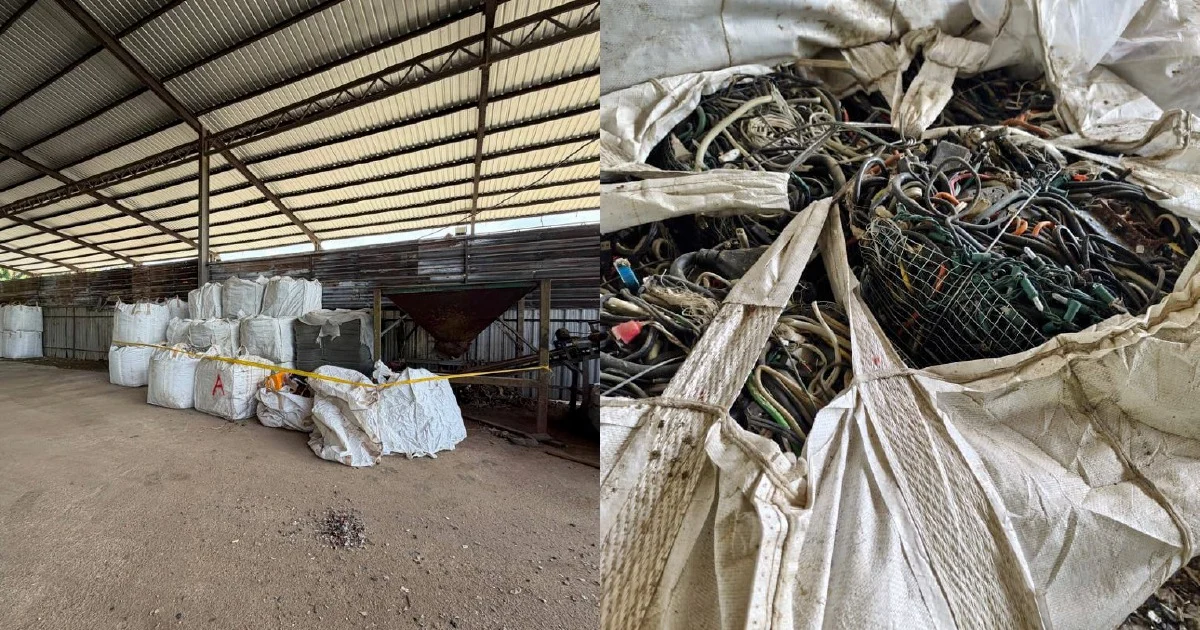
Enforcement officers descended on an illegal electronic waste processing and storage facility in Bukit Mertajam yesterday, conducting a comprehensive raid that resulted in the seizure of materials and equipment valued at approximately RM3 million. The operation marks a significant enforcement success in the ongoing campaign against unregulated e-waste operations that pose serious environmental and health risks across the country.
Five individuals were arrested at the scene during the raid, with authorities launching investigations into their involvement in the unauthorized handling and processing of electronic waste. The suspects are now assisting investigators as officials seek to determine the scope of their illegal operations and the origin of the seized materials.
Electronic waste has emerged as a growing environmental concern across Southeast Asia, particularly in Malaysia where rapid technological advancement and rising consumer electronics consumption generate substantial quantities of discarded devices annually. Unlike regulated facilities that employ certified recycling procedures, illegal operators often employ primitive and dangerous extraction methods to recover valuable metals such as copper, gold, and aluminum from circuit boards and components. These operations expose workers and surrounding communities to toxic substances including lead, mercury, and cadmium, creating acute health hazards that extend far beyond the immediate facility.
The Bukit Mertajam raid reflects intensified enforcement efforts by Malaysian authorities to combat the illicit e-waste trade. Illegal processors frequently operate with minimal oversight, avoiding compliance with stringent environmental protection standards that legitimate recycling facilities must maintain. Such operations typically lack proper containment systems, waste management protocols, and worker safety measures, creating conditions that contaminate soil and water sources while endangering personnel and nearby residents.
The confiscated materials recovered during yesterday's operation represent a substantial interception of what would likely have entered informal recycling channels, where environmental safeguards are minimal or non-existent. By removing these materials from circulation, enforcement authorities have prevented potential environmental degradation and disrupted a criminal supply chain that generates significant illegal profits while externalizing substantial social and environmental costs.
Malaysia's waste electrical and electronic equipment (WEEE) regulations establish a comprehensive legal framework governing e-waste management and recycling. Licensed facilities must comply with strict environmental impact assessments, maintain detailed records of processed materials, and implement pollution prevention measures. The existence of illegal operations like the one dismantled in Bukit Mertajam demonstrates the persistent challenge authorities face in enforcing these regulations across a fragmented and often informal recycling landscape.
The economic value of recovered e-waste creates powerful financial incentives for illegal operators, particularly those with access to minimal oversight and willing to disregard environmental protections. The RM3 million valuation of seized materials underscores the substantial profitability of unauthorized recycling operations, which explains the persistent attraction of the illegal trade despite escalating enforcement action and legal penalties.
Investigations into the arrested individuals will likely examine the destination of processed materials, whether such operations supplied downstream industries, and the extent of environmental contamination at the facility site. Authorities typically conduct comprehensive environmental assessments at illegal processing locations to quantify soil and water pollution and determine remediation requirements.
The enforcement action occurs amid growing international scrutiny of e-waste flows within the region. Developed nations increasingly scrutinize transnational e-waste trafficking, with Malaysia serving as a transit point for materials from advanced economies to informal processors in Southeast Asia and South Asia. Such international dynamics complicate domestic enforcement efforts and underscore the necessity for coordinated regional approaches to address e-waste management challenges.
For Malaysian manufacturers and businesses engaged in legitimate electronics recycling and processing, the raid reinforces the competitive advantages of regulatory compliance. Licensed operators investing in environmental safeguards and worker protection systems avoid legal liability, regulatory penalties, and reputational damage associated with the illicit trade. This enforcement action signals authorities' commitment to creating a level playing field where compliant businesses are not undercut by operators ignoring environmental and safety standards.
The incident highlights the importance of consumer awareness regarding responsible e-waste disposal and the environmental consequences of informal recycling practices. Electronics manufacturers and retailers increasingly participate in take-back programs and certified recycling schemes, allowing consumers to dispose of obsolete equipment through regulated channels. As Malaysia's electronics industry expands and consumer device ownership increases, establishing effective take-back infrastructure becomes increasingly critical to diverting materials from illegal processors.
Looking forward, enforcement authorities are expected to intensify monitoring of suspected illegal e-waste facilities while strengthening cooperation with licensed recyclers to expand legitimate processing capacity. The substantial quantities of materials seized in Bukit Mertajam demonstrate that single enforcement operations can recover significant volumes of improperly handled e-waste, yet coordinated, sustained enforcement pressure remains essential to eliminate the illegal operations that continue generating environmental damage across the country.