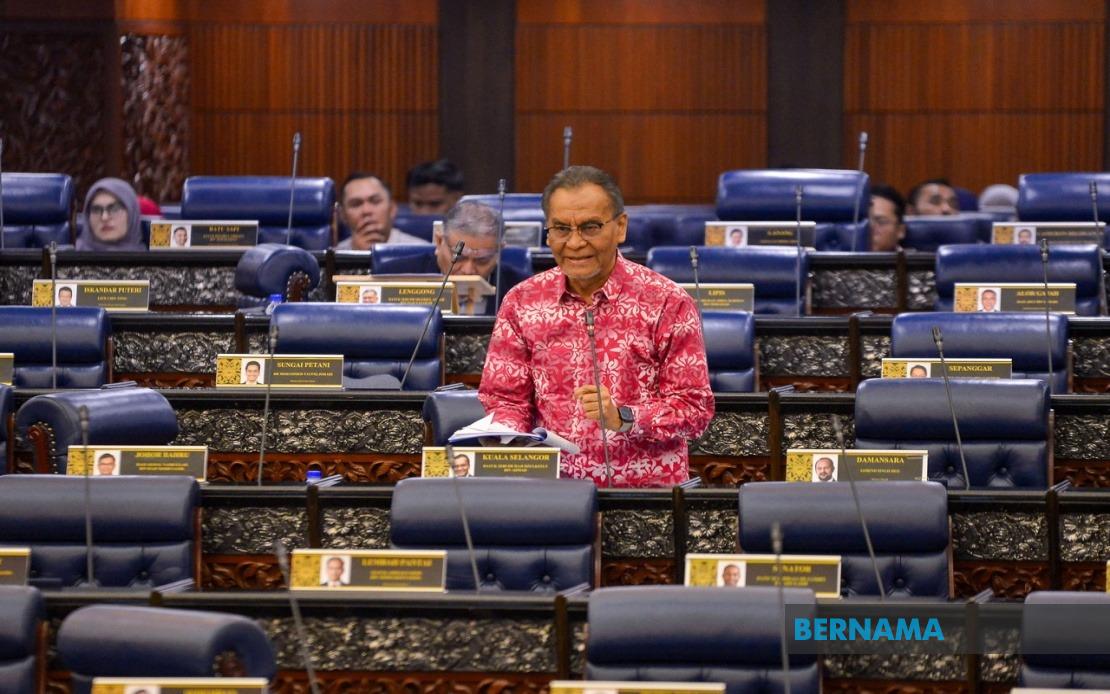
Health Minister Datuk Seri Dr Dzulkefly Ahmad moved to quell concerns in Parliament on July 2 by assuring lawmakers that the RM500 million expenditure restriction imposed on the Ministry of Health represents merely a technical recalibration rather than an operational cut that would degrade the nation's healthcare system. The minister's clarification came during question-and-answer proceedings in the Dewan Rakyat, where opposition and ruling coalition members sought reassurance about the implications of the financial adjustment announced by the Finance Ministry on June 5.
The core issue centres on a fundamental staffing reality within the health sector. Despite the Public Service Department approving 18,641 new positions for the Ministry of Health in the current financial year, the ministry faces a persistent challenge: there are insufficient qualified candidates to fill these vacancies. Dzulkefly explained that the RM500 million reduction emerges directly from this surplus budget allocation earmarked for positions that remain unfilled. Rather than allowing public funds to languish unused, the government has reallocated this amount elsewhere within the broader fiscal framework. This approach, he emphasised, permits prudent financial management without necessitating cuts to active service delivery.
When contextualised against the ministry's total annual allocation of approximately RM46.52 billion, the RM500 million adjustment represents just 1.07 per cent of overall expenditure. This narrow percentage underscores why Dzulkefly maintains that critical healthcare operations remain unaffected. The restriction explicitly excludes allocations designated for operational expenses, infrastructure development, staff remuneration and benefits, training initiatives, and the acquisition of medical equipment and supplies. Instead, the adjustment flows from a strategic reappraisal of spending priorities that channels resources toward the most essential health initiatives.
The question raised by Datuk Shahelmey Yahya, representing the Barisan Nasional-held Putatan constituency, reflected widespread public anxiety about fiscal constraints threatening rural healthcare provision. Rural health facilities, already operating with limited resources and personnel, face particular vulnerability during economic downturns. Supplementary questioning from Abdul Latiff Abdul Rahman of the Perikatan Nasional alignment in Kuala Krai further underscored this concern, suggesting that both government and opposition benches harbour genuine worries about service degradation in underserved communities. Dzulkefly's response directly addressed these fears, asserting that hospital services at all levels, including establishments in remote areas, will continue uninterrupted alongside ongoing health development projects.
Beyond the budget discussion, Dzulkefly unveiled parallel initiatives addressing another pressing healthcare challenge: escalating private medical costs. The Ministry of Health, functioning through the Joint Committee on Private Healthcare Costs (GBMKKS), plans to introduce a Base Medical and Health Insurance/Takaful scheme this month across select hospital networks. This fundamental coverage product aims to deliver affordable protection to consumers confronting mushrooming private healthcare expenses and insurance premiums. The rollout strategy involves initial implementation at participating facilities before expanding to nationwide availability in January 2027, providing a phased approach to market integration.
The MHIT framework represents a policy response to demographic and economic trends reshaping Malaysia's healthcare landscape. As personal incomes remain stagnant relative to medical inflation, many Malaysian families find private insurance increasingly unaffordable, yet simultaneously distrust or lack confidence in public system capacity. A competitively priced basic insurance product could bridge this gap, offering middle-income Malaysians genuine protection against catastrophic medical expenses without the premium burden of comprehensive private plans. This addresses a genuine market failure where existing options fail to serve the broad middle segment of the population.
Simultaneously, the government is implementing a Diagnosis Related Groups payment system designed to standardise hospital charges and reimbursement methodologies across public, private, university, and military healthcare institutions nationwide. The DRG framework, already successfully deployed in numerous countries, establishes transparent pricing benchmarks based on diagnosis and treatment complexity rather than allowing hospitals to levy arbitrary charges. For Malaysian patients, this standardisation promises greater predictability when comparing treatment costs across different facilities and sectors. For healthcare providers, it incentivises efficiency while establishing fair compensation floors.
These pricing reforms carry substantial implications for Southeast Asian healthcare markets. Malaysia, alongside Singapore and Thailand, occupies a regional position as a medical tourism destination. Standardised pricing through the DRG system could enhance Malaysia's competitiveness by ensuring transparent, predictable costs that attract international patients seeking affordable yet quality treatment. Simultaneously, the MHIT scheme demonstrates government commitment to expanding domestic insurance coverage, reducing out-of-pocket expenditure that historically deterred Malaysians from seeking timely medical intervention.
The RM500 million adjustment must be understood within this broader policy context. Rather than representing austerity or service contraction, the restriction reflects a deliberate budgetary housekeeping exercise that liberates resources for deployment toward these substantive healthcare improvements. Dzulkefly's framing positions the adjustment not as a failure of health planning, but as evidence of administrative discipline in matching spending to actual workforce availability. The persistent inability to fill thousands of approved positions, while theoretically concerning, practically demonstrates that the ministry cannot immediately absorb additional personnel expenditure regardless of budget allocation.
For Malaysian healthcare stakeholders, the sequence of developments offers mixed signals. The RM500 million adjustment provides reassurance that immediate operations will sustain normalcy. The insurance and pricing initiatives signal genuine commitment to cost containment and transparency. However, the underlying staffing shortages that necessitated the budget adjustment deserve serious attention. Rural hospitals, where physician and specialist recruitment remains particularly challenging, depend heavily on effective utilisation of approved positions. Failure to fill vacancies undermines quality even if total operational budgets remain intact.

