The Ministry of Defence has pushed back against parliamentary criticism over the RM571.9 million payment made to Norway for the Naval Strike Missile anti-ship system intended for Malaysia's Littoral Combat Ship fleet. In a written reply tabled in Parliament, MINDEF clarified that the entire sum was disbursed only after the Norwegian supplier had completed manufacturing, successfully conducted testing with the Royal Malaysian Navy, and readied all systems for delivery to Malaysia. This payment structure, the ministry stressed, strictly adhered to the contractual terms governing the procurement and represented legitimate progress-based settlement rather than an unsecured upfront transfer of funds.
The defence ministry's statement directly addressed assertions raised by Hassan Abdul Karim, the Pasir Gudang member of parliament, who had questioned whether Malaysia had released the full contract value prematurely and whether the procurement agreement contained sufficient safeguards for the government's financial interests. MINDEF countered both concerns with equal force. The ministry underscored that the contract is richly embedded with protective clauses, including provisions that grant the Malaysian government explicit recourse should the supplier fail to perform its obligations or breach any contractual commitment. These contractual mechanisms provide a legal foundation for the government to pursue recovery claims and seek compensation for damages stemming from any non-compliance.
The Norwegian government's sudden revocation of the export licence for the NSM system in May 2024 has thrust this Malaysian military procurement into the international spotlight and created genuine operational uncertainty for the Royal Malaysian Navy. However, MINDEF emphasised that this licensing decision by Oslo falls squarely outside the control of either the Malaysian government or the Norwegian defence contractor responsible for supplying the missiles. The ministry's acknowledgement of this external constraint is important, as it sidesteps any direct culpability while simultaneously laying groundwork for potential legal remedies. By invoking available contractual provisions, Malaysia is positioning itself to lodge claims against the supplier and potentially seek recovery of the RM571.9 million and associated damages arising from the export licence withdrawal.
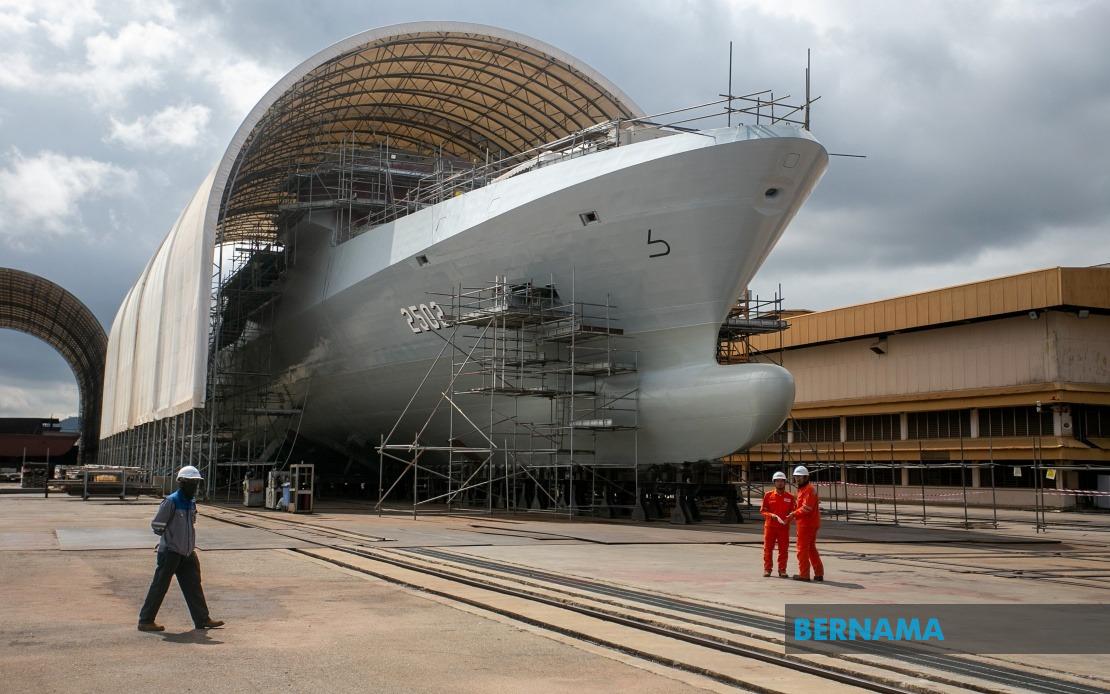
For Malaysian military planners, the NSM setback presents both an immediate challenge and a longer-term strategic consideration. The Littoral Combat Ship programme, a cornerstone of Malaysia's maritime modernisation efforts, now faces the prospect of operating advanced naval platforms without their intended primary anti-ship weapons system. The four LCS vessels under construction represent a significant investment in coastal defence capabilities, and their operational effectiveness depends critically on armed systems that can project power and deter regional maritime threats. The NSM, a sophisticated sea-skimming cruise missile produced by Kongsberg Defence & Aerospace, was specifically selected to enhance the RMN's asymmetric advantage in protecting Malaysia's extensive maritime interests across the Strait of Malacca and the South China Sea.
Despite the immediate complications caused by the Norwegian export licence cancellation, MINDEF has sought to reassure the nation that the Royal Malaysian Navy's operational readiness has not been materially compromised. The ministry pointed out that the RMN continues to maintain an inventory of existing naval assets and weapons systems that remain fully operational and capable of fulfilling Malaysia's maritime sovereignty obligations. This statement, while technically accurate, masks deeper concerns about capability gaps and the sophistication of threats that modern navies face. The NSM would have represented a significant technological upgrade, offering extended range and precision strike capabilities that Malaysia's legacy systems simply do not provide. The loss of this capability creates a potential vulnerability window that competitors in the region may seek to exploit.
The Royal Malaysian Navy is now engaged in a comprehensive evaluation of alternative missile systems that could potentially serve as substitutes for the NSM within the Littoral Combat Ship architecture. This search for alternatives is complicated by several factors. Any replacement system must be compatible with the existing LCS design and fire control infrastructure, a requirement that significantly narrows the field of viable candidates. Furthermore, most advanced anti-ship missile systems are subject to stringent export controls by their respective countries, meaning that even identifying a suitable technical alternative does not guarantee that the supplying nation will grant export permission. The experience with Norway, where political considerations apparently overrode contractual obligations, has exposed Malaysia's vulnerability to sudden shifts in supplier countries' foreign policy positions.
The broader context of Malaysia's defence procurement environment is worth examining. Over the past two decades, Malaysian military modernisation has increasingly relied on foreign suppliers and defence partnerships, particularly with European and advanced Asian nations. While this approach has brought technological advancement, it has also created dependencies that can be disrupted by factors beyond Malaysia's control. The NSM situation illustrates how geopolitical tensions, international pressure, and shifting political priorities in supplier nations can rapidly transform carefully planned military modernisation programmes into sources of strategic frustration. This experience may prompt Malaysian defence planners to reconsider the balance between technological sophistication and supply chain resilience in future procurement decisions.
The parliamentary exchanges surrounding the NSM payment reflect broader scrutiny of Malaysia's defence spending and procurement practices. Legislators from both the government and opposition benches have raised legitimate questions about financial oversight, contractual protections, and strategic foresight in major military acquisitions. The fact that MINDEF felt compelled to provide detailed written responses indicates the political salience of these issues and the expectations that parliament will exercise robust oversight of defence budgets. In the Malaysian context, where defence procurement has occasionally been overshadowed by corruption and mismanagement concerns, this parliamentary engagement serves as an important accountability mechanism.
Looking forward, the NSM situation holds lessons for Malaysia's entire military modernisation strategy. The government's decision to invoke contractual provisions and pursue recovery claims against the Norwegian supplier represents a reasonable legal response, though the practical prospects for obtaining full recompense remain uncertain. International litigation over defence contracts is notoriously protracted and often yields only partial recoveries. More importantly, Malaysia must now grapple with the strategic question of whether to persist with the Littoral Combat Ship programme as originally conceived, seek alternative missile systems from willing suppliers, or fundamentally reconsider the force structure requirements that the LCS was intended to address. These are decisions that extend far beyond the immediate NSM payment controversy and will shape the operational character of the Royal Malaysian Navy for decades to come.
The ministry's insistence that the RM571.9 million payment was appropriately structured and contractually sound may technically be accurate, yet it does not fully address the underlying vulnerability that the NSM situation has exposed. Malaysia's ability to acquire advanced military systems remains hostage to the policy decisions of foreign governments, many of which face their own domestic political pressures and international obligations that may conflict with their commercial defence interests. For a maritime nation like Malaysia, with extensive ocean territory to defend and growing regional strategic competition, this dependency on foreign suppliers represents a strategic constraint that deserves serious policy attention. The NSM case should catalyse a broader reassessment of how Malaysia structures its defence partnerships and identifies alternative pathways to acquiring critical military capabilities.
The Royal Malaysian Navy's current task of evaluating alternative missile systems will require patient diplomacy and creative problem-solving. Several countries produce capable anti-ship missiles, including France, Italy, India, Russia, and Israel, among others. Each potential supplier brings different technical characteristics, political considerations, and export control regimes. The Malaysian government will need to balance technical compatibility with the LCS, cost considerations, delivery timelines, and the geopolitical implications of diversifying defence suppliers. This evaluation process is unlikely to yield a simple, rapid solution, and there remains a possibility that no single alternative will perfectly match the capabilities that the NSM would have provided. The gap between what Malaysia intended to acquire and what it can actually obtain may ultimately shape the operational doctrine and strategic posture that the Royal Malaysian Navy adopts for the coming decade.

