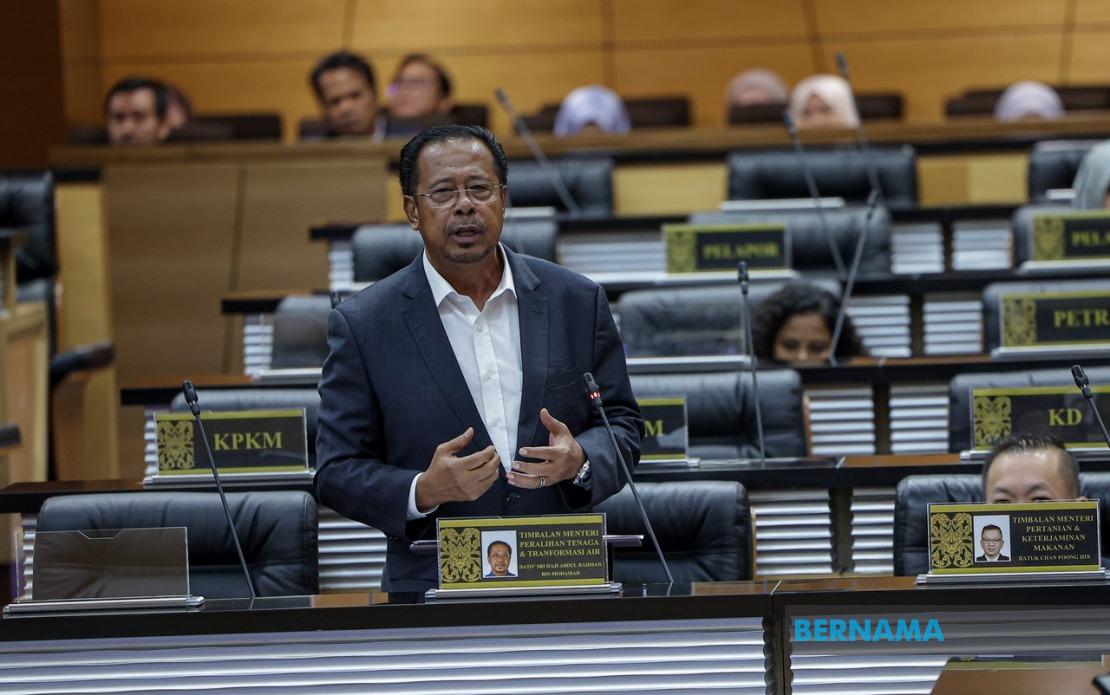
A major flood mitigation initiative for Sungai Skudai in Johor will deliver significant protection to nearby communities, with authorities projecting benefits for some 15,000 residents upon completion of the RM99.8 million Integrated River Basin Development (PLSB) scheme. Deputy Minister of Energy Transition and Water Transformation Datuk Seri Abdul Rahman Mohamad outlined the project's ambitious scope during parliamentary proceedings, emphasizing its role in shielding flood-prone areas while simultaneously restoring the river's ecological health and supporting livelihoods dependent on the waterway.
The initiative, funded under the 12th Malaysia Plan, currently remains in preliminary stages with extensive groundwork underway before any construction contracts are awarded. A specialist consulting firm was brought on in May 2025 to conduct detailed design work and baseline investigations, representing the foundational phase necessary to translate the project's vision into actionable engineering specifications. This methodical approach reflects the complexity inherent in large-scale water management infrastructure, where poor planning can prove costlier than careful preparation.
Field survey operations commenced in November 2025 and should conclude by May 2027, establishing the hydrological and geotechnical data essential for designing interventions tailored to Sungai Skudai's specific characteristics. Simultaneously, the government initiated land acquisition procedures in June 2026, targeting completion by August 2027—a critical parallel process given that implementing such projects frequently requires securing parcels along river corridors. Once these prerequisites are satisfied, procurement of construction services will proceed, with Abdul Rahman indicating that ground-breaking activities should commence around the middle of 2027.
The physical interventions themselves represent a comprehensive reworking of the 46-kilometre river system. Bank reinforcement works will stabilize vulnerable sections, while selected portions will be widened to approximately 15 metres, thereby increasing the waterway's capacity to convey monsoon flows without breaching. Such structural modifications directly address the capacity deficiencies that currently render the river prone to overflow during heavy rainfall events, a recurring hazard for downstream communities in the Johor locality.
Beyond flood prevention, the project carries broader implications for river health and community welfare. Abdul Rahman noted that enhancements to drainage systems and improved flow management should facilitate the revival of aquatic ecosystems degraded by decades of urban encroachment and industrial activity. The initiative also promises to strengthen navigability for local fishermen who depend on the river for their livelihoods, acknowledging that flood control schemes must balance protection objectives with the needs of riverside populations whose economic survival hinges on waterway access.
Landmark improvements to maritime security and emergency response capabilities represent an additional dimension. Enhanced infrastructure and operational visibility along the river corridor will enable coast guard and civil protection agencies to respond more effectively to emergencies, whether flood events or marine incidents. This interagency coordination reflects a modern understanding that water management transcends simple engineering, encompassing security and disaster response frameworks.
In recognition of the lengthy timeline before major works commence, the ministry has already implemented six smaller interim initiatives costing approximately RM700,000 collectively. These stopgap measures target immediate vulnerabilities, with authorities having identified roughly 50 specific flooding hotspots distributed along the river's length. Five of these concentrated clusters occur within Kulai, suggesting that targeted interventions in these zones could deliver measurable relief to residents while the comprehensive project advances through planning phases.
Abdullah Rahman's emphasis on schedule adherence carries particular weight for Johor communities whose exposure to seasonal flooding has persisted despite previous mitigation efforts. The commitment to transition from planning into full construction by mid-2027 signals governmental priority, though complex infrastructure projects often encounter unexpected delays arising from soil conditions, contractor availability, or regulatory complications. The pathway from detailed design approval through procurement and contract execution represents a critical juncture where momentum can either accelerate or stall.
The Sungai Skudai project sits within a broader portfolio of water management investments targeting flood-prone regions across Malaysia. Similar basin development schemes in other states have yielded measurable reductions in inundation frequency and severity, providing templates and lessons applicable to Johor's circumstances. However, each river system presents unique hydrological and geographical conditions requiring localized solutions, making Sungai Skudai's context-specific approach particularly relevant.
For the affected communities in Johor—many of whom endure repeated displacement during annual monsoon seasons—the project represents genuine momentum toward resilience. The convergence of environmental restoration, livelihood protection, and community safety within a single initiative reflects contemporary thinking about water governance that recognizes interconnections between ecological health, economic activity, and disaster prevention. As Malaysia's urbanization and climate patterns intensify hydrological pressures, such integrated approaches become increasingly essential for sustainable development.

