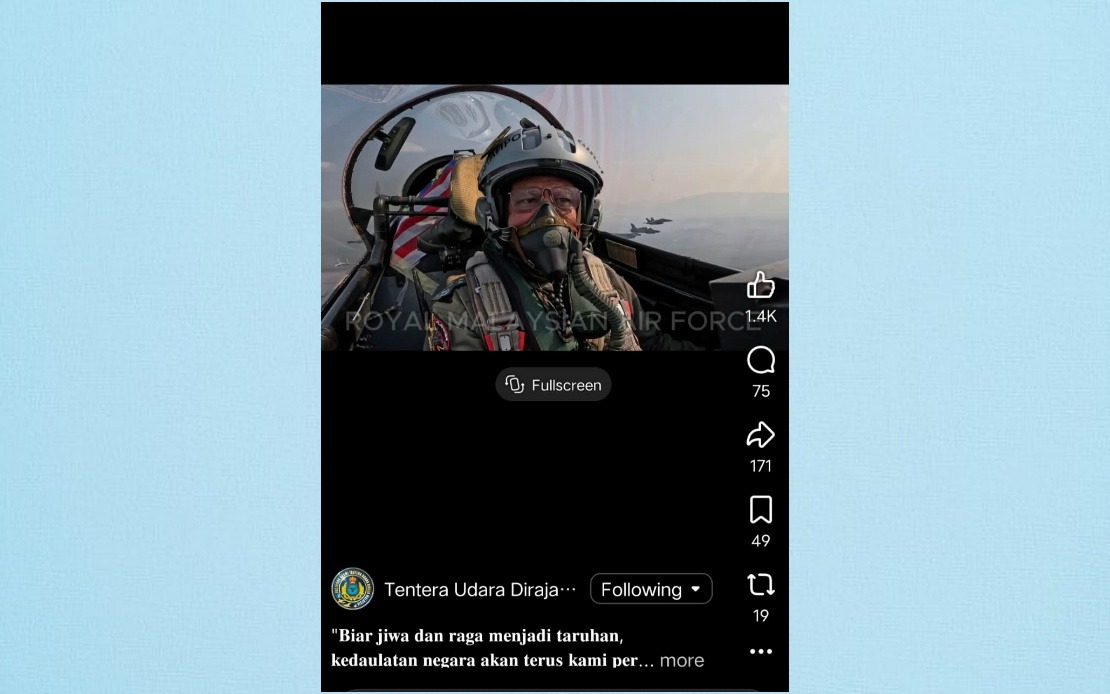
The skies above Putrajaya filled with the thunderous roar of military aircraft on August 31st as the Royal Malaysian Air Force orchestrated one of the most visually striking moments of Malaysia's 69th National Day festivities. The aerial demonstration, which commenced at 9.30 am and lasted ten minutes, represented a significant showcase of the nation's air defence capabilities and operational proficiency, drawing thousands of spectators to Dataran Putrajaya for an unforgettable display of precision flying and military prowess.
General Tan Sri Muhamad Norazlan Aris, the RMAF's commanding officer, once again assumed the pilot's seat of a Sukhoi Su-30MKM fighter jet to lead the entire formation. This marked the second consecutive year the air force chief has personally commanded the National Day air show, underscoring the symbolic importance of the event within Malaysia's defence establishment and the emphasis placed on demonstrating military leadership at the highest levels. The personal involvement of such a senior figure signals the air force's commitment to national pride and the significance of these annual celebrations in reinforcing public confidence in the military's capabilities.
The composition of the flying formation reflected a cross-section of the RMAF's frontline combat assets. Four Sukhoi Su-30MKM multirole fighter jets formed the core of the display, representing the air force's most advanced fighter platform and its capacity for sustained air superiority operations. Accompanying these were four F/A-18D Hornet aircraft, agile platforms known for their versatility in both air-to-air and air-to-ground roles, alongside three BAE Hawk 208 jets that serve critical training and light combat functions. This combination of approximately eleven tactical aircraft demonstrated the breadth of Malaysia's fighter capabilities to observers.
The choreography of the display extended beyond mere speed and altitude demonstrations. Specially designed formation patterns, including the Kite, Diamond, Delta and Victory Combine configurations, required meticulous coordination among pilots and showcased the technical proficiency demanded in executing synchronized flying. Each formation transition, often executed at considerable speeds while maintaining precise lateral and vertical spacing, exemplifies the intensive training and discipline required of combat aviators. For Malaysian audiences, such displays serve dual purposes: national celebration and credible deterrent messaging to regional observers.
Enhancing the spectator experience, three military commentators—Major Patrick Dinnesh, Major Neny Suhaida Ab Suki and Captain Muhammad Iqbal Nasrudin—provided real-time explanations of aircraft maneuvers and formation changes. This educational component transformed the event from mere entertainment into an informative presentation of aviation capabilities, allowing spectators unfamiliar with military aircraft to appreciate the complexity and skill involved in conducting such operations. The narration helped contextualize each maneuver and aircraft type, creating deeper engagement with the demonstration's narrative arc.
Following the fighter jet performances, the RMAF directed attention toward its strategic airlift and transport capabilities. Large military cargo aircraft, notably the C-130H Hercules, the newer A400M Atlas, and the medium-lift CN235, conducted their own formation passes overhead. These platforms underscore Malaysia's ability to project logistical support across its vast archipelago and beyond, a capability increasingly relevant given regional geopolitical considerations and the nation's commitments to international peacekeeping operations. The rotation of transport aircraft into the display sequence also provided visual contrast, emphasizing that modern air force operations extend far beyond fighter combat.
The demonstration incorporated rotary-wing assets alongside fixed-wing aircraft, with EC725 and AW139 helicopters operated by the RMAF executing their own coordinated passes. Notably, these helicopter formations flew in conjunction with aerial assets from complementary military and civilian services, including platforms from the Malaysian Army, Royal Malaysian Navy, Malaysian Fire and Rescue Department, and Royal Malaysia Police. This inter-agency coordination element highlighted the increasingly integrated nature of modern emergency response and defence operations in Malaysia, where multiple services routinely conduct joint operations.
Throughout the display, thousands of assembled spectators maintained their attention on the heavens, their reactions punctuating the aircraft passes with sustained applause and expressions of appreciation. The sheer volume and intensity of sound generated by modern jet engines created an immersive experience that photographs and video recordings struggle to convey, producing a visceral connection between observers and the machinery of air power. For many Malaysians, such displays provide rare opportunities to witness firsthand the scale and sophistication of their nation's military assets.
The aerial spectacle fundamentally transformed the airspace above Malaysia's federal administrative centre into a choreographed theatrical performance, temporarily converting government buildings and monuments into a backdrop for sustained demonstration of national military capability. The juxtaposition of celebration and military might reflects the traditional role such displays play within national commemorations across Southeast Asia and globally, where exhibitions of armed forces capabilities remain integrated into independence and unity festivals. The emotional resonance generated by such visual spectacles often reinforces national cohesion and collective pride in institutional achievements.
For Malaysian audiences and defence observers, the RMAF's National Day exhibition served multiple functions simultaneously. It entertained and impressed the assembled public while simultaneously communicating operational readiness to potential adversaries and reassuring allies of Malaysia's continued investment in credible defence capabilities. The personal leadership of the RMAF commander, combined with the sophisticated coordination of multiple aircraft types, demonstrated organizational effectiveness and the professionalism embedded within the service. Such displays, while celebratory in nature, carry strategic implications within the regional security architecture of Southeast Asia.

